Vegan Miso Butter Noodles (two ways)

IMG_9354

Somewhere in the last ten years, two things happened: food blogs became more homogenised – facsimiles of facsimiles which trade strenuous perkiness for any discernible personality. And people on Twitter started complaining about food blogs, usually with the cadence of a joke but an absence of actual humour. “Get to the recipe, Karen”, they say, “I just want to know how to make pancakes, I don’t need to hear your life story. Don’t make me scroll through five paragraphs on your year abroad in the Tuscan hills and how it gave you a new appreciation for the mysteries of olive oil.” Everyone words it as though they’re the first person to be affronted by scrolling through a blog to find the recipe. Even Mindy Kaling tweeted this tired joke, and I know she knows how to be funny! (She since deleted it.)

Spend enough time ploughing in the Discourse Salt Mines and you’ll find insufferable takes on both sides (although anecdotal irritation doesn’t preclude one side from usually being considerably in the right.) For every re-tread of this same snide joke, there are a dozen earnest responses about valuing women’s labour (a valid point) and how bloggers get paid greater ad revenue if their posts are longer, or that Google SEO prioritises particular keywords and structures, or other words that mean nothing to me because my blog doesn’t earn me a cent and it’s too late to reverse-engineer any attention from Google’s finicky SEO.

IMG_9359

Yes, that’s certainly an explanation as to why these rictus-grin food blogs chant the same interchangeable phrases over and over, and my issue with them is that the writing is bad, not that I have to wade through it to get to the recipe – but my question is, why aren’t all the complainers simply reading better food blogs? And why are they so brutishly averse to even a shred of context and back story – who could possibly hate context? Imagine two marshmallows: one is sitting on a plastic plate on the floor in a room dimly lit by a flickering bulb, the second marshmallow is on a china plate on a tablecloth lit by candles with kittens roaming about and a sign saying “this marshmallow is delicious and hand-made using local ingredients” – which marshmallow do you think most people would choose? That’s context, baby! (I realise I accidentally made the first marshmallow sound cool as hell, but hopefully, you get what I was going for.) And even the most unreadable food blog is still providing you with a service, for free, that you could get elsewhere but you didn’t, because they made it easier for you – and I recognise how in their own bizarre bloodless way, these food blogs are as much social history as anything I’ll ever write or any food writer I love will ever come up with. They’re documenting a specific time when the tyranny of SEO flattened –

Okay, I also recognise the irony of kicking off such a blog post with absolutely no sign of the recipe in sight.

IMG_9357

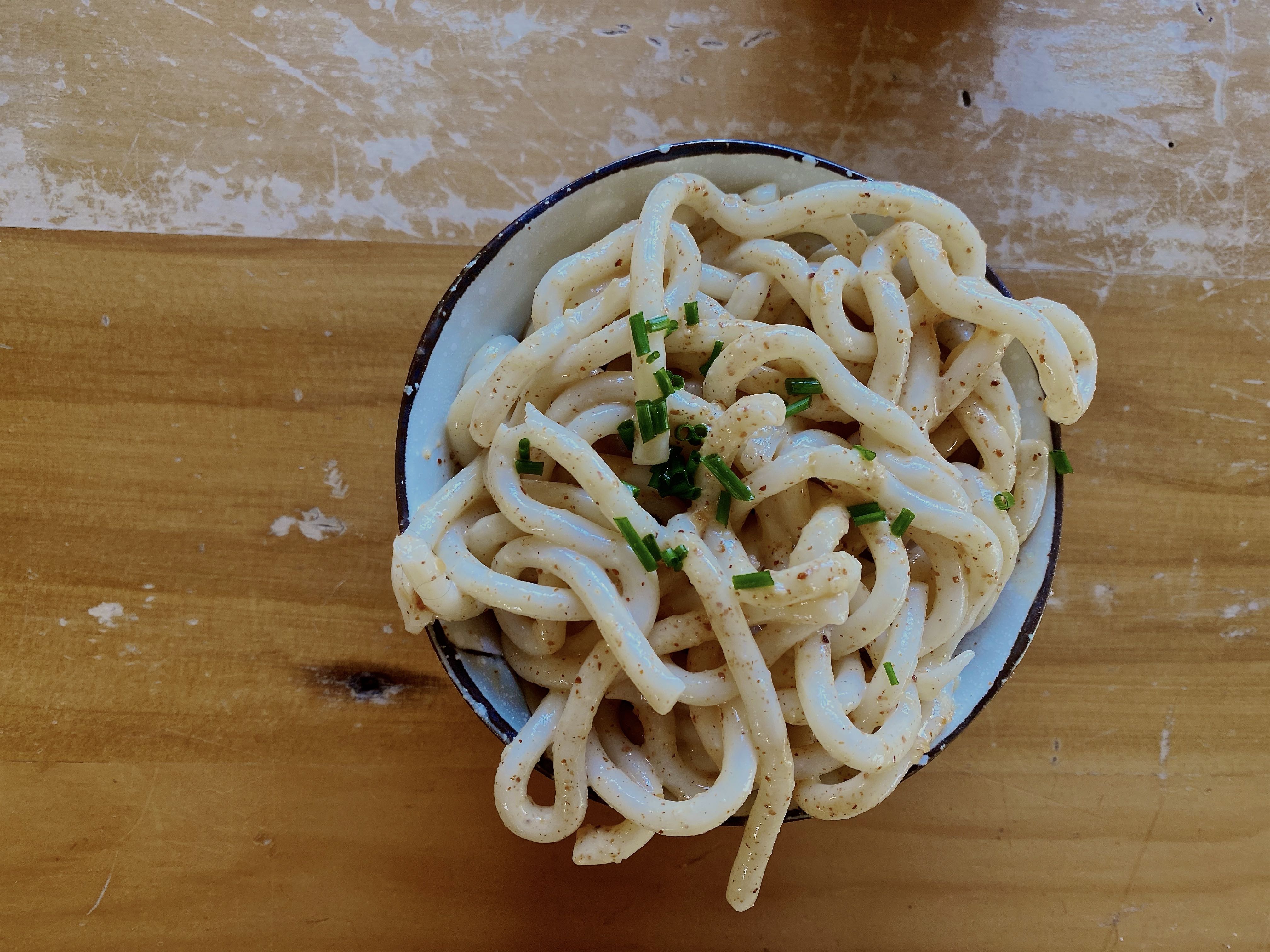
This dichotomy of food blogs and those who consume them is always on my mind and the simplicity of today’s recipe for Miso Butter Noodles was what tied it all together for me and started this rant. Literally, just the simplicity: I was like, I have to reassure the readers that this is simple and they shouldn’t expect too much of it, but also that its minimal ingredients aren’t a mark of success in and of themselves and this is simple because it needs to be – and then I started spiralling – and, well, here we are. I feel like I’ve got more to say about food blogs and the space they take up, and perhaps one day I’ll revisit these opening paragraphs and expand upon them, but for now, I’ll start actually talking about the recipe since you’ve already scrolled this far, and I hear that scrolling is an exhausting task.

In 2013 my cookbook was published by Penguin, when writing the manuscript the recipe for Miso Butter Noodles was perhaps the easiest to commit to paper; it’s definitely the recipe I’ve made most since. In taking this favourite and recreating it to be vegan-friendly I knew I couldn’t just sub in vegan butter – aka margarine – or at least, not until I meet a brand my tastebuds can trust – and while you absolutely could use a homemade vegan butter, I didn’t want to presume such forward-thinking of you. If you’re coming to this recipe, you can make it on the spot using store-cupboard ingredients.

The salty, grainy savoury vibe of miso and the rich oiliness of butter make perfect sense together, and I knew there had to be a way to translate that to a vegan recipe without compromise. The result kind of is a compromise, in that I offer two versions: one simply using almond butter, which coats the noodles pleasingly and matches the depth and body of the miso. The second method – my preferred one – fools a few ingredients into acting like butter – coconut oil for fat, soy milk for protein, and vinegar to coagulate. Heating this together with miso paste makes for a more delicate and subtle yet surprisingly, genuinely buttery sauce, and each fat noodle strand is all the more delicious for it.

This is a very simple recipe and it tastes simple – it’s meant to! Feel free to augment any ingredients to make the balance work for you, and definitely add chilli if you want – I love it with Lao Gan Ma chilli in oil, but sriracha or chilli flakes would be friendly too – or garlic sauce, or soy sauce, or kimchi, or fried tofu, or wilted greens. It started life in the cookbook as the sort of meal you could rustle up for yourself while tired, tipsy, or both, and in the years hence it’s slid into pure comfort food territory – it soothes because it’s easy to make, it soothes because it’s salty and oily. I’m glad to have it back.

(PS: speaking of comfort food and things we’re glad to have back, I finally concluded season 1 of my Frasier food blog; to prepare I rewatched the episode under the most perfect of settings: it was raining, it was Sunday and I didn’t have anywhere to be the next day, and I was eating a bowl of these noodles.)

IMG_9347

Vegan Miso Butter Noodles

A revamp of a favourite comfort food recipe from my 2013 cookbook. I offer two variations depending on your ingredients and effort level – but neither version asks too much of you. As you can see this is an incredibly simple recipe: add anything you like to make it more your own. I can definitely recommend a large spoonful of Lao Gan Ma chilli in oil, but then I would recommend that for literally anything you’re eating. Recipes by myself.

Version 1: Almond Butter

This is the simplest of the two simple recipes – a little stirring and you’re done. Make the sauce in the bowl you intend to eat the noodles from for even faster results.

  • 1 x 200g package udon noodles
  • 2 heaped tablespoons almond butter
  • 1 heaped tablespoon white miso paste
  • chives to serve

1: Place the noodles in a bowl and cover with boiling water. Let them sit for five or so minutes until they’ve softened. If you have a preferred way of cooking your noodles then do that instead, this is the slovenly habit I’ve fallen into (in my mind, if the bowl has just had hot water and noodles in it, it only needs a rinse before going back in the drawer…perhaps I’ve said too much but it is what it is.)

2: Whisk the almond butter and miso paste together, using a spoonful or two of the noodle water to loosen it into a smooth paste. Drain the noodles and fold in the miso-almond butter sauce. Taste to see if it needs more miso paste and then snip over your chives with kitchen scissors or finely chop them and sprinkle them over. Serves 1.

Version 2: Quick Emulsion

I need to come up with a more appealing name than “quick emulsion” but that’s what this is – you’re basically tricking these ingredients into acting like butter. Anyway, it’s very fast and gives a more subtle, delicate sauce – of the two, this is my favourite version, but they’re both delicious.

  • 1 x 200g package udon noodles
  • 1/4 cup soy milk
  • 1 teaspoon vinegar of your choice (I used Chinkiang black vinegar)
  • 2 tablespoons refined coconut oil
  • 1 heaped tablespoon miso paste
  • chives, to serve

1: Prepare the udon noodles as above, or to your preference. Meanwhile, place the soy milk, vinegar, coconut oil and miso paste in a small saucepan and stir over low heat until it’s bubbling slightly and all the ingredients have combined to form a cohesive sauce. Drain the noodles and stir them into the sauce, then top with the finely chopped chives. Serves 1.

Note: if you have homemade vegan butter (eg this recipe or this recipe) then you can melt as much of that as you like together with a heaped tablespoon of miso paste and stir that through your noodles for an excellent time. If you have a store-bought vegan butter that you genuinely love and trust, then use that instead, too, and if you live in NZ please tell me the brand name because I want to know what love is!
IMG_9352

music lately:

Looking For Someone by 8 Eyed Spy. The film-noir horns and Lydia Lunch’s voice both have this incredible mix of bombastic yet careless, I love it so much.

The Key The Secret by Urban Cookie Collective, this song is simply pinging with unreal levels of euphoria – when Diane Charlemagne goes from “I’ve got the key, I’ve got the secret” to “I’ve got the key, I’ve got the secret” – that’s the sound of living!
Freedom! ’90 by George Michael. Those piano chords…that bridge…those supermodels…my life would be NOTHING without this song, that’s all there is to it!

PS: If you like my writing and wish to support me directly, there’s no better way than by stepping behind the claret velvet VIP curtain of my Patreon. Recipes, reviews, poetry, updates, secrets, stories, all yours on a monthly basis.

Vegan Tofu-Fried Tofu

IMG_8446

On Friday I had my first professional driving lesson in at least ten years. People have been trying to teach me to drive one way or another since 2001; people have failed. I could not be car-broken. And in a nation of drivers, where 97% of society and its amenities are inaccessible without a car, this was eventually going to bite me. Learning about things like anxiety and ADHD has certainly helped me understand why I might not have taken smoothly to driving, but it still didn’t make me any more inclined to get behind the wheel. What I wanted was a Matrix-style chip in the back of my neck, uploading the necessary software to turn me into a driver – failing that, some kind of magic-adjacent experience, such as being hit over the head or electrocuting myself or being bitten by a spider. I did not want to do the work! Nor, should I! Why can’t society bend to me, why must we prioritise driving when it’s so dangerous and environmentally terrible and also something I can’t do?

Ten months of avoidance passed after I got my learners license (again) and then I finally booked a lesson. Unlike the other pros, this instructor was kind and patient and had heard of anxiety and didn’t just bark at me to drive into oncoming traffic; after 50 minutes concentrated figure-eighting around the nearby town, making serviceable left turns and even a few right turns, I felt unbelievably powerful and hyperactive, high on the absence of failure, almost too powerful – like, wait, can I drive now? Should I go on a cross-country road trip right now? Probably, right? Just to be safe?

IMG_8445

I bring this up for reasons twofold: firstly, I just wanted to boast that I bravely committed to learning to drive; secondly, if you’ve ever been suspicious of tofu – which I don’t respect but I do understand because we live in a society and tofu has been poorly treated in the public image – then perhaps this recipe could be the kind of successful interaction to finally make you feel like a person who not only enjoys tofu but frantically celebrates it at any opportunity. (I also recommend Bettina Makalintal’s crispy glazed tofu, I will never be without a bag of potato starch ever again.)

The recipe is Tofu-Fried Tofu, and it’s spectacularly good and inspired by Brooks Headley and his Superiority Burger Crispy Fried Tofu Sandwich. Sometimes, no matter how established the person writing the recipe, I just physically can’t follow it, and instead, I have to scan it into my head like a pdf and never read it again but use whatever key components I can remember to make a recipe based on it. Why is this? I think it’s partly the way a lot of recipes are laid out these days, and probably partly something neurological on my part, let’s be honest. The only person I don’t do this with is Nigella Lawson – at least, not as much – and I think it’s because her recipes feel as though they’re so very already in my language – whatever changes I’d make, Nigella has probably already anticipated it.

This is my roundabout way of explaining that I’m not trying to say I’m any better than Brooks Headley but I still had to make my own version inspired by his recipe rather than following it to the letter. There’s no reason why you can’t make his recipe as it’s written, I’m sure it’s amazing, and my recipe doesn’t diverge too wildly anyway. But the recipe I made is also delicious and through some trial and error, it’s exactly where I want it to be. These errors include adding cocoa to the flour mixture (I wanted to want it, but it’s not the one) and leaving the tofu at its from-the-package thickness, making for a genuinely strenuous eating experience where you practically needed a step-ladder to scale the breadth of soy protein on your plate.

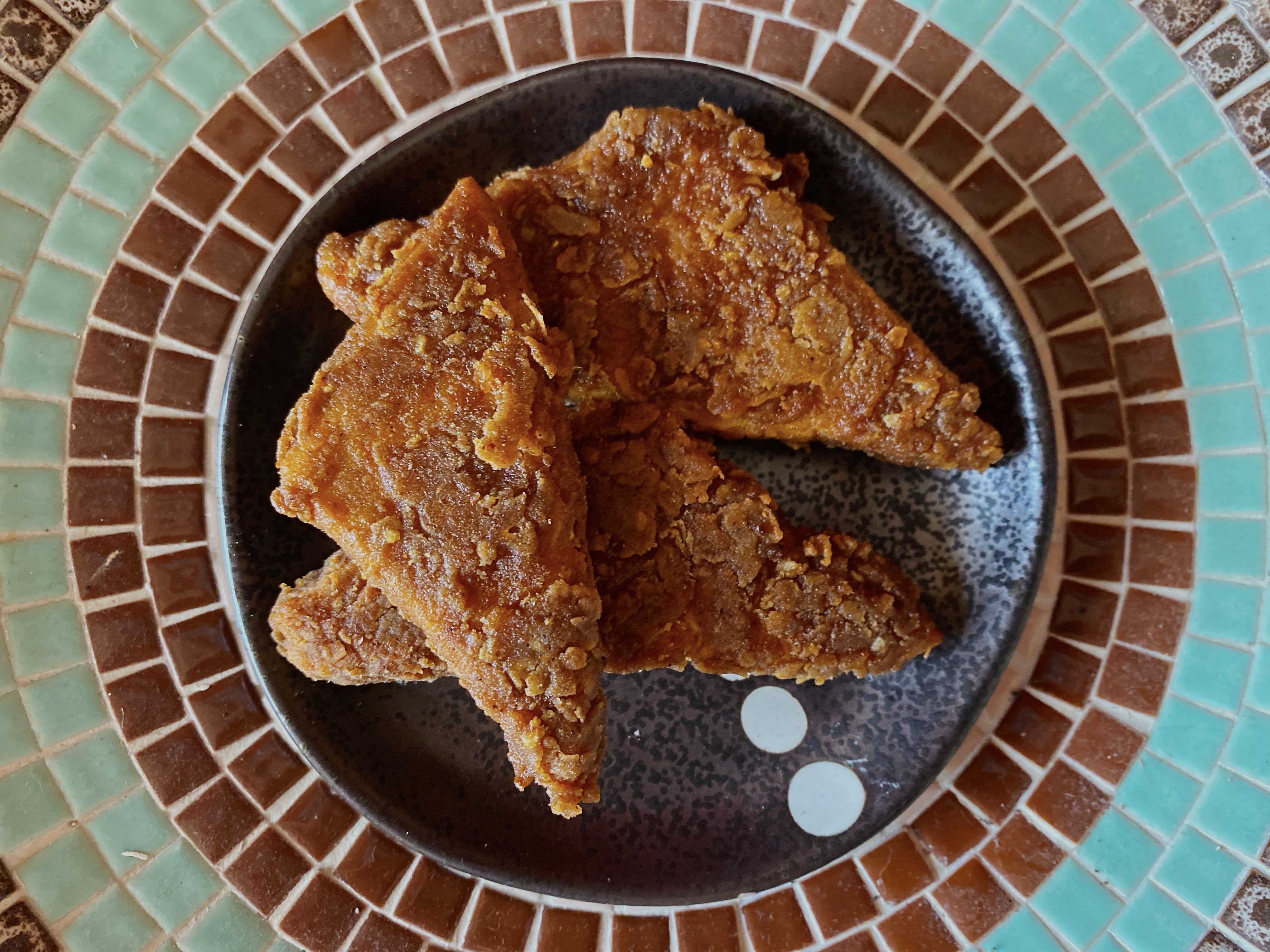
These slender triangles of tofu bathe in an aggressive marinade of pickle brine, soy milk, vegan oyster sauce or Maggi, and mustard powder – which when combined is oddly potable if not wildly delicious, I really had to bargain with myself to stop drinking it from the container while the tofu was marinating in it, I wish I were exaggerating for comic effect here but if anything I’m downplaying it. The key to the flour dredge is a ton of Chinese Five-Spice powder and ground white pepper – an inelegant ingredient but one who deserves to shine, in my opinion – and double-dunking to create pockets and crevices of crumbly coating. It’s more of a KFC-esque coating – dense and softly crisp – rather than shatteringly crunchy, especially the longer it sits, and this is obviously not a bad thing.

IMG_8434

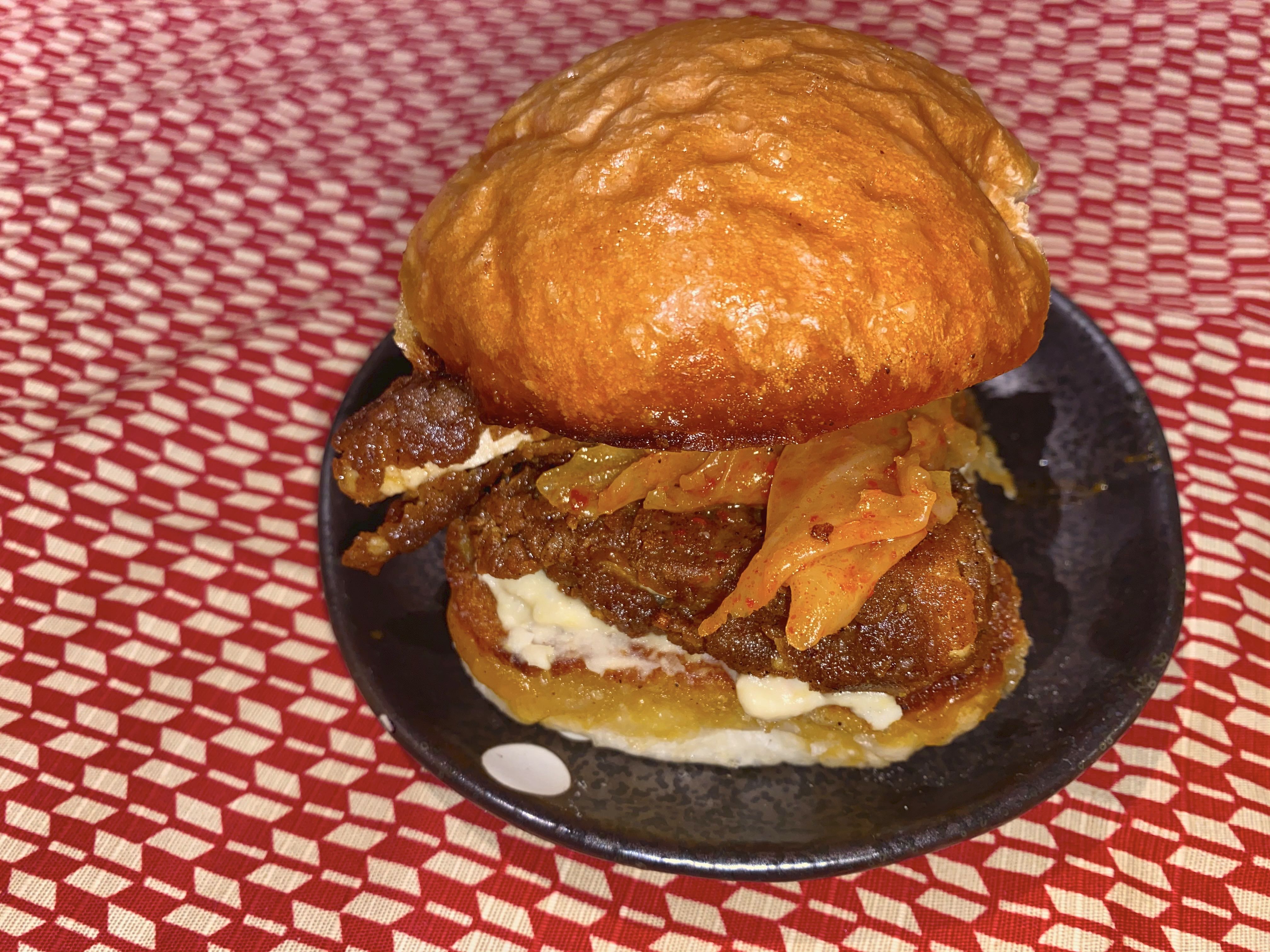
Between the tanginess of the pickle brine and mustard and the bumptious yet balanced spices, this is one of the very best things you can do with tofu. It makes sense to tuck it into a burger bun (I spread the base with hummus and topped the tofu with kimchi which was a chaotic but complementary combination) but you could serve these alongside chips or on top of rice. The crucial thing is to leave yourself a few for the next day, I honestly think they taste better cold than they do at any other stage of the proceedings.

[Also – I forgot to mention this last week but I had the joy of appearing on Pip Adam’s Better off Read podcast to discuss the plot devices I employ in my poetry, the way I’m influenced by film auteurs in my fiction writing (does this make me an auteur? Maybe??) and more besides; Pip is one of my very favourite writers and it was such an honour and a thrill to speak with her about writing. It’s just really fun and I thoroughly recommend you listen to it because I’m a great podcast guest and she’s a great host!]

IMG_8467

Tofu-Fried Tofu

This is inspired by Brooks Headley’s recipe, and the more often you make it the less effort it will seem. I can’t tell you how delicious this is cold from the fridge the next day. Makes 12 pieces.

  • 1 x 300g (or thereabouts) block of tofu, firm or extra-firm
  • 1/3 cup brine from a jar of pickles/gherkins
  • 1/2 cup soy milk (or oat milk – I wouldn’t use anything other than these guys though)
  • 1 tablespoon mustard powder
  • 1 tablespoon vegan oyster sauce, Maggi seasoning sauce, or soy sauce
  • 2 cups flour
  • 3 tablespoons cornflour
  • 5 teaspoons Chinese Five-Spice powder
  • 1 tablespoon smoked paprika
  • 1 tablespoon garlic powder
  • 1 teaspoon ground white pepper
  • a large pinch of salt
  • 1 teaspoon dried celery (if you can get hold of it)
  • neutral oil, such as rice bran, for frying

1: If you have the time, freeze the tofu for at least a couple of hours and then allow it to defrost – this does something wonderful to the texture, but if you forgot or can’t be bothered – or just got home and want to eat this as soon as possible – don’t worry, it’ll still taste good with tofu straight from the fridge.

2: Place the pickle brine, soy milk, mustard powder, and vegan oyster sauce in a rectangular container a little larger than your block of tofu and whisk to combine. Drain any liquid from the tofu and slice it across diagonally, so you have four triangles, then sit each triangle on their longest side and slice through them twice with the knife flush with the flat side, so you have three of that same triangle, just a lot thinner/flatter. You’re cutting pages, not wedges. I hope that description makes sense – basically, you want to go from having those four triangles to having three matching sets of those triangles, which you can stack up again back into the original rectangle. If it still doesn’t make sense, watch the TikTok above and you’ll see how I cut it there.

3: Place the tofu into the container of marinade, stacking them up into their original rectangle shape, and leave for a couple of hours (although I’ve made this with only about half an hour of marinating and it still tasted good so once again, if you’re impatient or didn’t plan a single thing, it’ll work out.)

4: In a mixing bowl, combine the flour, cornflour, Chinese Five-Spice powder, smoked paprika, garlic, pepper, salt, and dried celery if you’re using it.

5: Drop each tofu triangle into the flour mixture, then dunk them back in the pickle marinade, then coat in flour again. This is messy, there’s no way around it, but if you just use one hand it’s at least contained, you know?

6: Pour a thin but definite layer of oil into a large saucepan and once it’s hot – when bubbles form around a spoon or whatever you stick into it – cook the tofu slices for a few minutes on each side, flipping twice. Also, this might sound weird but if you have any leftover flour mixture, stir in a little marinade and fry this dough in the hot oil too as a little cook’s treat. It’s really good and I don’t care!

7: Transfer the cooked tofu to a rack with absorbent paper on it and either use immediately, or you can store them in an airtight container in the fridge and briefly fry on each side to heat through. They’re best either straight from the pan or dead cold from the fridge, but this in-between stage is also very commendable.

Notes: As you can see, there are some aspects of this recipe you can be loose about and some which I think are very important. I’d like to emphasise that you absolutely cannot leave out the Chinese Five-Spice and the pepper has to be white – but if you only have a quarter of a cup of pickle brine left in your jar or if you accidentally pour half a cup, nothing bad is going to happen. Sometimes I add a little pinch of baking powder to the flour mixture, this time I forgot, either way is fine. Also, I realise two cups of flour sounds like a lot, but you end up needing it all to confidently double-dunk the tofu. Finally: I don’t know if you can bake or air fry this and I don’t want to find out! The oil is as important an ingredient as anything else on the list!

IMG_8448

music lately:

For The Love of Ivy by The Gun Club. Rhyming “hell” with “hell” four times in a row? Going loud then quiet then loud? That’s the ticket!

Matthew and Son by Yusuf/Cat Stevens (he goes by both names these days, I checked) this song is disarmingly goofy and has the distinct air of being accompanied by a high school orchestra and it’s nowhere near as cool as any of his other songs so naturally, it’s my favourite thing that he’s ever done. It is what it is!

When Love Goes Wrong, Nothing Goes Right, by Marilyn Monroe and Jane Russell from the film Gentlemen Prefer Blondes, I haven’t seen this film in years but was reminded – on TikTok! – of how charming this number is and how crackling the chemistry is between Monroe and Russell. Their harmonies when the song speeds up a notch – “a man goes out, gets high as a kite” – are glorious. I will absolutely be rewatching this film soon.

PS: If you like my writing and wish to support me directly, there’s no better way than by stepping behind the claret velvet VIP curtain of my Patreon. Recipes, reviews, poetry, updates, secrets, stories, all yours on a monthly basis.

rum and coke jackfruit

IMG_8025

The notes app on our phones and its contribution to our general existentialism cannot be overstated – it’s our id and ego condensed, an unkempt filing cabinet of shopping lists and auspicious dreams, of half-written poems, funny bits, bullet points, log-in details, recipes, addresses and other arbitrary ephemera.

(If this doesn’t make any sense: the notes app is a function on most smartphones that acts as a notebook for you to jot down literally anything – usually to forget about it immediately – and there’s also a good chance I’ve misused the word “existentialism” here but whatever, it’s the vibe of the thing.)

Because I ricochet from one thought to another like an earnest pinball, and every last one of these thoughts seems terribly meaningful, my notes app is rather busy. And because each note is filed away forevermore until you delete it, I’m always finding stuff I absolutely do not remember writing.

Like this note: “rum and coke jackfruit”.

IMG_8012

I don’t remember writing it – although evidently, I did at some point – but having found it, I decided to make good on this long-ago reminder to myself, and so we have this week’s recipe, based on that promising prompt. Jackfruit is a large fruit present in the cuisine of numerous cultures, including Bangladesh and Sri Lanka for whom it’s the national fruit, and South India and Southeast Asia. Over the last few years, it’s become increasingly common in NZ supermarkets canned in brine, which makes it straightforward to use, and its superb texture – dense, softly fibrous – and sweetly mellow flavour makes it ideal for vegan cooking.

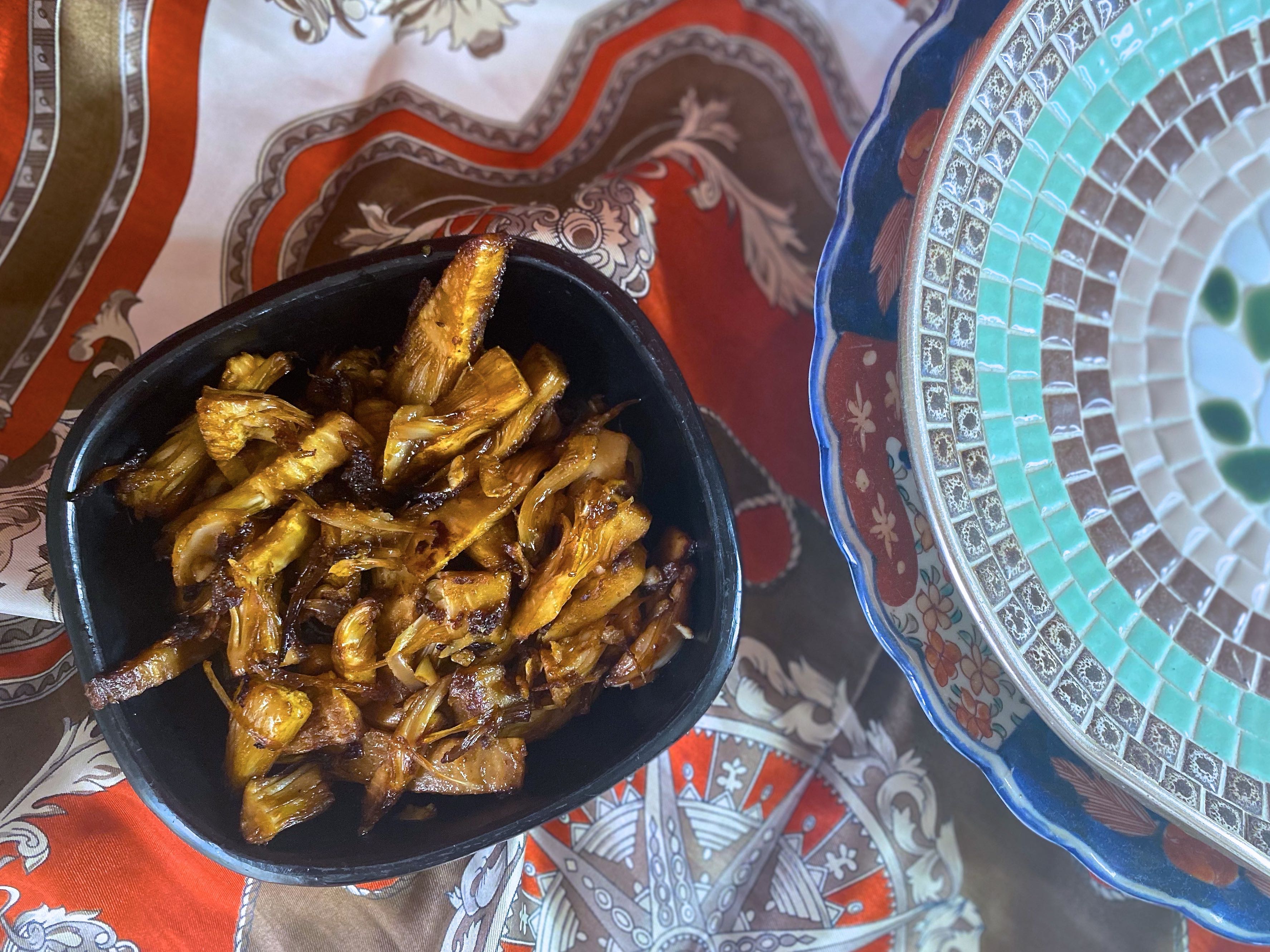
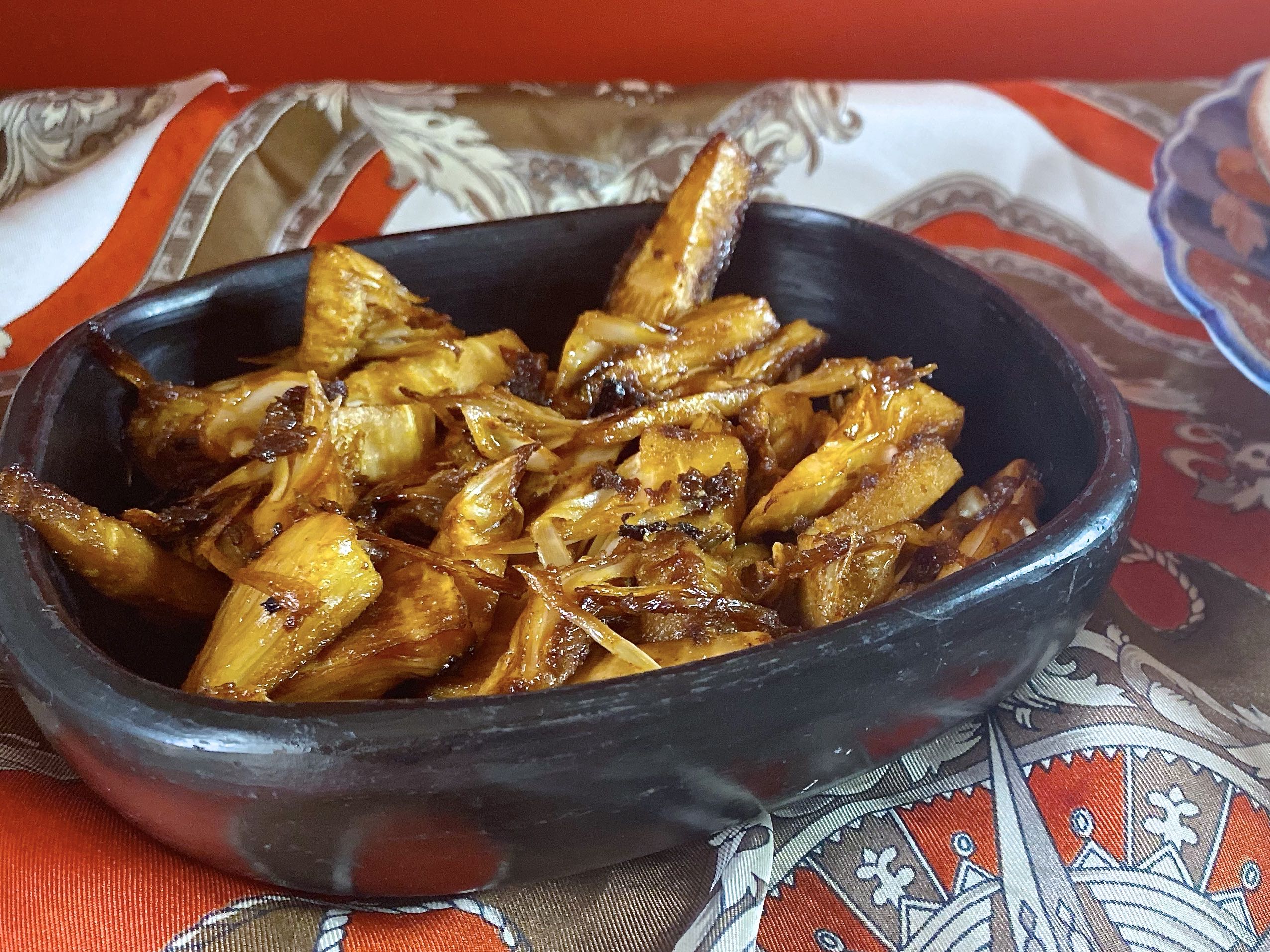
Rum and Coke are both sweet, and somehow spiced without being spicy – and together they plus a few other ingredients create a sticky, saucy coating for the jackfruit under the heat of the oven’s grill. Now, if you were to taste this wearing a blindfold I don’t know if you could confidently name either ingredient, and if I’m very honest the rum is mostly just window-dressing because the come-hither familiarity of the title is cute – but nonetheless, this is monumentally appealing, with the smokiness from the paprika, earthy cumin, and plenty of garlic. And despite the length of the recipe, it’s easy too – a bit of simmering, a bit of scorching in the oven, and it’s all yours, to be draped over rice or tucked into tacos and sandwiches.

@hungryandfrozen

my best loop yet 🥲 Rum and Coke Jackfruit, recipe @ hungryandfrozen.com 🤠 #recipe #vegan #veganrecipes #jackfruit #foodblogger #cooking #fypシ #fy

♬ Bluebirds Over the Mountain – Richie valens

This sauce mix – by which I mean everything minus the chicken stock and jackfruit – would be excellent coating other star ingredients as well, with its general barbecue-ribs-flame-grill mood – tofu, obviously, or seitan would be great, but I think oyster mushrooms would be even better. I based the method on the pulled jackfruit recipe I made back in 2017 – before I was vegan but tentatively contemplating it – and I enthusiastically recommend you make that one too. It’s true for both recipes: no matter how much jackfruit I cook, I always wish I’d made more – you’d better write “two cans of jackfruit” in your notes app, to be safe.

IMG_8023

Rum and Coke Jackfruit

Sticky, smoky and sweet, this vegan jackfruit is perfect over rice, in tacos, in sandwiches – basically wherever you want something extremely delicious. Recipe by myself.

  • 1 x 500g can jackfruit in brine (300g drained weight)
  • 1 cup vegan chicken stock (eg 1 cup water, 1 stock cube)
  • 4 cloves garlic
  • 3 tablespoons olive oil
  • 1 teaspoon mustard powder
  • 1 teaspoon cumin
  • 2 teaspoons smoked paprika
  • 2 teaspoons coconut sugar (or brown sugar)
  • a pinch of cinnamon
  • 2 tablespoons soy sauce
  • 1 tablespoon dark rum
  • 1/2 cup coca-cola
  • 1/2 teaspoon cornflour (cornstarch)

1: Drain the liquid from the can and roughly chop each piece of jackfruit into smaller pieces lengthwise. Don’t worry if there are any seeds – leave them in.

2: Place the jackfruit pieces, the chicken stock, and the unpeeled garlic cloves into a saucepan and simmer for ten minutes. Simmering the garlic cloves like this gives them a more mellow flavour and makes them easy to peel later.

3: While this is happening, turn your oven to 200C/400F, pour the olive oil into a roasting tray, and place it in the oven to heat up.

4: In a small bowl, mix together the mustard, cumin, paprika, sugar, and cinnamon. Stir in the soy sauce, dark rum, coca-cola (it’ll fizz up a little) and the cornflour.

5: After ten minutes, drain the stock from the pan of jackfruit (you can save it for later use, I’m not advocating wastefulness here.) Press down on the garlic cloves to release them from their skins and roughly chop them. Return them to the pan of jackfruit along with the coca-cola/spice mix and stir to combine.

6: Remove the hot roasting dish from the oven. Transfer the jackfruit mixture onto the roasting dish – I recommend using tongs to ferry the jackfruit pieces across before pouring the remaining liquid over rather than just dumping the contents of the pan onto the roasting dish because it will splutter when the liquid hits the hot oil.

7: Place the tray in the oven and leave for twenty minutes. At this point, remove the tray, turn the jackfruit pieces over, switch your oven to the grill/broil function and grill for a further ten minutes, keeping an eye on it to make sure it doesn’t scorch too much. By this point, the liquid should have evaporated and the jackfruit should be burnished brown at the edges.

8: Serve immediately, although you can store it in the fridge and reheat it in a hot pan if need be.

Serves – well that depends on how you serve this. It fed four as part of a rice bowl, but if I was having it with fewer extra bits I wouldn’t want to make this for any more than two people, and one person could eat the lot very easily. Making double would be sensible (in which case I’d only increase the liquids by about half – eg 1/2 cup coca-cola becomes 3/4 cup – but the spices can be fully doubled.)

Notes:

  • If you don’t have rum or don’t wish to use alcohol in the recipe, that’s all good – just add an extra teaspoon of sugar. I wouldn’t make this if I only had white rum in the house, but spiced rum could be interesting.
  • Feel free to add your preferred form of chilli to this recipe – my family’s taste tends towards the mild, but if I was making it just for myself a little gochujang wouldn’t go amiss.
  • I suspect diet Coke or Coke Zero wouldn’t have the same effect here – you need the sugar to make it work.

IMG_8022

music lately:

Pretty Little Angel Eyes by Curtis Lee. I’ve had of late an odd nostalgia for the songs used in my jazz dancing classes in the early nineties – those hard-working cassette tapes dubbed from other tapes by my teacher. This song was one which we danced to, and despite its chirpy lyrics and break-neck pace – I’m not sure it actually has any verses? It’s literally all bridge? – there’s something about that doo-wop sound that makes me feel super melancholy the minute the “woo-ooo-ooo” bit starts. Anyone else?

Overload by Zappacosta, another song on high rotation in my jazz-dancing years – and I’m sorry to sound ancient but WHY don’t songs sound like this anymore? When will people be brave enough to do that? Is it so much to ask?

SpottieOttieDopaliscious by Outkast. Everyone mentions the horns first – and they’re the greatest – but I also harbour deep affection for that “damn, damn, damn James” refrain. This song is seven minutes long and it feels like three – honestly, forty minutes would still leave you feeling bereft the moment it ends.

PS: If you like my writing and wish to support me directly, there’s no better way than by stepping behind the claret velvet VIP curtain of my Patreon. Recipes, reviews, poetry, updates, secrets, stories, all yours on a monthly basis.

Coconut Chilli Tofu Noodles [Vegan]

IMG_5045

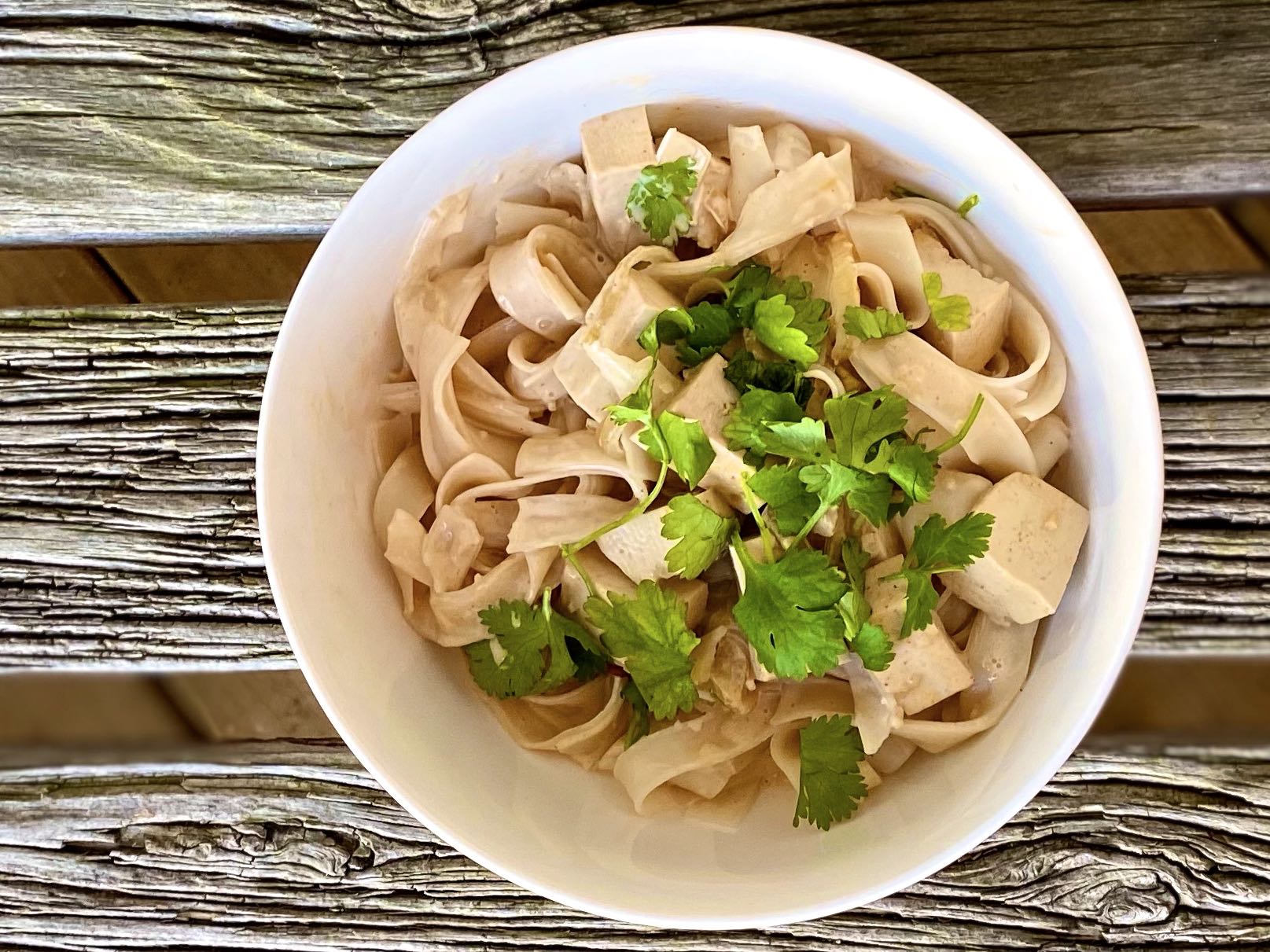
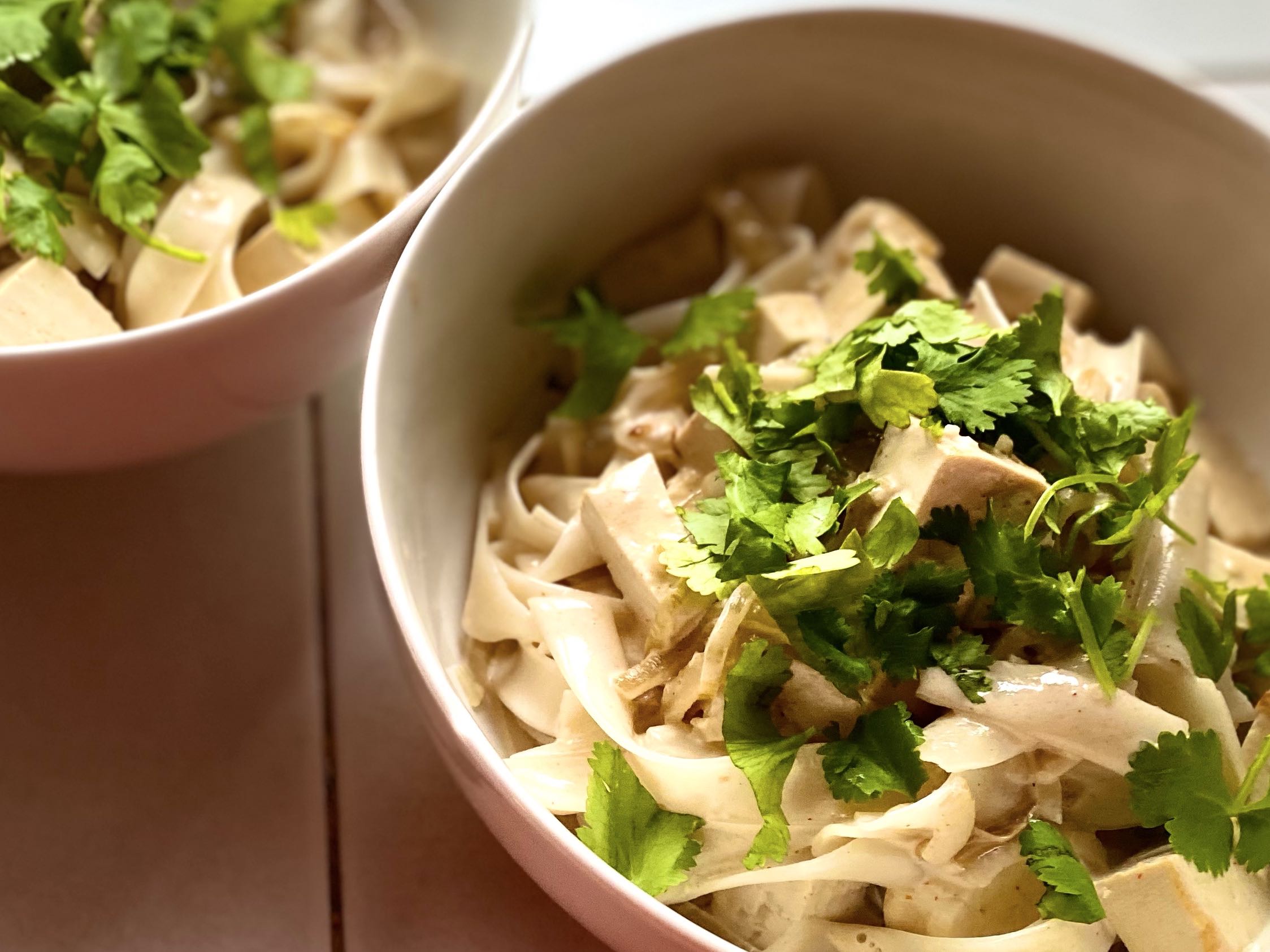
In my last blog post, I talked about how a lot of my dinner recipes don’t end up on here for various photogenically-challenged reasons. Well, here’s one for you – if you will excuse the hasty phone-snapped photos, with the mise-en-scene being me ferrying my bowl of noodles about the house searching for a corner or recess where they might appear inviting. That’s how delicious this recipe is, I just have to share it with you even though the photos aren’t the greatest. (Although, we’ve already dealt with photos worse than this, if more stylistically confident.)

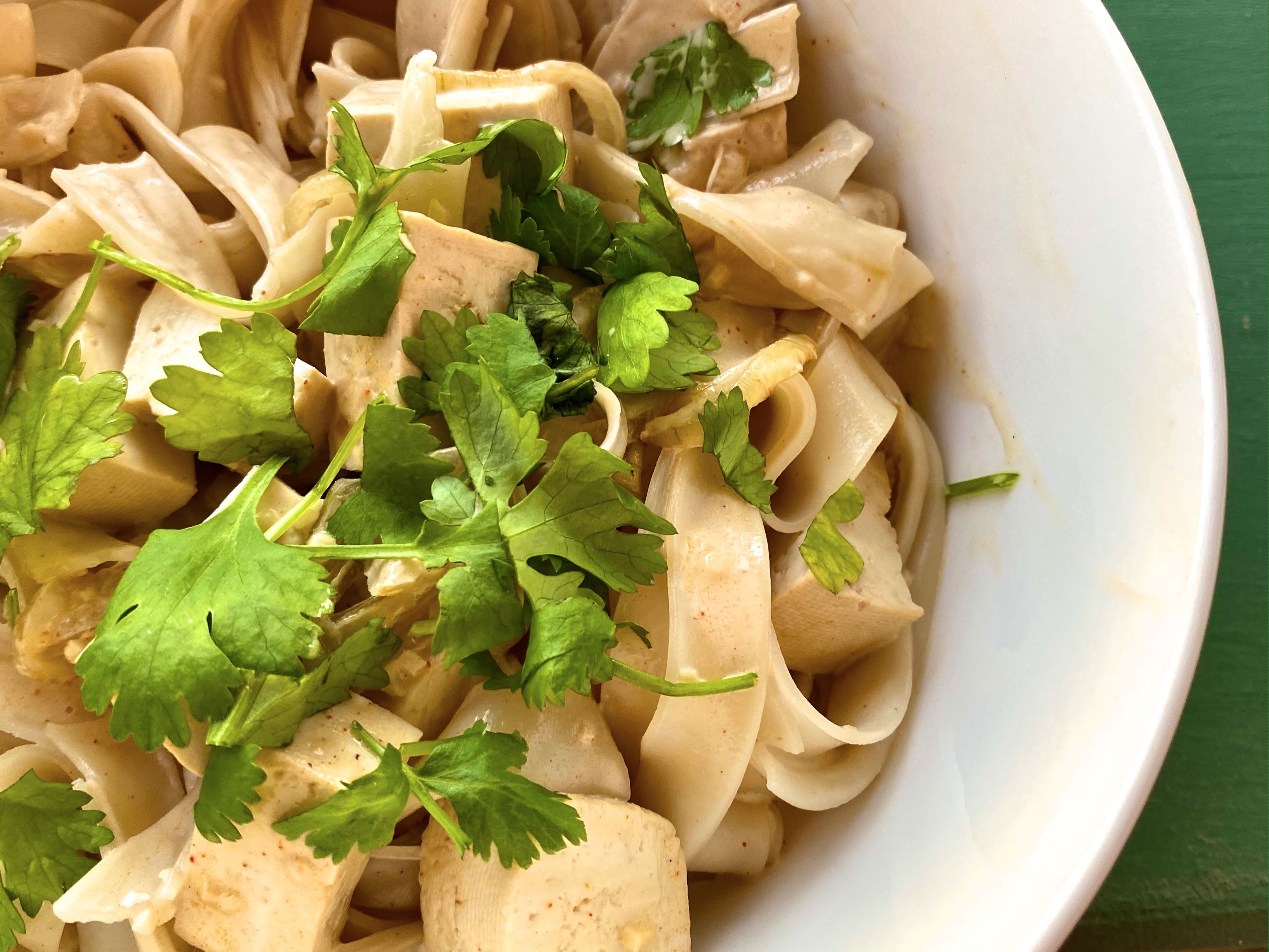
And to be fair, even if the photos were more thought-out, this is still a very pale and unlikely looking dish of warmed through tofu and rice noodles, with that layer of coriander doing some very heavy lifting, visually. I promise you, it’s more seasoned than it looks, and it’s so good. This recipe, a version of which initially ended up in my 2013 cookbook, gives you everything: it’s practically instant, it’s carbonara-level creamy and soft and saucy, and it’s superbly comforting. And while there is definitely chilli present, it’s sedated and dispersed by the coconut cream.

IMG_5034

That being said, there’s nothing stopping you from adding more and more gochujang (Korean chilli paste) to the recipe – this is comfort food with the ability to bite you back, if that’s what you need. And I’m certainly not going to leap out from the third draw down and protest if you want to add less chilli, but I’d at least urge you to start small and see how you go, rather than leave it out altogether, at which point this would become a dish I couldn’t recommend in good conscience. The gochujang adds heat, yes, but in a way that reminds you of life’s bracing potential rather than the metallic clank of your imminent mortality.

IMG_5048

Coconut Chilli Tofu Noodles

These near-instant vegan noodles are so comforting and creamy but also as spicy as you want or need it to be. Recipe by myself. Serves 2.

  • 1 x 200g (or thereabouts) package wide rice noodles
  • 1 large onion
  • 3 garlic cloves (or a hefty dash of garlic powder)
  • 2 tablespoons neutral oil (eg rice bran)
  • 300-400g extra firm tofu
  • 2-3 tablespoons gochujang, plus more to taste
  • 2 tablespoons Maggi seasoning sauce, or soy sauce
  • a squeeze of lime juice (I sometimes use vinegar if I don’t have any lime)
  • 1 x 400ml can full-fat coconut cream
  • large dash of ground white pepper
  • a dash of sesame oil and a handful of fresh coriander, to serve

1: Peel and finely slice the onion and finely chop the garlic. Place the noodles in a heatproof bowl, cover with water from a just-boiled jug, pushing them under the surface of the water with a utensil of some kind, and set aside to soften. Meanwhile, heat the oil in a medium-sized saucepan and fry the onions and garlic in it for a minute or two, until they’re softened and starting to colour.

2: While this is happening, take a moment to dice the tofu into good-sized cubes of about 2cm. Please don’t stop to measure. Stir the gochujang into the onions, then add the tofu and give it another stir. Then add the Maggi sauce, the lime juice, the coconut cream, and the white pepper. Quarter-fill the empty coconut cream can with tap water, swirl it around, and tip it into the pan as well. Bring to a robust simmer, and stir till the tofu is heated through, which should only take a minute or two.

3: Drain the noodles, add them to the pan, stir everything all together, taste to see if it wants more chilli or seasoning, then remove from the heat and carefully divide between two bowls.

Shake over a few droplets of sesame oil and roughly tear the coriander leaves, blanketing each bowl of noodles with them.

Notes:

  • I used to just make this with sriracha or, if I had one to hand, a chopped red chilli. The Korean fermented chilli paste gochujang is now my favourite and recommended method of adding chilli to these noodles. It’s just got so much flavour and depth and intensity. I got mine from an Asian supermarket, I think Countdown stocks it too. It does pack a lot of heat on its own which seems to chill out in this recipe, but if you’re really not sure of your tolerance just start with a small teaspoon of it, then augment after the noodles are added if necessary.
  • You can definitely use coconut milk instead of coconut cream, I just tend to exclusively use coconut cream because you get maximum flavour and texture for your buck. Either way: full fat.
  • I guess you could use something other than wide rice noodles. But I wouldn’t want to! They work so perfectly here.
    If you want to make this more soupy and saucy you can simply add more water, I’d maybe throw in a stock cube as well.
  • I use Maggi sauce in everything and strenuously recommend that you find some if you aren’t all over it already. You won’t be sorry.
  • Finally, if you can find vegan oyster sauce, add a splash along with the Maggi or soy sauce.

IMG_5035

music lately:

Oh, What A Beautiful Mornin’ by Damon Daunno and Mary Testa from the 2019 Broadway revival of Oklahoma! which, without changing a word of the book or score, made this familiar classic into something new altogether, and I wish so much that I’d had a chance to see it live. This version of the opening song gives it this incredibly compelling mournful-yet-sexy bluegrass vibe, and I can’t stop listening to it. I also recommend Ali Stroker’s brash, unapologetic, and Tony Award-winning take on I Cain’t Say No, worth listening to for the way she roars the word “chaps” if nothing else.

Nine Million Rainy Days by The Jesus and Mary Chain. While it’s not my favourite song of theirs, it perfectly represents one of my favourite genres of music, which is “gloomy yet exhilarating”. And that line “and all my time in hell was spent with you” is better than anything I’ll ever write. (My favourite of theirs? The exhilarating-yet-exhilarating Head On, of course.)

Ode to the Wind, by 1960s Texas garage band Danny and the Counts. It’s melancholy and gorgeous and it’s a literal crime that their music isn’t more widely available on Spotify!!

PS: If you enjoy my writing and wish to support me directly, there’s no better way than behind the claret velvet VIP curtain of my Patreon. Recipes, reviews, poetry, updates, secrets, stories, all yours on a monthly basis.

Thai Yellow Curry Mac’n’Cheese

P1200162

A lot to unpack here – despite the title of this recipe there is demonstrably neither macaroni nor cheese involved, and as for the wayward cross-cultural Thai-Italian fusion, perhaps the less said the better. But this is a food blog, so unfortunately for us all, I legally have to say more.

That being said – because we’re sliding headfirst into Christmas and because I am significantly sucrose-dizzy from eating large amounts of the mixture while making my Christmas Cake and Raspberry Rainbow Slab before settling down to write this – I will keep to the point: this is perhaps the best mac’n’cheese I’ve ever made. I’ve had numerous stabs at making THE vegan mac’n’cheese and they’ve all been great – usually involving cashews and pureed roasted carrots and nutritional yeast – and they’re still excellent recipes which I’m happy to call my own! This specific recipe just happens to be at the charming crossroads of tasting fantastic, while involving barely any effort (and not a single blender.)

P1200153

This is a recipe I’ve been thinking about for a long, long time – based simply on some stove-side musing, while using Thai yellow curry paste in its intended form. It occurred to me, while tasting the curry sauce I was stirring and simultaneously stealing small spoonfuls of the curry paste from the jar to eat – that its savoury, salty fulsomeness might be surprisingly wonderful and slightly cheese sauce-adjacent draped over pasta.

I figured this concept might also require what we in the business call a soft-launch – by which I mean, I made it just for me and my brother on a night when my parents were out. It was all I had hoped for and more: the pasta and creamy roux provided a smooth tranquil background to the mellow heat and heady mix of spices in the curry paste, somehow – corroborated by my brother – quite bewitchingly cheese sauce-like – and yet also its own unique creation. What I’m trying to say is, this definitely tastes like yellow curry paste and pasta, and that is a very good thing, and yet it doesn’t taste incongruous. It’s so good, even though its main ingredients weren’t originally intended to be bedfellows – just so good! Besides, 2020 has made strange bedfellows of us all, and this mac’n’cheese is precisely the sort of comforting and easy tuck you want at this destabilisingly intense and hyper-emotional time of year – or indeed – any time.

P1200160

Thai Yellow Curry Mac’nCheese

So simple, so delicious, maybe the best vegan mac’ncheese I’ve ever made? A recipe by myself. 

  • 200g macaroni or small pasta shape of your choice (I only had casarecce for some reason hence the photos)
  • 1/3 – 1/2 cup panko breadcrumbs
  • 3 tablespoons refined (flavourless) coconut oil (plus extra for the breadcrumbs)
  • 2-3 heaped tablespoons Thai yellow curry paste
  • a pinch of nutmeg
  • 3 tablespoons flour
  • 1 cup soy milk

1: Bring a pan of water to the boil, add plenty of salt, and cook the pasta until it’s, you know, cooked.

2: Meanwhile, toast the breadcrumbs in an extra tablespoon or so of coconut oil in a saucepan over a medium heat until they are lightly golden brown. Transfer them to a dish and cover to keep warm until required.

3: In the same pan, melt the coconut oil and stir in the curry paste, heating it through for a minute or so. Add the flour and stir for another minute or so, by which point it should be a very thick, orange-coloured doughy roux.

4: Add the soymilk, a little at a time, stirring it into the roux the entire time to prevent lumps – it may help to switch to a whisk at this point – and continue stirring constantly over a medium heat until the sauce is thick and, well, saucy. Add about a quarter cup of the pasta water to the sauce and continue stirring. Once it looks thick enough to coat, pleasingly, the pasta, remove it from the heat. If it gets too thick, however, just stir in some more milk or pasta cooking water. Stir in the nutmeg, and then taste to see if it needs any more seasoning – you may, quite justifiably, wish to add more curry paste, which I encourage you to do.

5: Drain the pasta, stir it into the sauce, and sprinkle the toasted breadcrumbs over the surface.

Serves 2 as a main.

Notes:
  • I know you’re going to use whatever oil you have in the cupboard and that is absolutely fine but I’ve only tried this with refined coconut oil and its particular buttery flavour is quite specific!! However I’m sure unrefined coconut oil or olive oil would be great instead if that’s what you’ve got.
  • All the Thai yellow curry paste I’ve found has been vegan, but definitely check the ingredients just in case.
  • You may be tempted to skip the nutmeg, to which I say: no. Don’t.

P1200165

music lately:

LA WEED, by Allison Stone from her latest album of the same name. A long-awaited new release from Stone brings the year to a close in a slightly more bearable way – I love the title track and just everything from this album, it sort of sounds like Elastica if they were slowed down and then sped up again but only slightly?

Supervixens, by AR Kane, I know I talked about this song last week but the truth is I just have not stopped listening to it! And nor should you! Can you honestly tell me that whatever else you’re doing right now is more important than this?

Lonely Train by Judy Henske. Equally at home in folk as she was doing torch songs, this is more the former and showcases her jaw-dropping rich howl of a voice as it surges over an urgent, steam-powered guitar rhythm.

Next time: 2021, baby.

PS: If you enjoy my writing and wish to support me directly, there’s no better way than behind the claret velvet VIP curtain of my Patreon. Recipes, reviews, poetry, updates, secrets, stories, all yours on a monthly basis for as little as one or two dollars. Merry Christmas!

24 Hour Party Seitan

P1200123

“One Christmas,” wrote Dylan Thomas in A Child’s Christmas in Wales, “was so much like another…I can never remember whether it snowed for six days and six nights when I was twelve or whether it snowed for twelve days and twelve nights when I was six.” It’s that sudden, concentrated repetition which defines the season – the same songs, the same pine tree smell, everything squashing into one red and green fever dream until it’s over, and we put it away for another eleven months. It’s much the same with food – even Nigella Lawson, with every new cookbook she releases, still returns to that one brined turkey recipe every Christmas Day. If you’re vegan, however, there’s a decent chance you’re more amenable to trying new things at this time of resolutely clinging to old things, which is why, eleven days in to December of 2020, I confidently suggest my 24 Hour Party Seitan as your perfect new Christmas Day recipe. I’ve made seitan many, many times before, but this one is easily its ultimate iteration – I certainly wouldn’t suggest anything less for such an occasion.

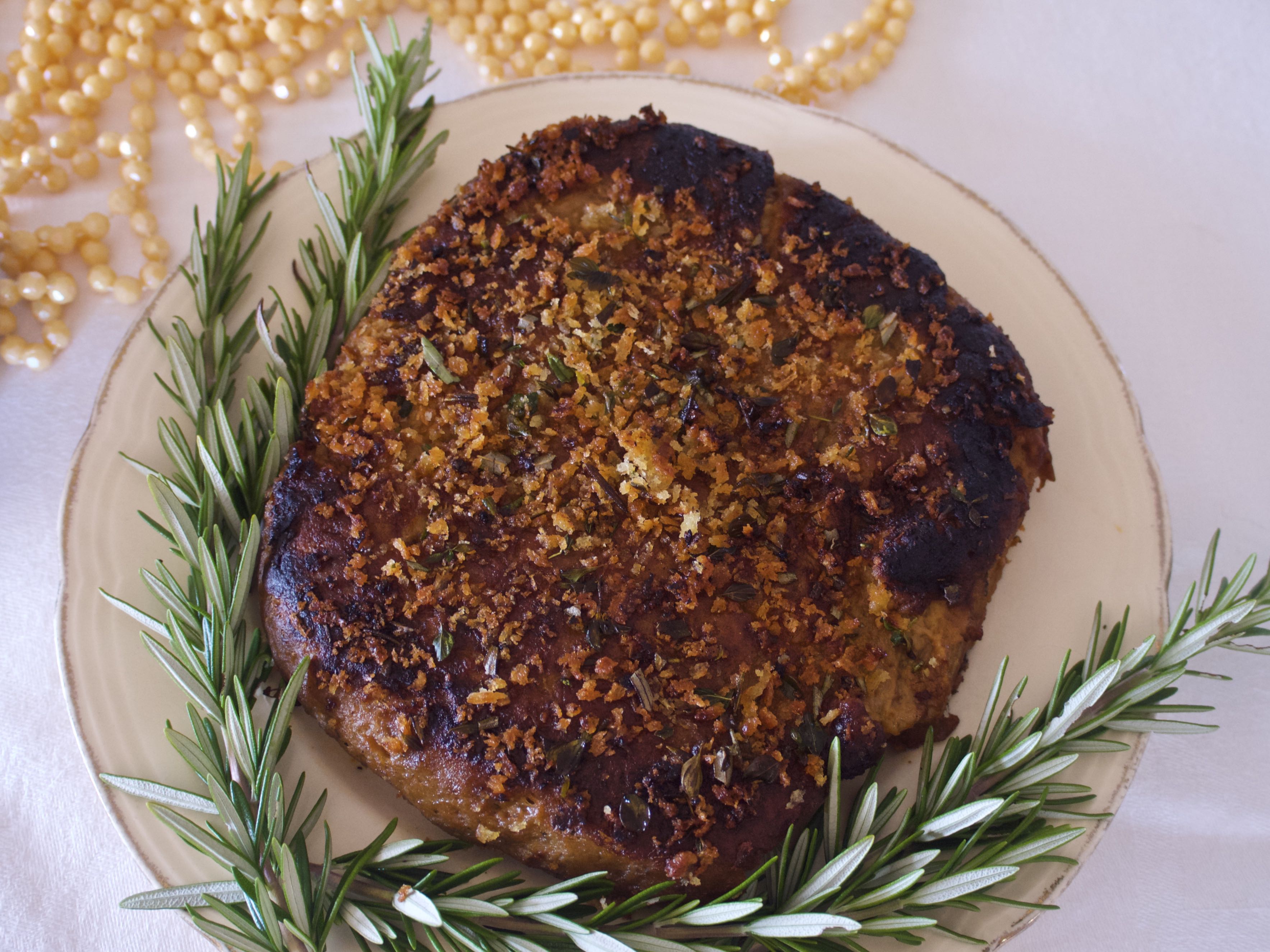
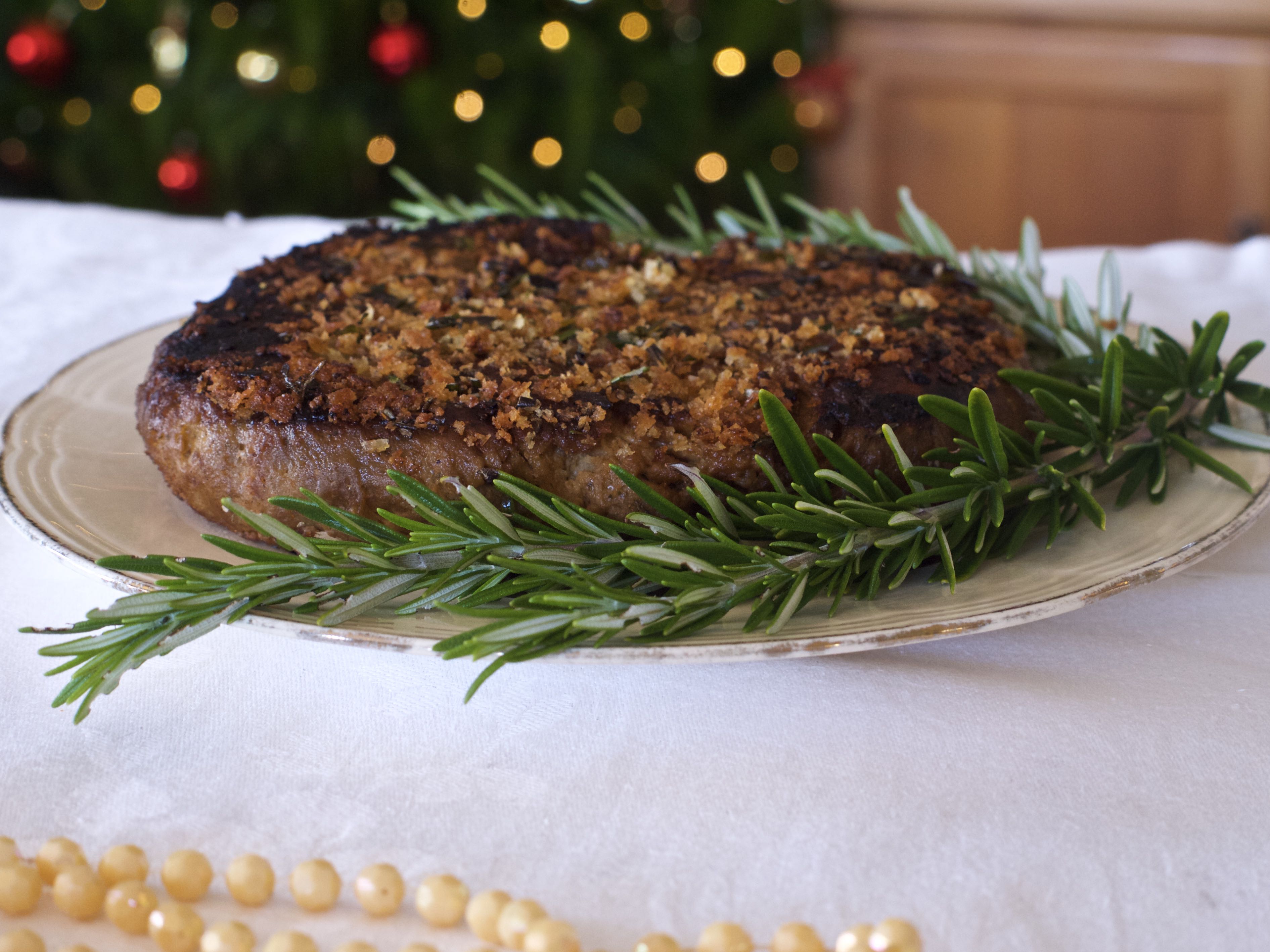
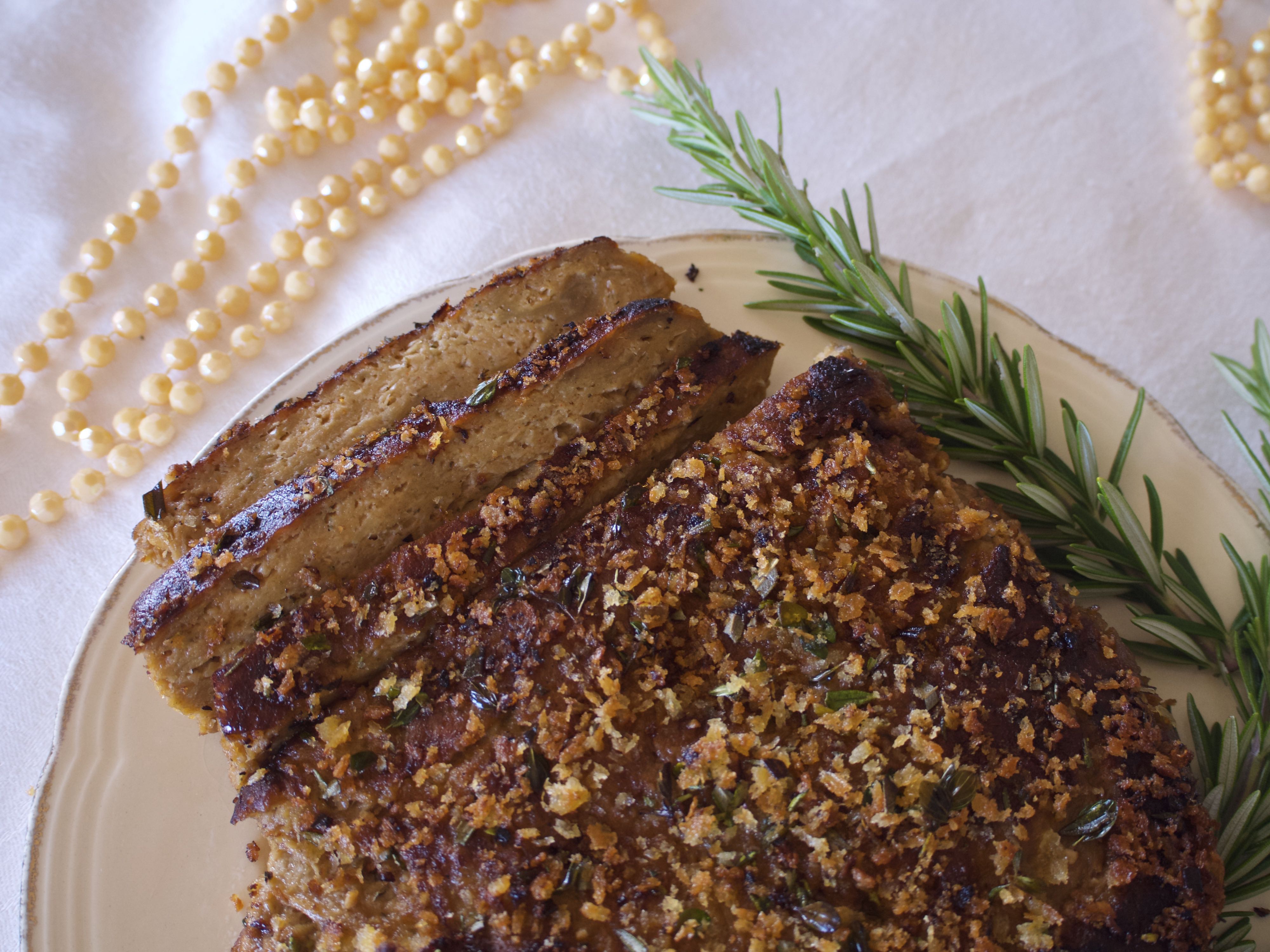
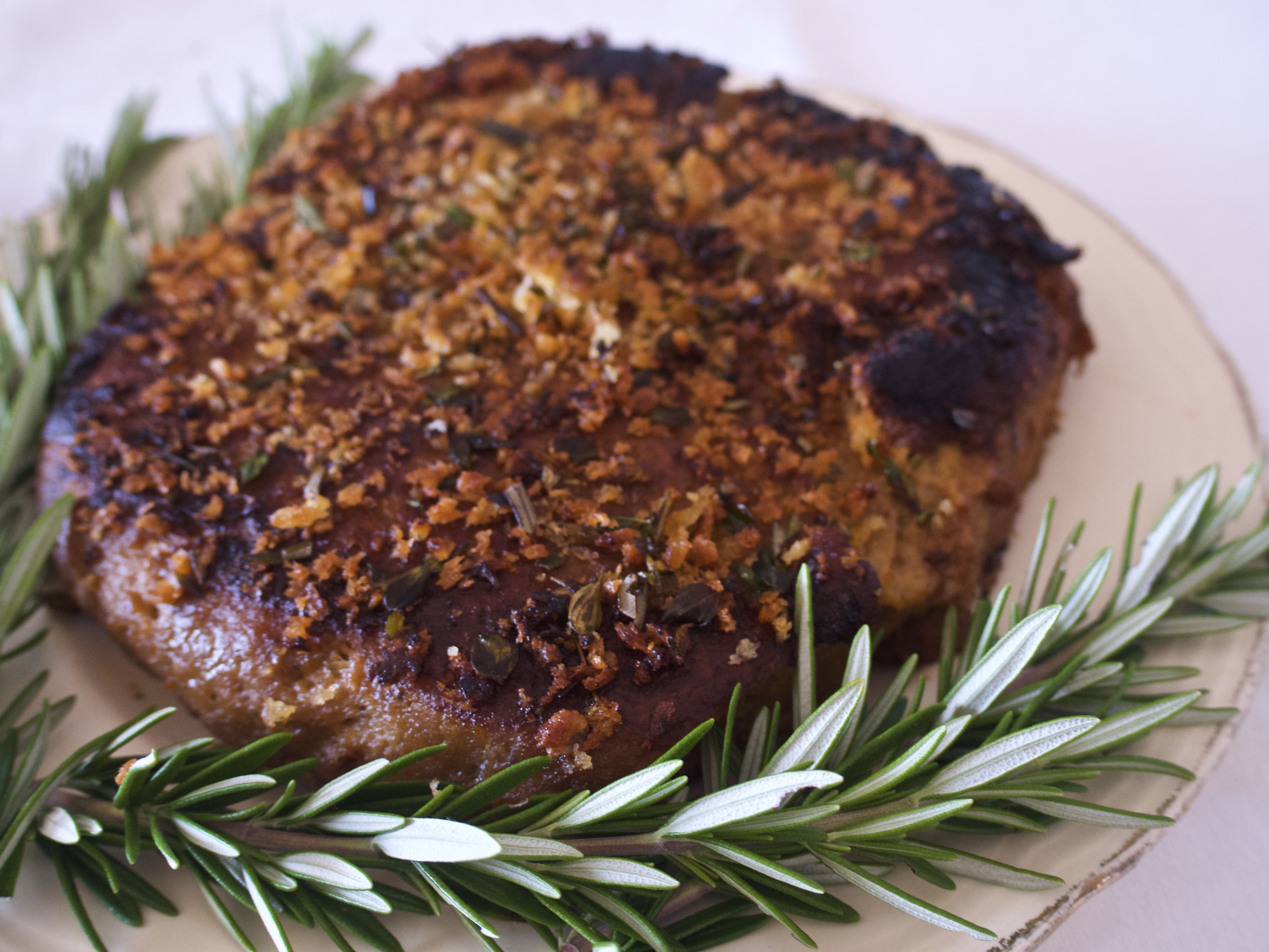
Despite all this talk of Christmas I’ve given it the seitan a more secular title in case you (a) don’t do Christmas or (b) want to make this at any other time, because it is absolutely worthy of being wheeled out year-round. (I also just thought this name was kind of crack up.) Unfortunately I couldn’t resist taking photos festooned with the apricot-coloured eighties Mardi Gras beads from our decorations and the tree lights glowing in the background. The “24 Hour” part is quite literal – you rest the seitan overnight in the fridge – but this is entirely in its, and your, favour. First of all, it means you can just pull it from the fridge and briefly sear it on Christmas Day – or whenever you want to eat it – meaning minimal on-the-day toil for you. Resting it also significantly improves the flavour, and I assume, being largely made of gluten, it must do something for the texture as well.

P1200125

(I actually initially intended this to be sixty hour seitan, imagining that the prolonged relaxation period would do wonderful things for the gluten. And so I rested the dough overnight three times – after kneading, after cooking, and after searing. Unfortunately the dough relaxed so hard that it was essentially sedated, positively tranquillised, and had a texture akin to partially solidified PVA glue. And yeah, I contritely ate it all before returning to the drawing board. Excess: sure! Wastefulness: no!)

Seitan is, more or less, a meat substitute made from gluten flour, which is, contrary to how it sounds, extremely high in protein. The gluten flour, when combined with some kind of lengthener – in our case, pureed cannellini beans – kneaded, and steamed or simmered, forms a chewy, dense, flavour-absorbing mass, with the kind of toothy bite and texture one might associate with the memory of meat. The longer I continue with this vegan thing, the less necessary it seems to describe food with its proximity to meat, but I realise it’s helpful to know what you’re getting into. Ultimately, to me, seitan is seitan: an ideal main ingredient and when done well, incredibly delicious. And although you could make various risottos or pastas or just eat the roast vegetables on Christmas Day, it’s sometimes nice to have something on offer which matches what everyone else is eating.

The size of the recipe may appear needlessly fiddly but it’s mostly because I like to really explain every step to make sure you’re okay with it, as opposed to the method itself actually being arduous. When you break it down, it’s just three steps: making the dough, steaming it, and then giving it a final caramelising sear. I’ve included finely shredded jackfruit to add even more fibrous texture, plus a proprietary, specific blend of spices and flavourings to make it taste the way it does: savoury, herby, perfectly salty, rich, pinging with umami, with a crisped, chewy crust. It looks fabulously celebratory sitting on a plate strewn with rosemary ready for carving – a Christmas offering you can be proud to call your own. I would strongly suggest a sauce alongside this – basil pesto, aioli with horseradish stirred in, cranberry sauce, mint sauce or, of course, plenty of gravy, would all be ideal. Even just wholegrain mustard would be excellent. And I can’t even tell you how good the leftovers taste, cold, the next day.

P1200128

24 Hour Party Seitan

The very best seitan I’ve ever made, ready for Christmas Day dinner or any time you need to impress someone.

  • 1 x 400g can jackfruit in brine
  • 1 x 400g can cannellini beans
  • 1 vegan chicken stock cube (I use and heartily recommend the Massel brand)
  • 1/2 cup water
  • 1 teaspoon dried celery (or, a dash of celery salt)
  • 1 teaspoon Chinese Five-Spice powder
  • 1 tablespoon ketchup/tomato sauce
  • 1 tablespoon paprika
  • 1 tablespoon Maggi seasoning/liquid aminos or soy sauce (Maggi is preferable)
  • 1 tablespoon golden syrup, maple syrup or treacle
  • 1 tablespoon fresh rosemary leaves, finely chopped
  • 1 tablespoon fresh sage leaves, finely chopped
  • 2 and 1/2 cups vital wheat gluten
  • 2 tablespoons nutritional yeast

To serve:

  • 4 tablespoons olive oil
  • 4 tablespoons panko breadcrumbs
  • 1 tablespoon fresh rosemary leaves, finely chopped
  • 1 tablespoon fresh thyme leaves
  • a pinch of salt and plenty of freshly ground black pepper

1: Drain the jackfruit. Remove any of the seeds (I just ate them.) Finely shred, with your fingers, the feathery softer parts of the jackfruit, and finely slice the more firm parts lengthwise. Set aside.

2: Drain, but don’t rinse the cannellini beans, and place them in a small mixing bowl along with the vegan stock cube and water. Puree until completely smooth using a stick blender. Alternatively, you can puree this in a blender or a high speed food processor, making sure you keep blending until it’s very smooth with no visible beans left. Stir in the celery, ketchup, Maggi seasoning, and golden syrup, and the shredded/finely chopped jackfruit. It’s important that you add the jackfruit at this point, rather than after the liquid has been added to the gluten, otherwise it will be incredibly difficult to mix it together.

3: In a larger mixing bowl (sorry about the extra dishes here) combine the rosemary, sage, vital wheat gluten and nutritional yeast. Tip in the bean and jackfruit mixture and carefully stir it together to form a ball, then briefly knead it, just until it is firm and springy and quite dry to the touch, and strings of gluten form when you break off a piece of the dough. If it’s a little damp and sticky still, sprinkle over a couple of tablespoons extra of the wheat gluten. It will look (and smell) very unlikely at this point, but bear with me.

4: Place a rack inside a steamer snugly fitted on top of a pan of water. If you don’t have a steamer basket, you could try to engineer one by placing a round metal cake rack inside a metal colander and finding a lid which will fit snugly on top of that. A large bamboo steamer will also work perfectly. Press the seitan dough into a vaguely pleasing shape about an inch or so thick (making sure it can fit inside the steamer.) Cut a piece of baking paper to about the same size as the seitan, lay the baking paper on the steamer rack, and the seitan on top of the paper, and top with the steamer lid. Let the water in the pan underneath come to the boil, and once it is – you’ll be able to hear it and see the steam forming on the underside of the lid – let it steam for a full half hour, without turning. Leave the seitan to cool in the steamer, then place in an airtight container and refrigerate overnight.

5: About half an hour before you plan to cook it, take the seitan out of the fridge. Heat up about a tablespoon of oil in a heavy pan and fry the seitan for five minutes on each side, turning carefully with the help of tongs and a flipper.

6: While it’s on its second side, mix the olive oil, rosemary, thyme, breadcrumbs, salt and pepper together in a small bowl. Press about half into the exposed side of the seitan, carefully turn it over, and cook for another minute or so. Repeat on the newly exposed side with the remaining breadcrumb mixture. Some of it will fall off, which absolutely doesn’t matter. Transfer to a serving plate, and serve while hot.

Makes around 10-12 thick slices. Store any leftovers in the fridge and reheat in a hot pan as necessary.

Notes:

  • You can make this up to three days ahead, but I wouldn’t start it any later than Christmas Eve.
  • Vital Wheat Gluten, sometimes labelled Wheat Gluten or Gluten Flour, should be available from most supermarkets, though if you’re near a Bin Inn I found it there in larger quantities for much cheaper than the supermarket.
  • Some seitan recipes – including ones that I’ve written – call for simmering the seitan submerged in water rather than steaming it. I find the steaming here is better for the texture and flavour, and you don’t have to worry about the bits of jackfruit falling out. Unless it’s absolutely impossible to steam it, I would advise against simmering this particular recipe.
  • This seitan can be used for pretty much anything once it’s steamed – you can stir-fry it, eat it cold, glaze it with various sauces, etc. Sometimes I make a glaze to brush on before searing – usually involving Maggi seasoning, oil, sugar, and Chinese Five-Spice powder.
  • Don’t skip the step where you take it out of the fridge before searing – letting it come closer to room temperature means you can thoroughly brown it on both sides without worrying that the centre will still be ice cold.

P1200122

music lately:

I Enjoy Being A Girl, by Pat Suzuki, from the 1958 Broadway show Flower Drum Song. Unfortunately she wasn’t cast in the later film adaptation – instead the role went to Nancy Kwan who, while very beautiful, had the singing parts dubbed by another singer. Nonetheless, Suzuki’s rendition remains the definitive one, and her voice is incredible – easily enormous, so expressive, with that delicious growl.

Get Up Off Your Knees, by Ethel Waters. There’s something so reassuring yet sexy about her voice, and she had a number of songs from this era (the late 1920s) which were fantastically strident and sexy like this song about a trifling lover (and some songs which were near-outrightly raunchy, in the case of Do What You Did Last Night.)

Sweetness and Light by Lush. Fizzy, feathery, swoony, delicious, listening to this makes exciting things feel possible again.

Next time: Okay so I did make butter out of oats but it also might be time for my annual edible Christmas present round-up.

PS: If you enjoy my writing and wish to support me directly, there’s no better way than behind the claret velvet VIP curtain of my Patreon. Recipes, reviews, poetry, updates, secrets, stories, all yours on a monthly basis.

Sticky Shiitake Yuba with Creamy Double Corn Polenta

IMG_1233

When making or devising vegan recipes, a lot of the time the point is suggesting a prior, existing food — eg, this tastes just like white chocolate! This tastes like pulled pork! I can’t believe it’s not butter! and so on. In choosing to close myself off to several avenues of consuming food, this comes as no surprise. When considering what today’s recipe was supposed to represent, however, I couldn’t come up with anything. It’s supposed to be itself, that’s all. In fact I wasn’t even making it to be blogged about — as you can probably tell from the slightly hasty vibe of the photos — but it tasted so good, that I couldn’t selfishly keep it to myself. Fortunately for me, there’s a current vogue for food photography which looks as though it took place under a yellow lightbulb, but it probably helps to let you know of this trend in case the imagery strikes you as hideous and unwarranted. It’s warranted! Much as prior generations gasp at the antics of the subsequent youth, I can imagine my 2007 self being moderately aghast that the ugly photos I took then out of necessity, due to living in a house as dark and wet as the underside of a lake, might later be recreated on purpose. That being said, the photos I took back then were properly ugly regardless of context, and no, you should not go back into the archives and investigate. I love to brag about how I’ve been blogging for a very long time, less fun is having reminders of what that content actually was.

Anyway, the recipe!

IMG_1236

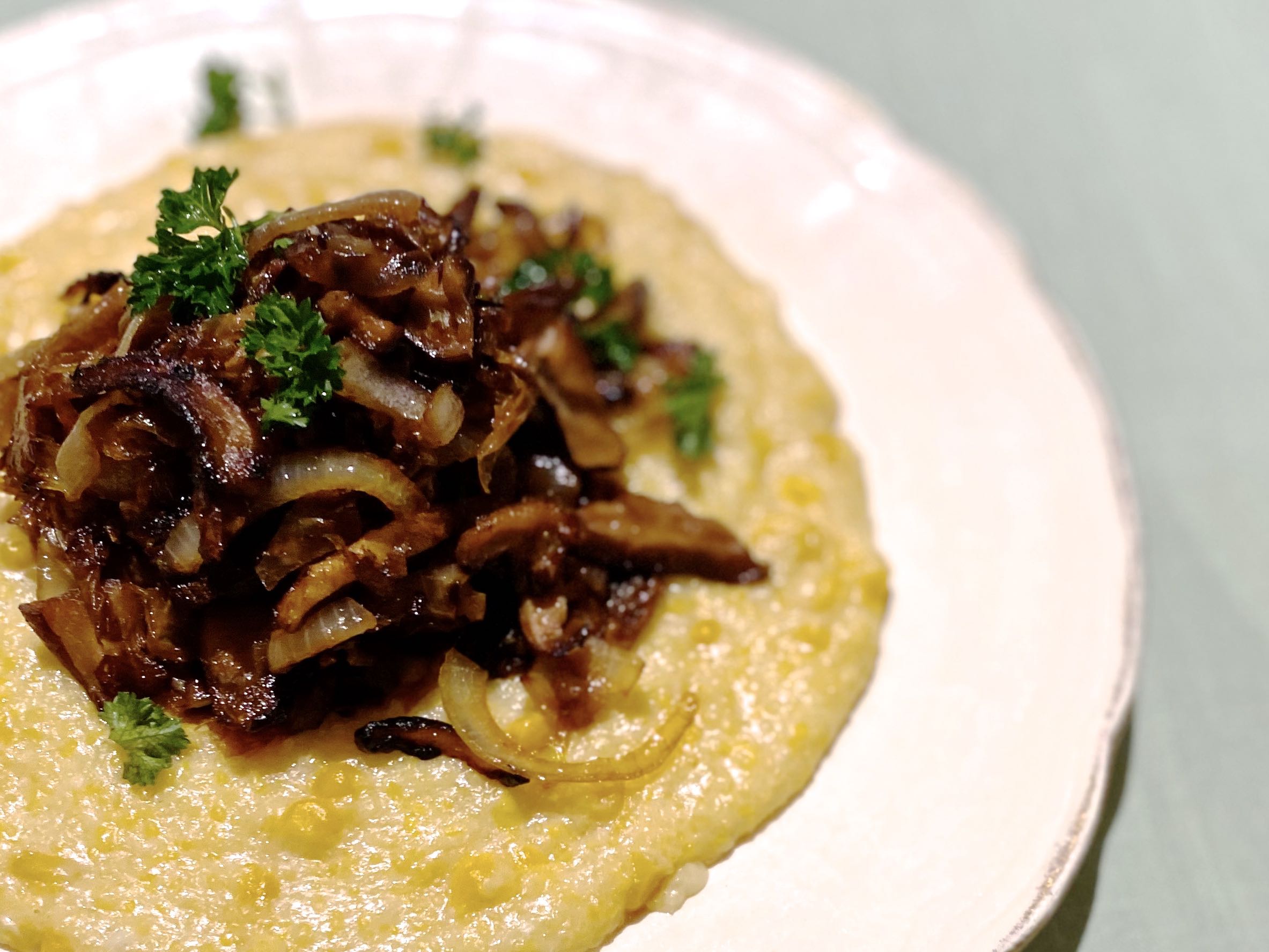
This is a double bill of which you can take or leave either part, but the components work beautifully together. Firstly, yuba — more specifically, the skin that forms on top of the soy milk while making tofu, then sold as a versatile product in its own right — which is marinated in a number of condiments and pastes and fried till stickily dense and chewy in a delicious and elegant salty-sweet tangle of crisp shiitake mushrooms and caramelised onions.

Secondly, the lotion-thick polenta, slowly simmered in coconut cream and stock with corn kernels added for no real reason other than I like corn and that’s my prerogative. If you’ve never had soft polenta before its floppy, porridge-like texture might seem a little disconcerting — is it hard soup? Is it cake batter? Big sauce? But its creamy, rich yielding-ness is wonderfully comforting and a great way of both propping up and absorbing the sauce of other foods in the same way you might use mashed potato. If, on the other hand, you are extremely familiar with polenta then you’ll probably hate my explanation not to mention my untraditional method of mixing the polenta and liquid together before heating it, instead of dropping the polenta into hot liquid and I’m sorry but I refuse to change! Or apologise!

IMG_1226

This recipe would be, I think, an ideal meal if you want to impress someone. I just made it for my brother and me for dinner, but I was pretty impressed with myself, for what it’s worth.

We’re back in lockdown in New Zealand, or at least, we are in my part of the country. Rather than feeling overwhelmed by returning to prior restrictions, I’m glad we have relatively clear leadership deciding this for us. Like, I extremely resist any sense of being part of a “team of five million”, which to me sounds like the realm of people who enjoy ice-breaker games and beep tests, but there’s nothing stopping us not being dicks about it at least. We’ve done this before and it’s not a surprise. We got to enjoy one hundred days free of COVID-19, on borrowed — and unprecedented — time, and now we’re putting in the work again. I’m very lucky that the activities which bring me joy are mostly housebound — knitting, cooking, writing, watching movies, reading – and maybe next time you hear from me I’ll be frazzled and denouncing this calmness, but till then: one hour at a time, one day at a time.

IMG_1232

Sticky Shiitake Yuba with Creamy Double Corn Polenta

Low-key and elegant. Recipe by myself. Serves 2.

  • 1 package yuba (also sold as tofu skin or bean curd skin)
  • 1/4 cup olive oil, plus extra for frying
  • 1 tablespoon liquid aminos or soy sauce
  • 2 tablespoons nutritional yeast
  • 2 tablespoons muscovado sugar (or brown sugar)
  • A dash of your preferred hot sauce, or to taste
  • 1 heaped tablespoon tomato paste
  • 1/2 cup dried shiitake mushrooms
  • 2 large onions
  • 3 cloves garlic, roughly chopped
  • salt and pepper, to taste
  • chopped fresh parsley, for garnish

Polenta

  • 3/4 cup polenta
  • 2 tablespoons olive oil
  • 1 cup coconut cream
  • 1 and half cups water
  • 1 vege stock cube (or your preferred flavour)
  • 2 cloves garlic, crushed
  • 1 can corn kernels, drained (or 1 cup frozen corn kernels)
  • Salt and pepper, to taste

1: First, the prep – place all of the yuba into a medium bowl and the shiitake mushrooms into a smaller bowl. Cover the yuba in cold water and leave for about four hours or until very soft. If the day is warm, cover and put it in the fridge, otherwise just leaving it on the bench is fine. At the same time, since they need to be soaked too, you might as well cover the shiitake mushrooms in boiling water.

2: Drain the soaked yuba, gently squeezing it to remove most of the water. Roll it up on a board and roughly chop into thin strips and shreds. Return it to the same bowl and add the olive oil, soy sauce, nutritional yeast, sugar, hot sauce and tomato paste. Drain the mushrooms, reserving a tablespoon of the soaking liquid, and add this liquid to the yuba. Leave the yuba to marinate for about an hour, and set the drained mushrooms aside.

3: Peel and finely slice the two onions, and fry them in a medium-sized saucepan in a little extra olive oil till quite browned. Turn off the heat, but leave the saucepan where it is.

4: Now for the polenta – mix all the ingredients except the corn kernels together in a saucepan. Bring to the boil, stirring often with a wooden spoon, then add the corn kernels, lower the heat, and allow to simmer for about twenty minutes – stirring quite often – until the polenta has lost any grittiness. You may need to add a little extra water along the way. I like to stir in more olive oil at the end but it’s optional, I am just extremely pro-oil. The level of seasoning is also up to you, but please, do season it.

5: While the polenta is simmering, turn the heat up under the onions again, push the onions to one side of the pan, add a little extra oil, and fry the shiitake mushrooms, allowing them to get browned on both sides. Next, push everything to the side and add the yuba along with its marinade, and the chopped garlic cloves, and stir over a high heat for a couple of minutes. The yuba should be sticky and chewy, and a little shrivelled in places, for want of a better word.

Spoon the polenta onto two plates, and divide the yuba mixture between them on top. Sprinkle over the parsley.

IMG_1228

music lately:

Blue Eyes Crying in the Rain by Harry Dean Stanton. A classic, from a classic.

Nel Blu Dipinto di Blu by Dolores Duran — a song often recorded under a name you might be more familiar with: Volare. Duran’s voice was stunning — smoky and rich with a comforting heft which belied her young years.

PS: If you enjoy my writing and wish to support me directly, there’s no better way than behind the claret velvet VIP curtain of my Patreon. Recipes, reviews, poetry, updates, secrets, stories, all yours on a monthly basis.

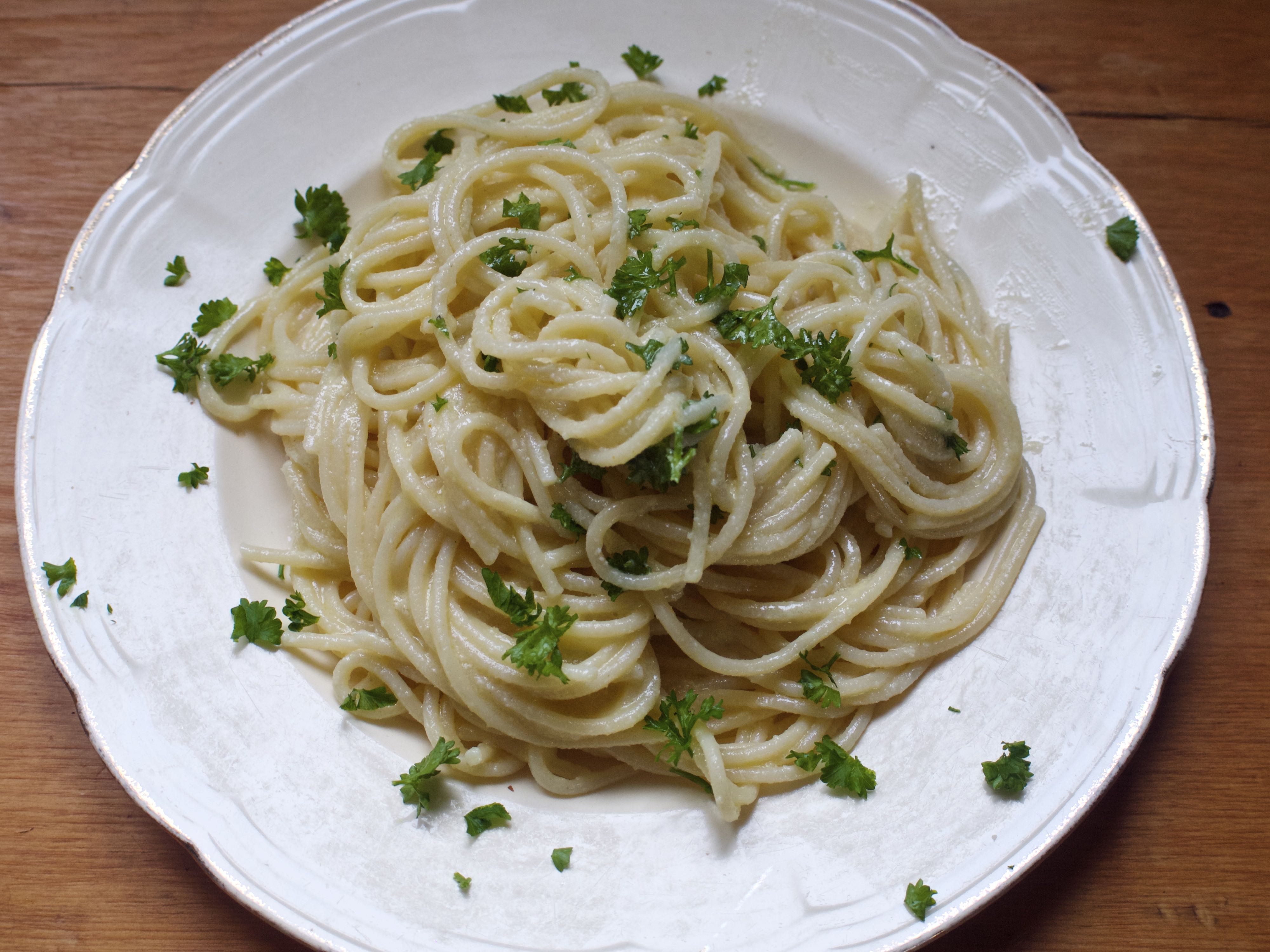
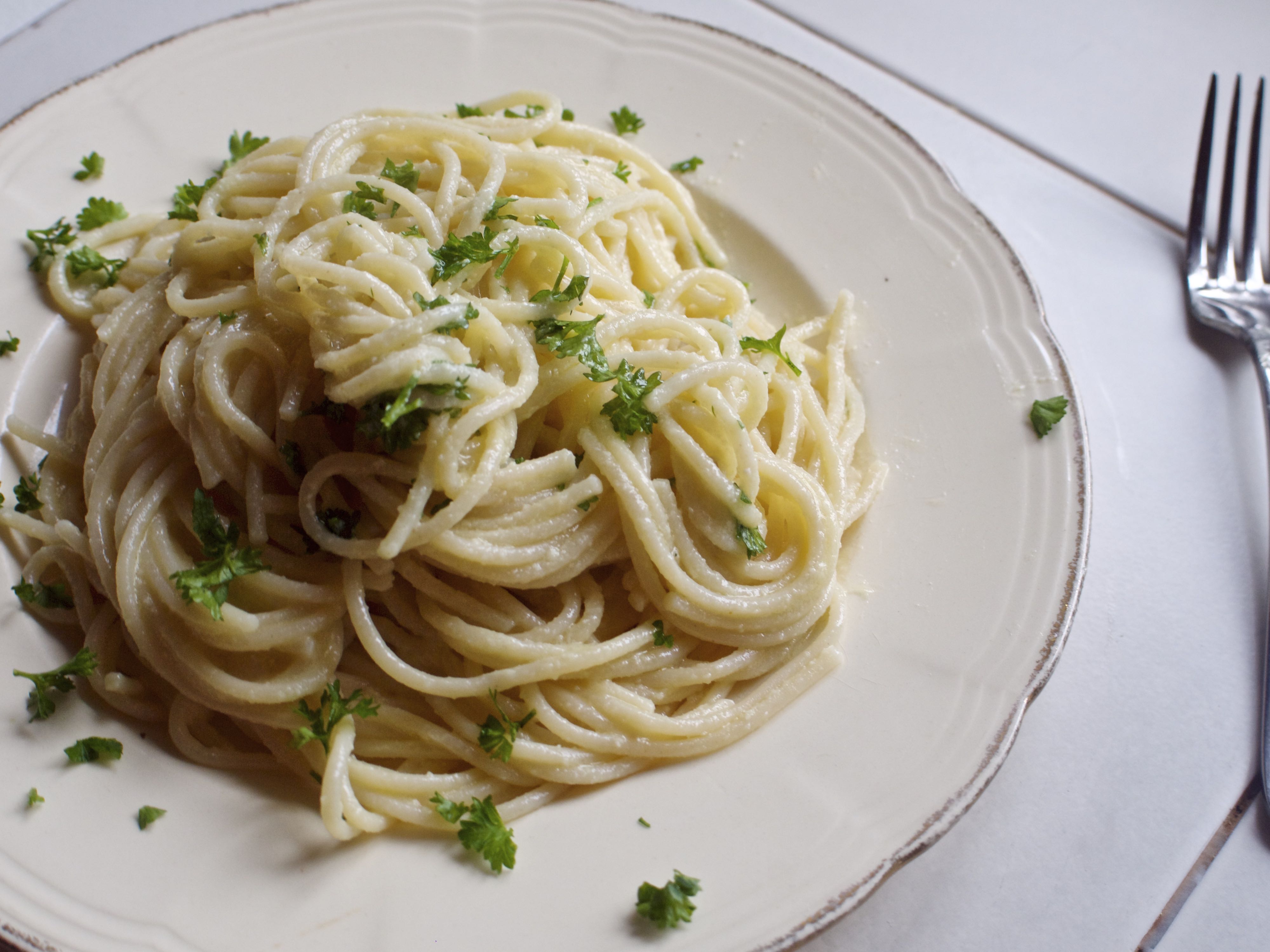
Spaghetti with Horseradish Butter [Vegan]

I took some time out from blogging over the past fortnight because it didn’t sit right with me to do normal updates as though an enormous uprising wasn’t happening in America in response to police brutality, murder, and systemic oppression of Black people. That uprising is so enormous — so powerful — that there was nothing else worth knowing about. Frankly, I didn’t want to hear my own voice. I’ve been donating to bail funds, signing petitions and doing a lot of reading, and — in order of their usefulness — I encourage anyone and everyone to do the same and to reflect hard if reflection is needed, and if you want any recommendations or thoughts just ask me! There are parallels between the failures of America and the failures of our own police force in New Zealand and the specificity of the Black Lives Matter cause to America doesn’t mean we’re removed from its impact. This is not a definitive statement on what’s going on or what the best response is — but just as much as I needed to shut up for a while, now I need to not, you know?


P1190924

This recipe for spaghetti with horseradish butter was domiciled in my brain for a long time — actual months — before I had the opportunity to make it. Despite being mostly at home during the various levels of lockdown I was never quite alone, and this was a recipe I knew I had to make alone — in case it was terrible, so no one else would be marred by the experience — or in case it was incredible, so I could selfishly yet serenely enjoy its abundance all to myself. Happily, it was the latter. Quite incredible.

Horseradish belongs to a particularly brusque family which includes wasabi, mustard, cabbage, broccoli and radishes, so even if you’ve never tried it this should give you some clue as to its flavour — clean, grassy, and more sinus-exfoliating than Buckley’s Canadiol expectorant, if consumed in large quantities. There’s a delicacy to horseradish though, a sort of gauzy pepperiness that cuts through richness in an elegant way, thus making it perfect for this simple buttery pasta. That being said, this sauce would be equally delicious made with wasabi or mustard instead.

P1190923

The butter is quickly made in a blender — based on this recipe I blogged about last year — and it’s fulsome and creamy and, well, buttery, or at least as close as my tastebuds can recall butter to be from the times before I was vegan. Any sharpness from the horseradish is mellowed out by the flood of richness from the coconut oil, but then any overwhelming richness from said oil is tempered with just enough harshness from the horseradish.

The quantity of butter this recipe makes could absolutely be sufficient for two people’s worth of spaghetti — perhaps even three — although I wouldn’t want to make that call personally. Much as I love it, I understand horseradish can be a somewhat divisive flavour — so perhaps it’s for the greater good if you make this just for yourself, too.

P1190919

Spaghetti with Horseradish Butter

A recipe by myself.

  • 2 tablespoons almond milk
  • 2 tablespoons ground almonds
  • 1/4 teaspoon vinegar (I used malt, cider or red wine would be good too)
  • 1 heaped tablespoon grated horseradish, from a jar
  • 4 tablespoons coconut oil, melted
  • 2 tablespoons extra virgin olive oil
  • a pinch of salt
  • 100g spaghetti or dried pasta of your choice
  • 1-2 tablespoons fresh parsley, for garnish

1: Either in a high-speed blender or using a stick blender in a small bowl, blitz the almond milk, ground almonds, vinegar and horseradish. You can also add a pinch of turmeric for colour if you like. It might feel a bit ineffectual blending such a small quantity of liquid but it will come together when you add the oil.

2: Add the oil and salt and blend thoroughly for about thirty seconds or until the mixture is thick and smoothly pureed. If you are using a stick blender, drizzle it in slowly as you’re blending, but if you’re using an actual blender just chuck it all in. Taste to see if it needs more salt, and refrigerate while you make the pasta.

3: Bring a large pan of water to the boil (or: boil the kettle and then tip that into your pan, which is much faster) and salt generously. Once the water is boiling, tip in the pasta and cook for ten to twelve minutes or until tender.

4: Drain the pasta, retaining about 2 tablespoons of the cooking water. Stir in as much of the horseradish butter as you like – I used the whole lot – along with a little of the cooking water, the starchiness of which will cohere with the butter to form a delicate sauce.

5: Serve, sprinkled with the parsley. Serves 1.

Notes: You can use refined or unrefined coconut oil successfully here — unrefined will give a slight coconut flavour, but I guess we’re used to that by now. You could try making this with a different plant milk but almond’s neutral (dare I say nonexistent) flavour works best here — if that’s not available I would go for rice milk instead.

P1190921

music lately:

Efuge Efuge, by Stelios Kazantzidis. As they say in the youtube comments, The Wire season two brought me here, and this song is so enigmatic — especially that mournful yet body-motivating chorus.

Germ Free Adolescents by X Ray Spex. Ugh I love this song, the way Poly Styrene’s voice cracks and then soars, it’s so grim yet so uplifting, like a — I don’t know, all I can think of is watching an albatross fly over the setting sun but then it swoops down and kicks you in the face and then flies off again and you’re like, “you know what, that belligerent albatross probably had their reasons,” because it’s so beautiful.

King of the World, by Billy Porter from the off-Broadway musical Songs for a New World. Porter was part of the original cast but due to a contractual conflict he didn’t appear on the cast recording — fortunately he recorded a version of this glorious song for his 2005 live album At the Corner of Broadway and Soul. Even in audio form you can feel his acting — but the singing! In that final chorus! When he inverts the melody and throws it towards the sky! Like a non-belligerent albatross!

PS: If you enjoy my writing and wish to support me directly, there’s no better way than behind the claret velvet VIP curtain of my Patreon. Recipes, reviews, poetry, updates, secrets, stories, all yours on a monthly basis.

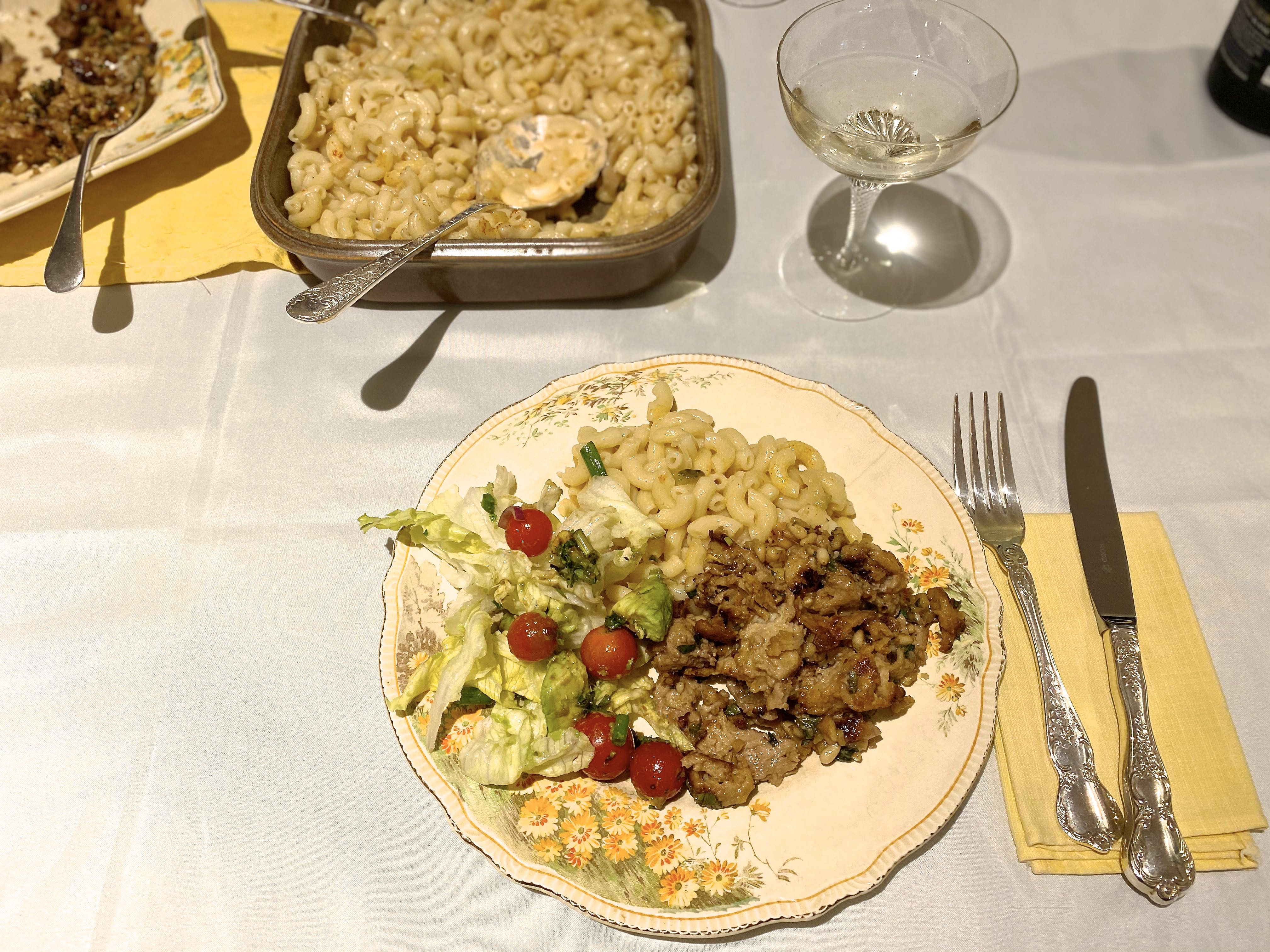
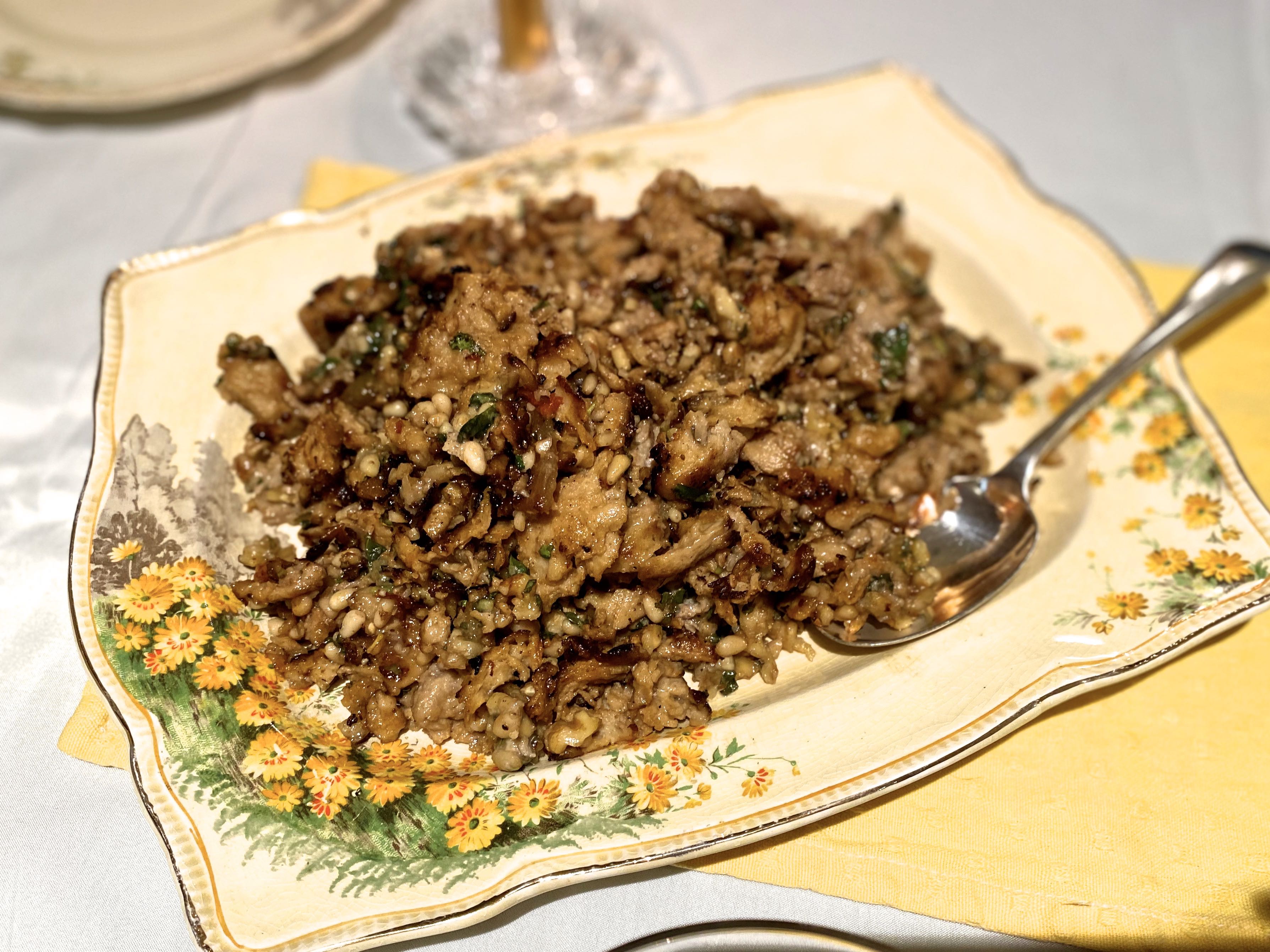
Pesto Seitan

IMG_8870

Even a minute looking at this recipe for seitan would completely put me off as it appears a mile long and every inch of it arduous, and there’s no real way to convince you it’s quite straightforward other than attempting to distract by waving lots of lengthy adjectives about. Frankly, I’ve not seen a single seitan recipe that doesn’t make the entire process seem like a gigantic pain in the skull and I doubt mine is doing anything to mitigate this — but it really, honestly, is a lot easier to put together than it is to read about.

As far as I can tell there’s no streamlining the three main steps – mixing the dough, simmering the dough, then actually cooking it as you intended — but once you have your head around these steps you can face the process with exuberance in your heart. When I first made this I just used gluten flour and water, with no added protein in the form of cannellini beans, and it was fine, but very springy — the pureed beans give the seitan a more relaxed texture, and they also make your gluten flour go further since it’s weirdly expensive here at $9 a package. You may rightfully be suspicious at how there’s very little seasoning in the seitan itself, but I’ve found it’s easier to get the flavour in during the marinading process than it is at the start, where the gluten flour muffles every effort at making it taste like anything other than hard bouncy flour.

IMG_8868_2

You can of course dial back my recipe by leaving out the pesto element — this was part of my birthday dinner last month (and you can also see the Triple Pickle Macaroni in the photos) and pesto remains as thrilling to me now as it did back in 2003 when I first learned of its existence. If you’re not making it a la pesto, then I would enthusiastically suggest adding lots of chopped fresh rosemary and thyme to the marinade, their resiny robust fragrance is an ideal pairing with the seitan.

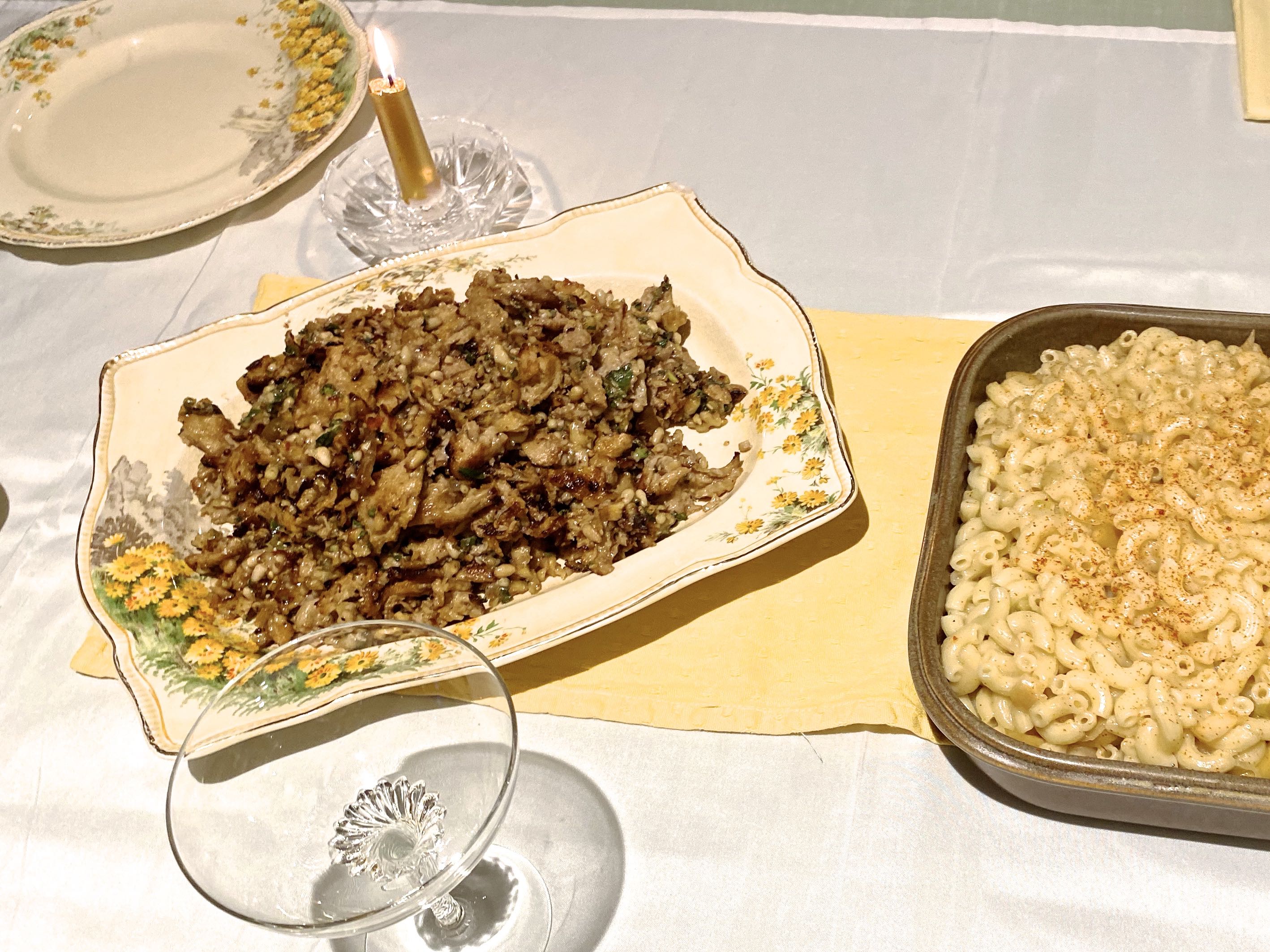
It’s not that seitan tastes like meat, it doesn’t. As soon as I start trying to describe it — firm, chewy, slightly fibrous — we get back into off-putting territory, but there really is something amazing about its texture. The gluten gives a mild flavour, slightly nutty and rich, a foolproof backdrop for whatever flavour you wish to have cling to. Basically: it tastes of culinary potential. Once marinated in a salt-fat-acid-heat mixture, then fried vigorously till crisp-edged and caramelised, with the rubble of hand-chopped pesto stirred through — it becomes particularly luxurious and opulent. It reminded me of the canned mock duck which I used to consume at great length and which, in lockdown, I lamentably haven’t been able to get hold of — this is, perhaps, the highest praise I can offer. Therefore, truly worth the hassle. That being said, if you are, unlike me, able to get hold of the Wu Chung canned mock duck? Put your feet up and ignore everything I’ve just said, because dinner is served.

IMG_8883

Pesto Seitan

A recipe by myself.

Seitan

  • 1 x 400g tin cannellini beans
  • 1 and 1/2 cups vital wheat gluten, also sold as gluten flour (the brand I used was Lotus Gluten Flour which I found at my small local New World)
  • 1/2 cup water
  • 1 vegan chicken stock cube (or whatever flavour you want)

Marinade

  • 3 tablespoons olive oil
  • 2 tablespoons brown sugar
  • 1 tablespoon malt vinegar
  • 1 tablespoon tomato paste
  • 1 teaspoon cumin
  • 3 garlic cloves, crushed
  • 1 heaped teaspoon Marmite or 1 tablespoon soy sauce
  • 1/2 teaspoon celery salt
  • pinch cayenne pepper or a dash of chilli sauce

Pesto Sauce

  • 2 large handfuls fresh basil leaves
  • 1/2 cup pine nuts, toasted
  • 1/2 cup walnuts, toasted
  • 2 heaped tablespoons tahini
  • zest and juice of a lemon
  • 1/4 cup olive oil (though you may wish to add more)
  • 2 cloves garlic, crushed
  • salt, to taste

Step One: Mix and Simmer the Seitan

1: Blend the drained cannellini beans in a food processor until smooth. You can mash them with a fork if need be, but it’s a lot harder to mix into the flour if not completely pureed. Transfer to a bowl and add the gluten flour, 1/2 a cup of water and half the stock cube, stirring briefly till it forms a solid ball – this won’t take very long, and only add more water if there’s too much flour remaining. Knead it for a minute – pushing away and pulling back with your palms and knuckles – it should feel quite dense and solid.

2: Cut the ball into four even pieces (the size and quantity isn’t that important, it’s just to make it easier to simmer.) Place the seitan and remaining half a stock cube in a large pan and cover with water by a couple inches. Bring the water to the boil, and then simmer for about fifteen to twenty minutes, stirring often. The seitan will swell up alarmingly, which is why you need to keep an eye on it, but it will deflate once the water is drained.

3: Thoroughly drain the seitan – I put it in a colander and then press down with the pan I’ve just cooked it in – and set aside till you’re ready to cook dinner. I quite like to leave it overnight in the fridge, it seems to improve the flavour and texture, but I also very, very, very rarely think that far ahead, so don’t worry too much. It helps, once the seitan has cooled, to squeeze it out a bit over a sink – but don’t stress too much, any remaining water will evaporate in the hot saucepan.

Step Two: Make the Marinade and Sauce

1: About half an hour before you want to cook dinner, mix together the marinade ingredients in a medium-sized bowl. Slice the thoroughly drained seitan into small pieces and stir into the marinade, and leave at room temperature for about half an hour.

2: To make the pesto sauce, chop the basil, pine nuts and walnuts finely – doing it in small batches with a large knife is most effective – and mix together in a small bowl with the remaining pesto ingredients. It’s fine if some pine nuts are left whole or larger pieces of walnuts remain. This won’t look like pesto from a jar – it’s supposed to be more rough and textural. Taste to see if it needs more of anything.

Step Three: Fry, Stir and Serve

1: Heat a large frying pan and fry the marinated seitan pieces over a high heat, turning occasionally with tongs, until browned and a little crisp in places. Tip in the remaining marinade and stir for a minute or two.

2: Remove from the heat and stir in the pesto until everything is thoroughly coated.

3: Serve immediately.

Substitution notes: instead of cannellini beans you can use chickpeas or firm tofu — about 150g to 200g, pressed with a paper towel to remove excess liquid, whatever you use just blend it in the same way. Stock cubes can be replaced with soy sauce, or just use more Marmite; use tomato puree or even tomato ketchup/sauce instead of paste. You can add different herbs and spices to the marinade — chopped fresh rosemary goes really well here – and you can use different oil, maple syrup or golden syrup instead of sugar, and any time I mention garlic cloves you can totally use the stuff from a jar. I would, however, make a concerted effort to get hold of some celery salt — it adds something specific and irreplaceable in my opinion! You can increase the quantity of pine nuts in the pesto if you’re feeling rich; and you can add spinach or parsley to the basil.

IMG_8878

music lately:

Savage Remix, by Megan Thee Stallion featuring Beyoncé. Imagine having Beyoncé featuring on your track before you even release your debut album? It makes sense though and I love this for Megan, she’s so enormously talented and fun and if the song wasn’t already the quarantine soundtrack with the ubiquitous accompanying TikTok dance challenge (which I admit, I learned, but did not broadcast) this fresh take has thoroughly invigorated my love of it. I realise what I’ve just written feels extremely 2020, but — here we undeniably are.

Big Iron, by Marty Robbins from his Gunfighter Ballads and Trail Songs album which is so instantly calming yet stirring it’s like being full-body dunked in a bowl of noodle soup.

Tainted Love, Gloria Jones, this is kind of like Rumble by Link Wray in that you listen to it and it’s like does anything else go as hard as this? Why do we bother to continue making music when this exists? Why doesn’t every song have that dun-dun beat in it (as in, “sometimes I feel I’ve got to — dun-dun — run away”) imagine how much better Mozart would be if his Eine Kleine Nachtmusik had this dun-dun after his opening bars?

PS: If you enjoy my writing and wish to support me directly, there’s no better way than behind the claret velvet VIP curtain of my Patreon. Recipes, reviews, poetry, updates, secrets, stories, all yours on a monthly basis.

Triple Pickle Macaroni

IMG_8864

A birthday in lockdown is no great hardship compared to the breadth of suffering and distress worldwide resulting from COVID-19. I also can’t pretend to be winsomely diffident, it took some getting used to — but it was only a very small adversity. There were many positives: I received a lot of love online – and truly, there’s no greater gift than online displays of affection. Would I rather have an elaborate present, or a nice instagram story about how much someone loves me? That’s so unchallenging a question it’s practically rhetorical. (But the answer is the latter, in case I wasn’t clear.) I also got to make dinner for my family, and since making dinner is a pastime I anticipate with irrational vigilance, it was like another gift to me.

IMG_8863

On the menu was pesto seitan, a salad with the final precious avocado for the foreseeable future, and something I call Triple Pickle Macaroni, since, well, that’s what it is. Like all good recipes this idea appeared in my head all at once, fully formed, and all I had to do was make it. I was going to call it a Mac and Cheese because it’s certainly evocative of that wonderful dish, but there’s no actual cheese involved and something in the sheer inelegance of the title Triple Pickle Macaroni cheered me hugely. Now, no matter how defined the image of a recipe is in your mind, the tangible result doesn’t always match up. Fortunately for me, my family, my birthday, and ultimately you: it was so delicious.

IMG_8883

The pickled elements I refer to are sauerkraut, gherkins and pickled apples, each of which tangle into the creamy sauce and provide tangy, biting contrast. With all the sharp-sweet-saltiness going on it almost tastes like there is cheese involved, and in fact — well, I’m only human — I concede it would probably taste particularly great with actual cheese added. Should you have no cheese of any sort to hand, fear not: the Triple Pickle Macaroni is wonderful on its own. Rich, robustly hearty, tasting of lurid kitschy yesteryear and the punctilious present all at once, dense enough to make you sleepy but strewn with enough vinegary bursts of texture to wake you back up again.

In my last blog post I talked about the overwhelming, impenetrable irritability that has grown like a haunted forest around my brain in lockdown. If I may be frank, after some reflection I’m not entirely convinced it’s me being disagreeable — I think people really are just becoming more annoying. I am, however, doing my best to remain sanguine. Turning 34 was not at all what I thought it would be, but it was, all told, a rather happy little birthday, and I’m immensely grateful to everyone who helped make it so.

IMG_8879

Triple Pickle Macaroni

A recipe by myself.

  • 1 x 500g package macaroni elbows
  • 2 tablespoons coconut oil
  • 2 tablespoons olive oil
  • 1/4 cup plain flour
  • 1/2 teaspoon Marmite or half a stock cube
  • 2 cups oat milk or whatever you have
  • 1/2 teaspoon ground nutmeg
  • 1 tablespoon nutritional yeast
  • 1/4 cup sauerkraut
  • 1/4 cup chopped gherkins (or as they’re sometimes simply known: pickles)
  • 1/4 cup chopped pickled apples
  • salt and pepper to taste, plus a little paprika to sprinkle over

Note: I don’t assume you have pickled apples to hand – you can use pretty much anything else you think would work, whether it’s pickled onions, beans, zucchini, whatever. Or just more sauerkraut and gherkins.

1: Cook the macaroni in a large pan of boiling, well-salted water for about eleven minutes or until it’s tender.

2: Meanwhile, stir the coconut oil, olive oil, flour and Marmite together in another pan over a medium heat, continuing to stir for about five minutes or until it’s somewhat thickened. Slowly add the oat milk, continuing to stir the whole time. Let it simmer away over a low heat, stirring often. It should be fairly thick and saucy but still plausibly able to coat a whole lot of pasta at this point, add more milk if it gets too thick.

3: Stir in the nutmeg, nutritional yeast, and all the pickled ingredients. I’ve suggested 1/4 cup of each as a starting point but you can absolutely add more, indeed, I encourage it.

4: By this point your pasta should be cooked. Drain the macaroni, reserving about 1/2 a cup of the cooking water, which you then add to the simmering sauce. Taste the sauce to see if it needs more of anything, then stir through the drained macaroni. Serve sprinkled with a dusting of paprika.

This makes a LOT, and will serve four people very generously with plenty of leftovers, and probably up to eight people as a side. 

IMG_8867

music lately:

I Want You To Love Me, by Fiona Apple. The only thing better than public displays of love on my birthday is Fiona Apple releasing a brand new album. This is the first song on Fetch The Bolt Cutters and it arrives with a clatter of piano keys and Apple’s throaty voice and her lyrics which have the emotional effect of being suddenly kicked behind the knees: Whenever you want to begin, begin/We don’t have to go back to where we’ve been/I am the woman who wants you to win/and I’ve been waiting, waiting for you to love me.

Simon Zealotes, from the musical Jesus Christ Superstar, covered by Ledisi. Very specifically, I’ve been listening to the stretch between 2:12 and 3:09 over and over where she sounds especially incredible, and I strongly encourage you to do the same, I wish the whole song consisted of this bit.

Cheree, by Suicide, I love this song so much, it’s kinda creepy and yet makes it feel like the world is full of possibilities all waiting for you to discover them, which is, you must admit, a rare combination to pull off.

PS: If you enjoy my writing and wish to support me directly, there’s no better way than behind the claret velvet VIP curtain of my Patreon. And if dovetailing is something you’re keen on, then there’s truly no better time than at this close proximity to my birthday.