
Some years ago I posted a recipe for a vegan variation on gochujang bokkeum, a Korean fried chilli sauce, and though I’m no longer vegan, the sauce in this iteration has lost none of its monumental appeal. Here I’ve simply stirred it through wide, chewy noodles with some flash-wilted greens and a hazy splash of liquid smoke; it makes for a dinner of such wild splendidness that even though it’s something of a retread; it does both bear repeating and stand alone on its own merit. Indeed, I’ve made a slight variation of this three times this weekend alone because it has thrice been the exact correct answer to ‘what should we have for dinner’, prosaic though that is.
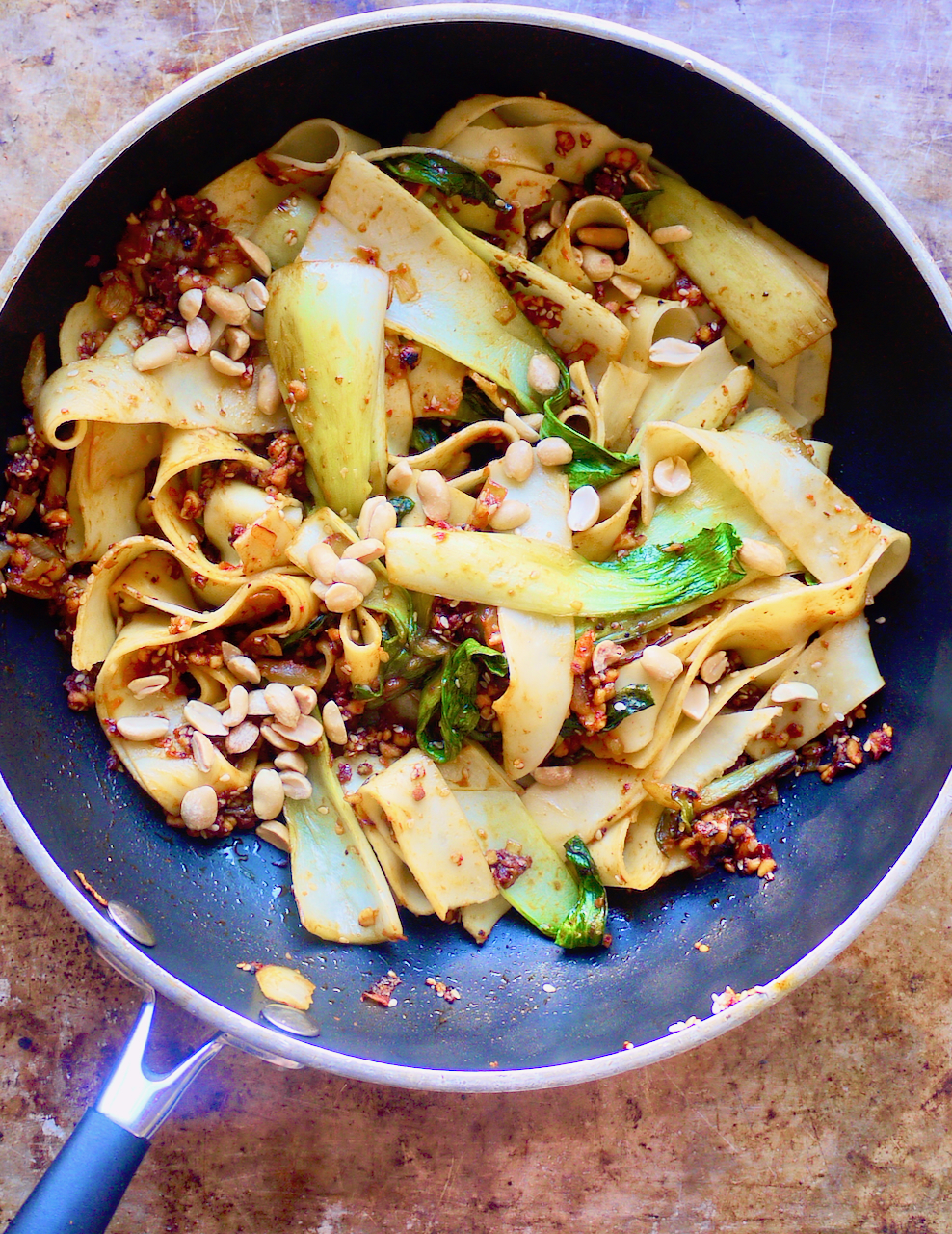
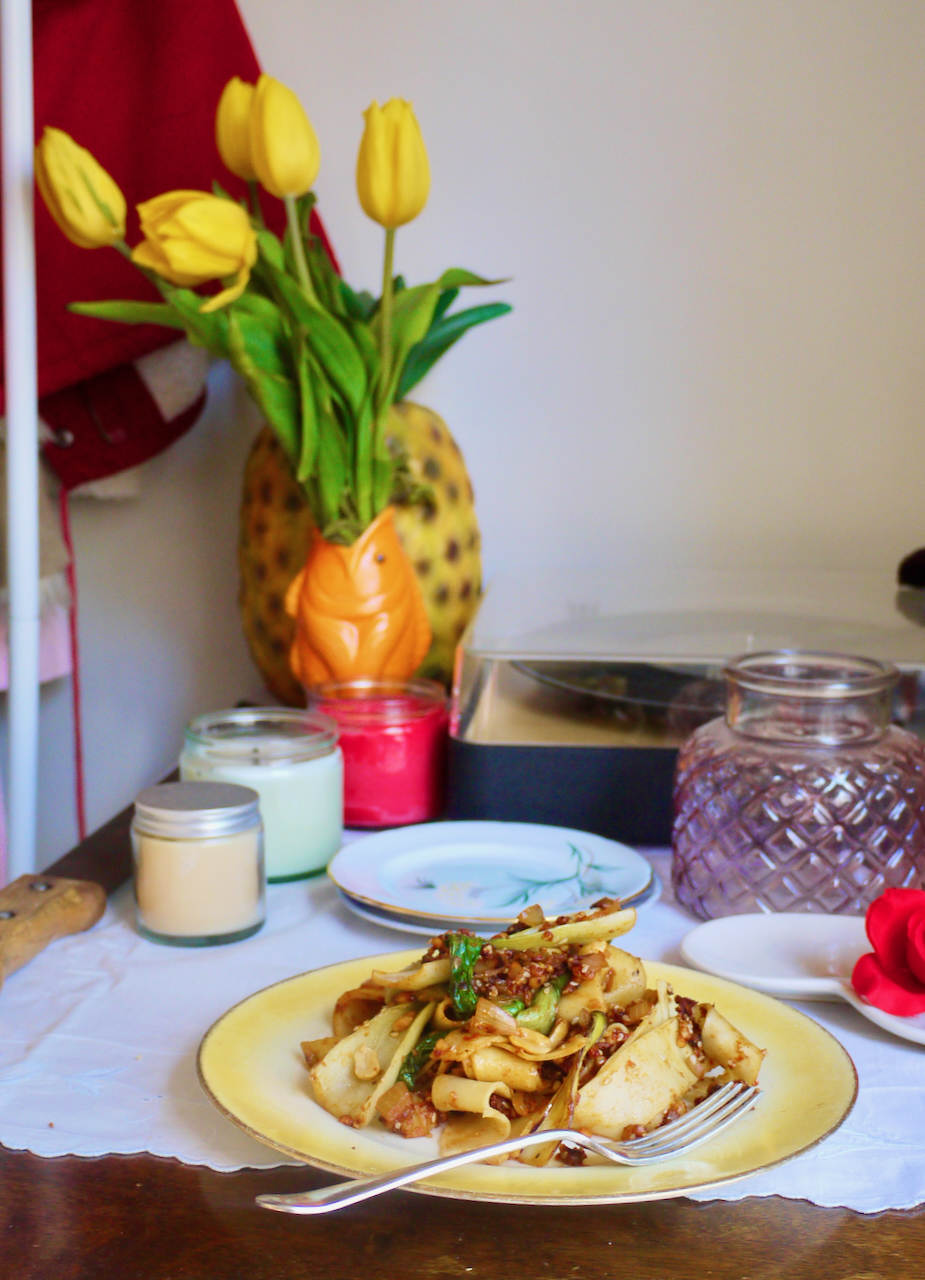
I recently learned of the Critical Path Analysis method; which—more or less—determines the most condensed way of completing the most tasks at once that you need to get from A to B. It’s hard not to consider it in all actions—even if it doesn’t actually make it to the undertaking of said actions—but it really comes into its own while cooking. In this case, you blend the sauce while wilting the greens; you boil the water for the noodles while frying the sauce, and this somewhat breakneck approach makes this recipe remarkably quick to make. Alas, the Critical Path completely fell apart when I came to photographing these noodles: as I am wont to complain, I have about twelve viable minutes of personal time each week with which to take blog photos, and this weekend was grey and overcast—hence the somewhat strenuous lighting—and in my flustered haste, I completely forgot to include the very edamame beans that I’d set out that same morning to specifically purchase. I can’t say for sure that they would’ve remarkably improved the photos, but given that my options were to wait another week for my twelve minutes of spare daylight time, or continue with the beanless and murkily-lit photos I already had, I chose the path of least resistance. Please bear with me and kindly imagine there are both edamame beans and soft, diffused natural light dappling their rotund green bodies.
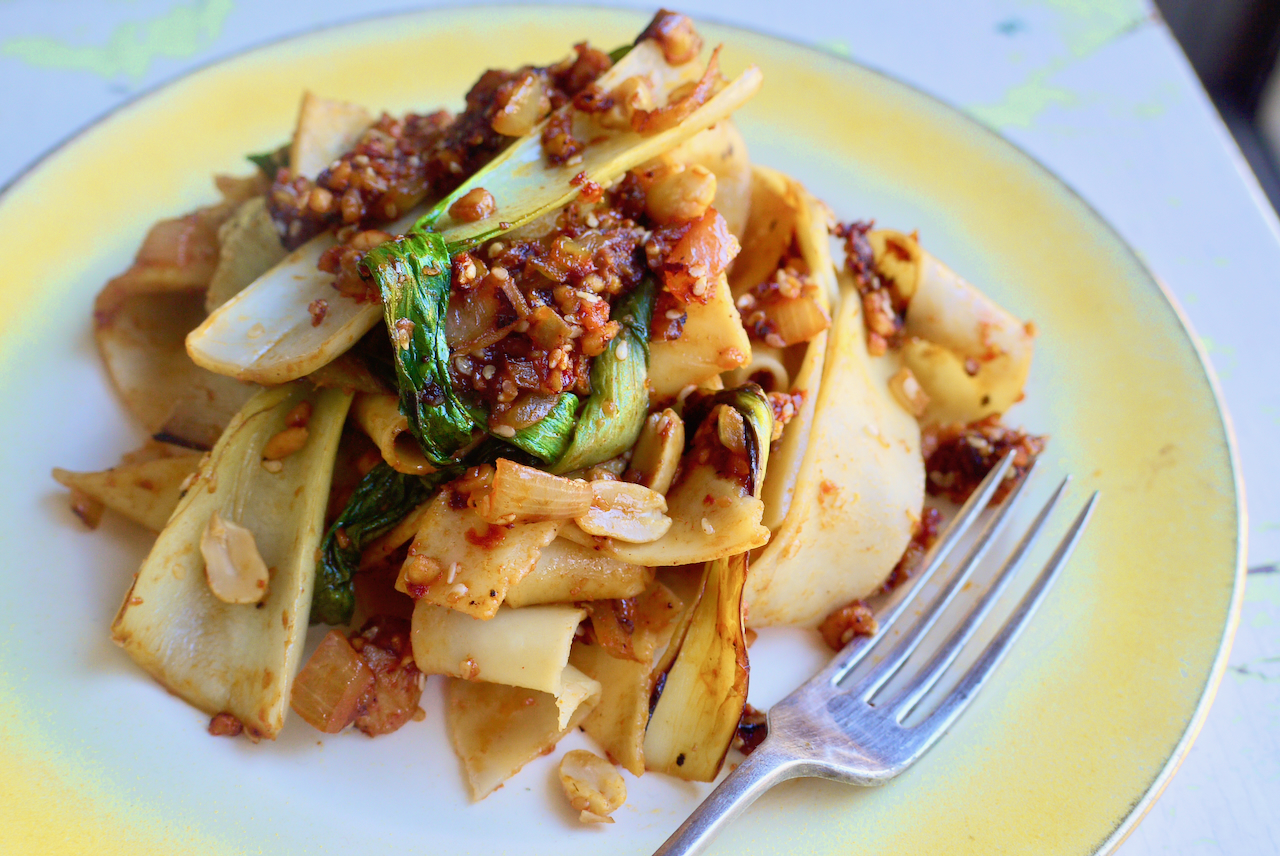
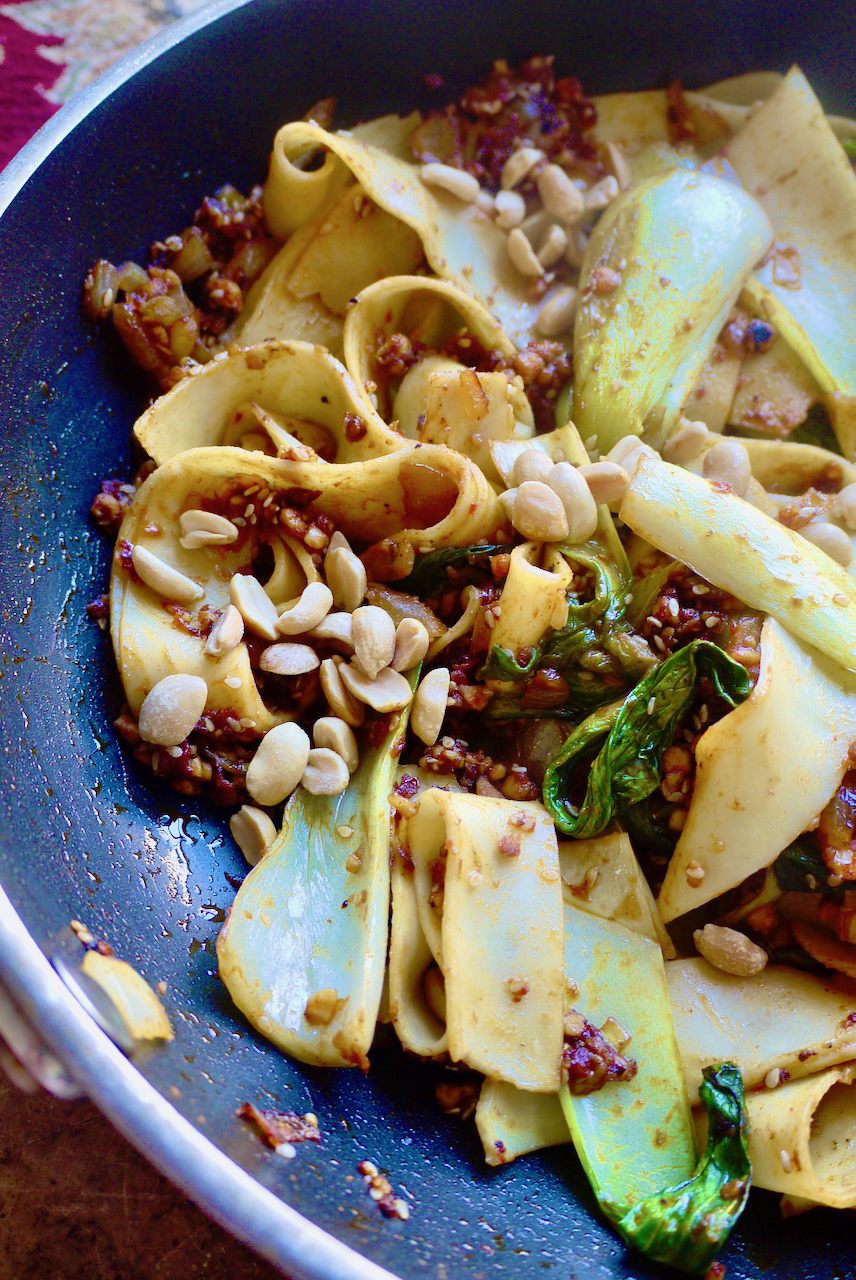
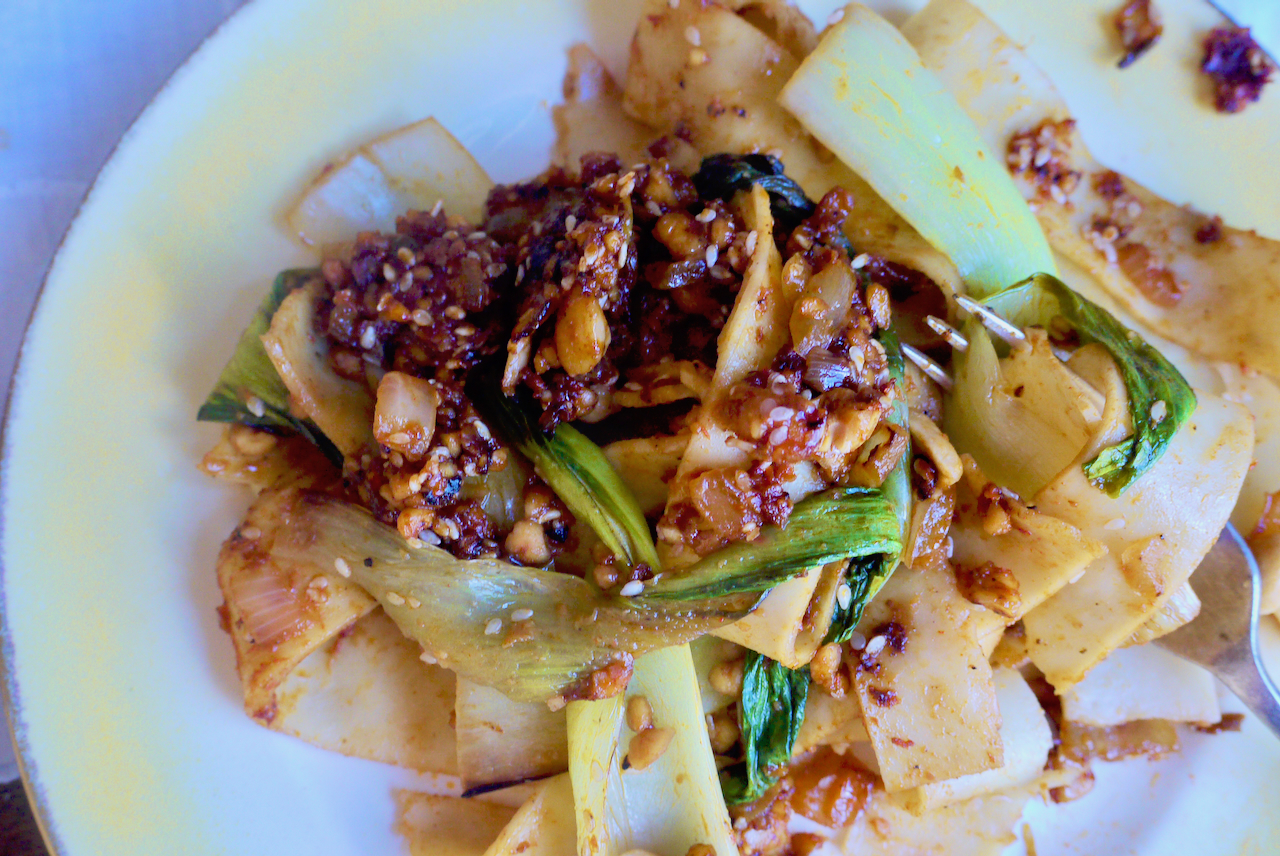
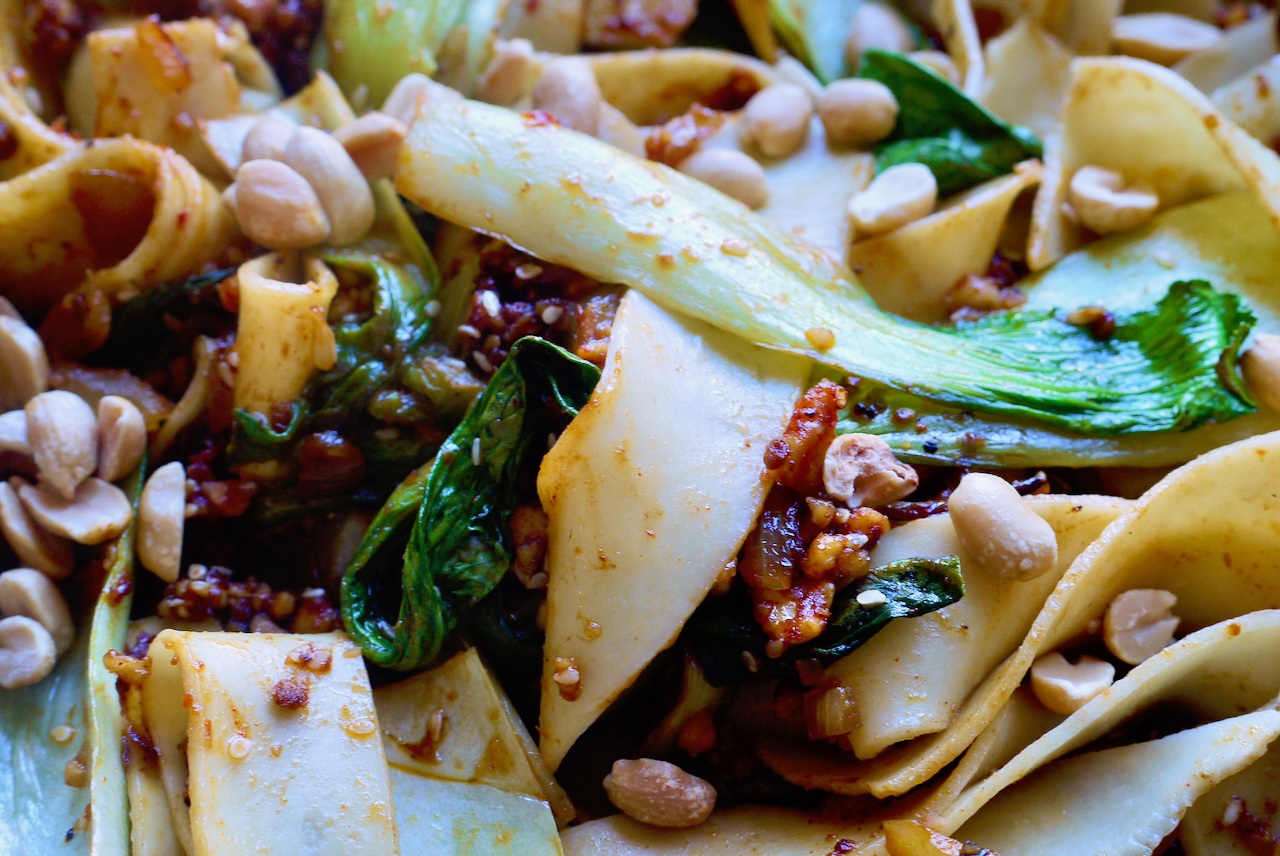
Here, robust, meaty sun-dried tomatoes and earthy peanuts are blended into the liquorice-hot gochujang, softened with sesame oil and enlivened with fennel seeds, clinging redly to thick, ribbon-like noodles and the ladle-concave bellies of bok choy leaves which limply wind around your fork or chopsticks like the noodles themselves.
And, of course, the creamy, softly firm edamame beans which you’ll have to imagine are definitely here. Should you be concerned with such things, it’s a stealthily protein-rich meal across the peanuts, beans, noodles—mine had about 11g protein per serve—and even the sun-dried tomatoes—though my concerns lie with the flavour, which is rollickingly rich and intense, undeniably spicy but quite bearably so, and with welcome complexity from gochujang’s fermented ingredients.
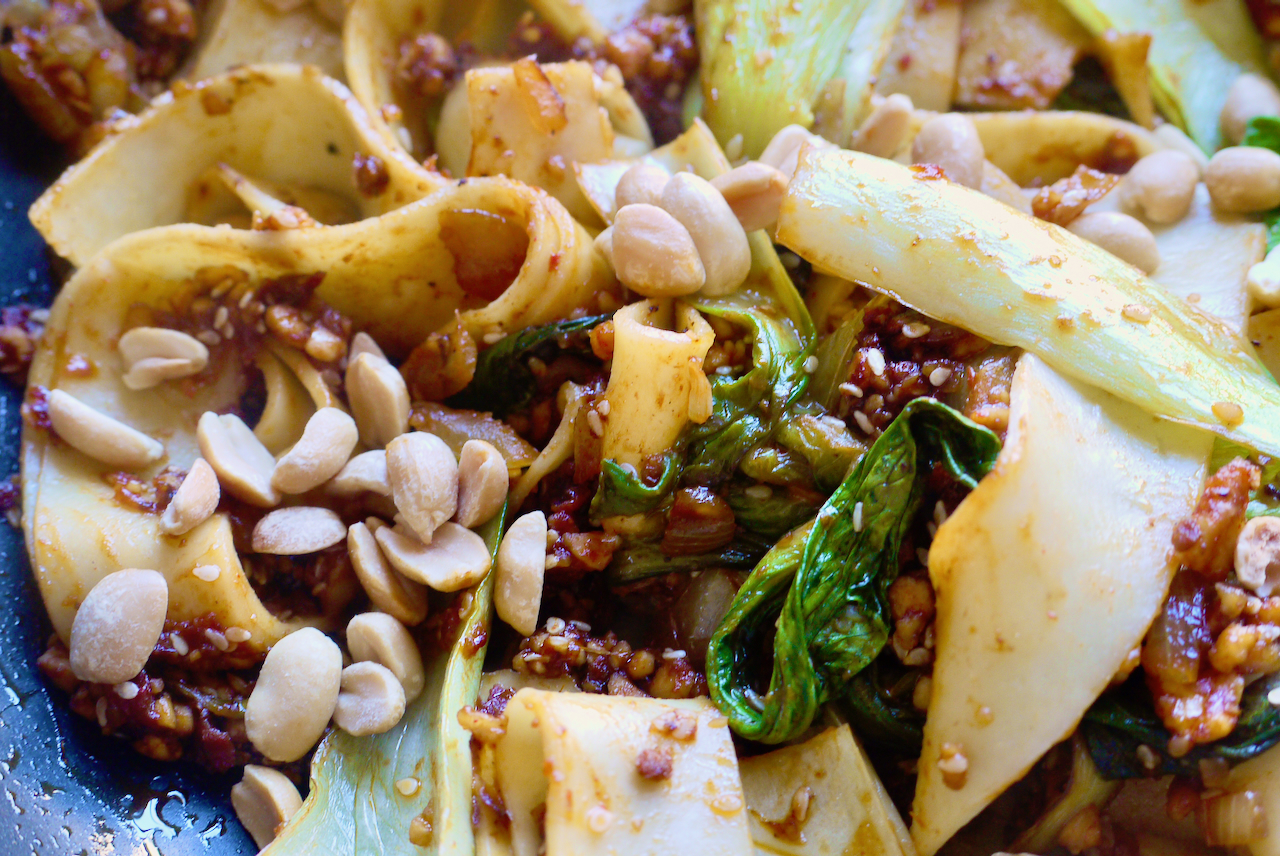
Though you could add more elements to it—another vegetable component, another protein—it tastes quite complete as is; though I wouldn’t stop you from further daubing it with chilli crisp. Especially since that’s how I made it the first time. I also admit that the liquid smoke is an additional flourish but not a load-bearing ingredient—if you can’t get hold of any or don’t have it in the pantry, this is every bit as stunning without.
For more of-a-piece recipes, I recommend these Coconut Chilli Tofu Noodles, these Vegan Miso Butter Noodles; or this Creamy Gochujang Tomato Pasta.
And if I may, a reminder that you can sign up here to hear irregular and unobtrusive updates and details about my forthcoming 2025 debut novel, Hoods Landing. Find out more, which you probably already know, at my official author website.
Noodles with smoky gochujang bokkeum
Snappy enough to make, with a complex bloom of flavour—whether or not you add the liquid smoke. Though it will be undeniably more smoky with it, the heady gochujang and seared bok choi lend their own lightly charred energy. And though this is quick, it’s even faster if you make a large batch of the vegan gochujang bokkeum recipe and keep it in the fridge. Despite the chilli presence, this is quite bearable for all but the most sensitive—you’ll know your own tolerance levels, so adjust the heat accordingly, but it’s really more about delivering forceful flavour rather than trying to make you cry, and the sweet-edged sun-dried tomatoes, rich sesame oil, and thick, chewy noodles dissipate the burn significantly. Recipe by myself, though I obviously didn’t come up with the original gochujang bokkeum upon which my variation is based.
- 1 onion
- 2 heads of baby bok choy (also sold as pak choi)
- 5 sun-dried tomatoes from a jar packed in oil
- 100g roasted peanuts
- 2 cloves garlic
- 1 heaped tablespoon gochujang
- 1 tablespoon soy sauce
- 1 teaspoon brown sugar
- 1 tablespoon sesame seeds
- 150g wide wheat noodles—look for ones labelled “knife cut”
- 100g frozen, shelled edamame beans
- 1 teaspoon liquid smoke
- 1 teaspoon sesame oil
- 1/2 teaspoon fennel seeds
1: I’m going to explain this as if you’re making it as I do—that is, trying to streamline the process as much as possible. So, first peel and finely dice the onion and set aside. Heat a wide, heavy saucepan, trim the ends off the two heads of bok choy, and briefly rinse them under cold water to remove any dirt. Throw the bok choy into the hot pan and let cook for five minutes—any water droplets clinging from the tap are fine, as they’ll evaporate on impact—and stir occasionally, until the white parts have softened somewhat and the green ends are wilted.
2: Since you don’t have to pay too much attention to the bok choy while it’s searing away, you can make the sauce. In a food processor, blitz the 5 sun-dried tomatoes, 80g of the roasted peanuts (save the rest for garnish), the two garlic cloves, the heaped tablespoon of gochujang, the regular tablespoon of soy sauce, and the teaspoon of brown sugar until it forms a nubbly red paste. Add the tablespoon of sesame seeds and briefly pulse to combine.
3: Remove the bok choy from the pan and set aside on a plate—although sometimes I just push them to one side of the pan and move that side of the pan slightly off the heat—and splash a little of the sun-dried tomato oil from the jar into the pan. Saute the diced onion that you previously set aside until softened, stirring frequently. Meanwhile, fill the kettle with water and turn it on to boil; if you don’t have a jug for whatever reason (hey, it’s okay, I don’t have a toaster) then simply bring a large saucepan of water to the boil on one of the other elements.
4: While the water is boiling, scrape about two thirds of the contents of the food processor into the first pan—I say this purely because it always makes slightly more sauce than I need, but you can use the lot if you like, otherwise refrigerate the rest for another day—and fry briskly, stirring often, letting the red of the chilli and tomatoes brighten and darken in the heat.
5: Once the water has boiled, add it to the second pan and turn it on high heat, then drop in the 150g noodles, which usually cook damn near immediately—though I suppose it’s about two minutes—then add the 100g frozen edamame to the same pan with the boiling noodles, and remove the pan from the heat, during which time the beans, too, will cook through quite instantly. Sometimes I throw the edamame beans into the frying pan with the sauce instead, stirring them around a bit to warm through—either option is fine, really.
6: Now, you’re very nearly done—add the reserved wilted bok choy back to the pan of gochujang sauce, remove said pan from the heat, and stir them through the sauce, along with the teaspoon each of sesame oil and liquid smoke and the 1/2 teaspoon of fennel seeds. Drain the noodles and edamame beans from their pan of water, and add them to the pan of sauce, stirring through to coat the noodles. Divide between two plates—I find it easier to grab the noodles first, then the bok choy, and finally to use a spoon to pick up any remaining sauce and edamame. Scatter with the remaining 20g peanuts and serve.
Serves 2.
Notes:
- The liquid smoke is quite optional—it does undeniably add a smoky flavour, but the gochujang has plenty of character on its own without it.
- The fennel seeds are, I suppose, also optional, but I believe it tastes better with them—they provide a subtle, clean lift to the flavour.
- I have tried this with pappardelle instead of egg noodles, despite them being ostensibly the same in structure, the noodles are better but if you can’t find noodles in a hurry, they’re a decent substitute. You could also consider slicing up fresh lasagne sheets to your desired width; just remember that if using pasta you’ll need to salt the cooking water.
music lately:
Would? by Alice in Chains; that sloshing, grey water production and those cavernous vocals, the aural equivalent of standing in the middle of a storm drain, on purpose.
If You Hadn’t, But You Did from the 1951 musical Two on the Aisle, as performed by Kristin Chenoweth—when the mournful preamble gives way to comedic patter song halfway through, hinging on the pun of “I hope I don’t miss you”—it’s a tour de force of vocal control, physical and vocal comedy, prop work (her prop in this case being a dancer with exceptional core strength), old-fashioned showbiz and, honestly, the ability to memorise complex lyrics. I can only find it in 240p but the star quality makes it feel sharper.
Hedonism by Skunk Anansie. Just-because-you-feel-GOOOOOOOD! Not to sound like a crone in my dotage but why don’t alternative rock bands with stunningly raspy yet soaringly-voiced lead singers make music videos with subversive physical distortion effects anymore?
WHITE ROOM by ena mori, every 20 seconds brings more layers of bubbling exhilaration, by the time you get to about three minutes in it feels like you’ve dropped mint candies in a bottle of carbonated cola-flavoured soda pop and chugged it.
PS: As we enjoy our food we can’t forget those going violently without it. Words fail me when it comes to Gaza but—NZ-based humanitarian org ReliefAid’s Gaza Appeal continues to work to deliver water sourced and treated from within Gaza so give it if you’ve got it. Feeling hopeless is kind of a luxury but as a response to the world, hardly a surprise. If you want to feel in control of something remember that the absence of your dollars can have power. Boycott Zine Aotearoa has helpfully put together two comprehensive free zines so you can quickly see who to studiously avoid when buying food, drinks, household items and beauty products. You should also check out the Made in Palestine collection—coincidentally, my cool artist pal Pinky is involved with both this and the zine—and if you can’t afford one of the stunning prints or the perfume oil, try your hand at the raffle, which closes on 12 July—I had the chance to smell the perfume and it is hauntingly beautiful and worth taking your chances on.


Looks delicious!
LikeLike