
This weekend I asked my modest number of Instagram followers whether they were currently feeling burnt out. 54% of people said yes, medically, 38% of people said they were very tired and almost burnt out. A mere seven total people said they were fine. Why did I ask? Well, I would describe myself as currently spending time googling the symptoms of burnout, if you know what I mean. But as I suspected, burning out is rarely something you’re doing alone.
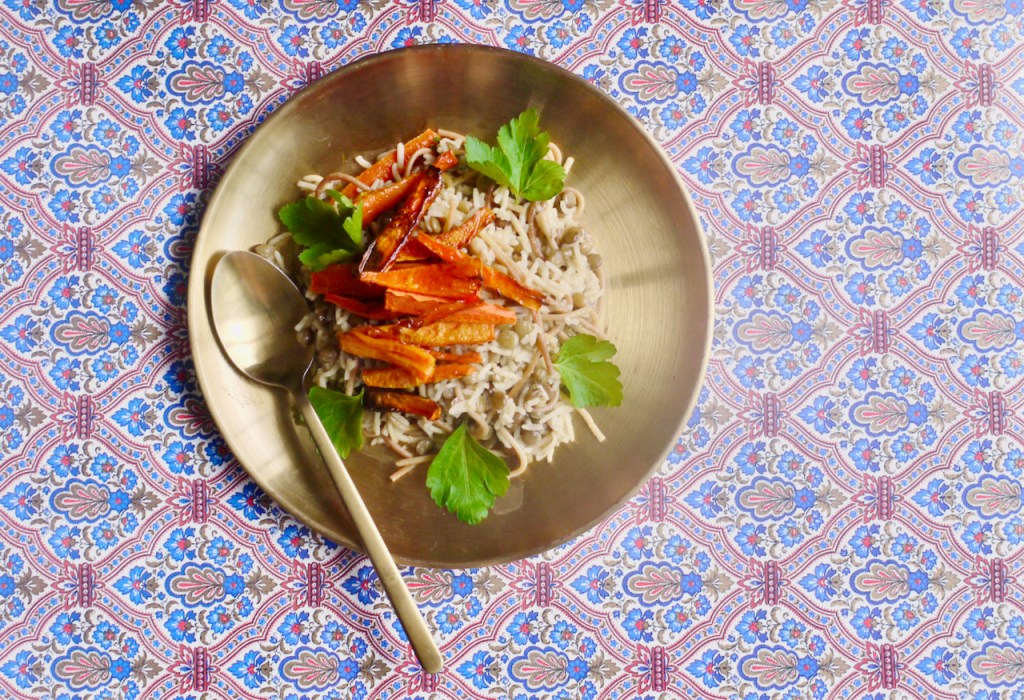
One such prong on the serving fork of tentative burnout claims is my famous ongoing inability to carve out enough time to keep this blog updated frequently—which then leads to time-consuming self-flagellation and further stress and misery as the last blog post fades further into the calendar—and the cadence of posts here has continued to dwindle so much that there’s barely any pattern-recognition to be had. Nevertheless, here I am in the month of August—just—with a recipe that has truly kept me tethered to the earth on a weekly basis, which is why I’m eager to share it with you at last: Roasted Carrot Kushari. To be clear, this recipe will in no way solve your burnout. But I promise it won’t add to it.
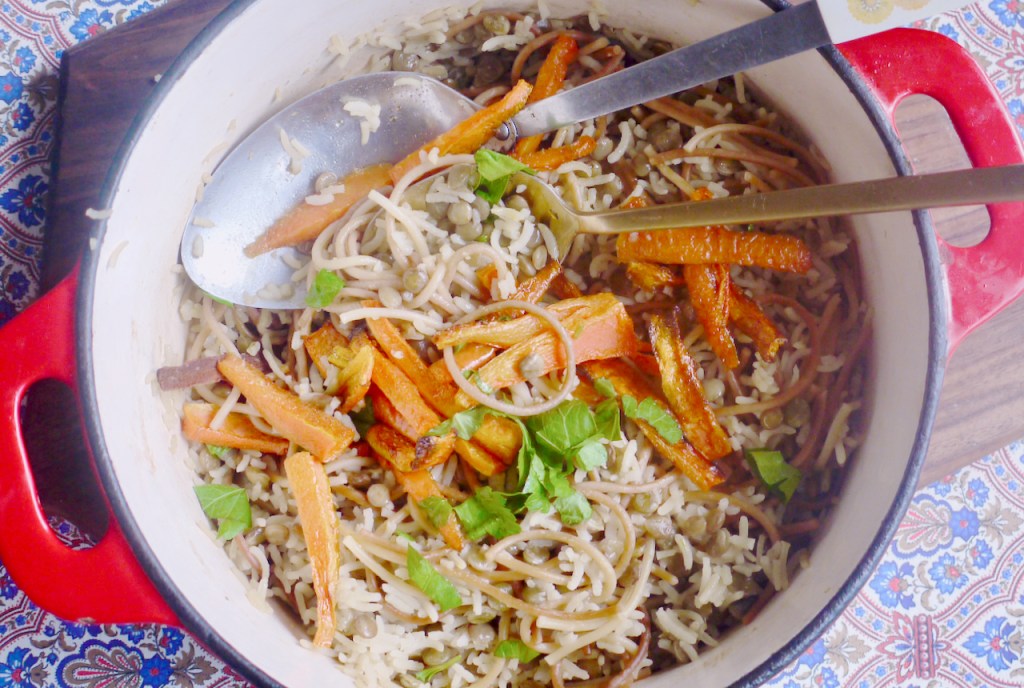
It’s another recipe via Claire Thomson, whose cookbooks are assets all; although—if I may be lumberingly but necessarily obvious—kushari as a concept isn’t of her invention, being the classic Egyptian dish combining lentils, pasta and rice. This is her pared-back curation of it, and I, in turn, have played with it a little further—only a little.
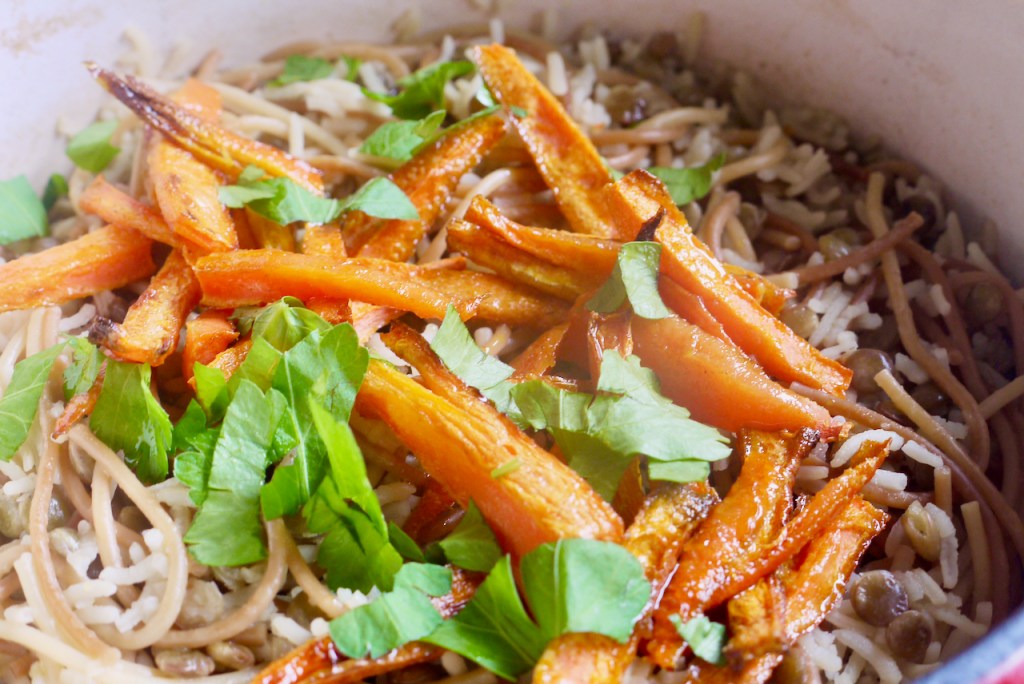
This dish provides a sturdy example for the argument that heat itself is a spice in your cooking. I don’t mean heat from chilli, but from the cooking process. A searing pan, an oven turned up to eleven. Because to glance at, this recipe looks almost alarmingly under-seasoned, and with no onions or garlic to speak of—and yet it’s abundant in rich, layered flavour, and a lot of that comes from the lightly scorched broken pasta that starts the process off. The Maillard reaction, sure, but something in that daring heat before the brittle pasta is swollen into pliant strands with water brings so much buttery fulsomeness, imbued throughout the fragrant rice grains and earthy, tender lentils.
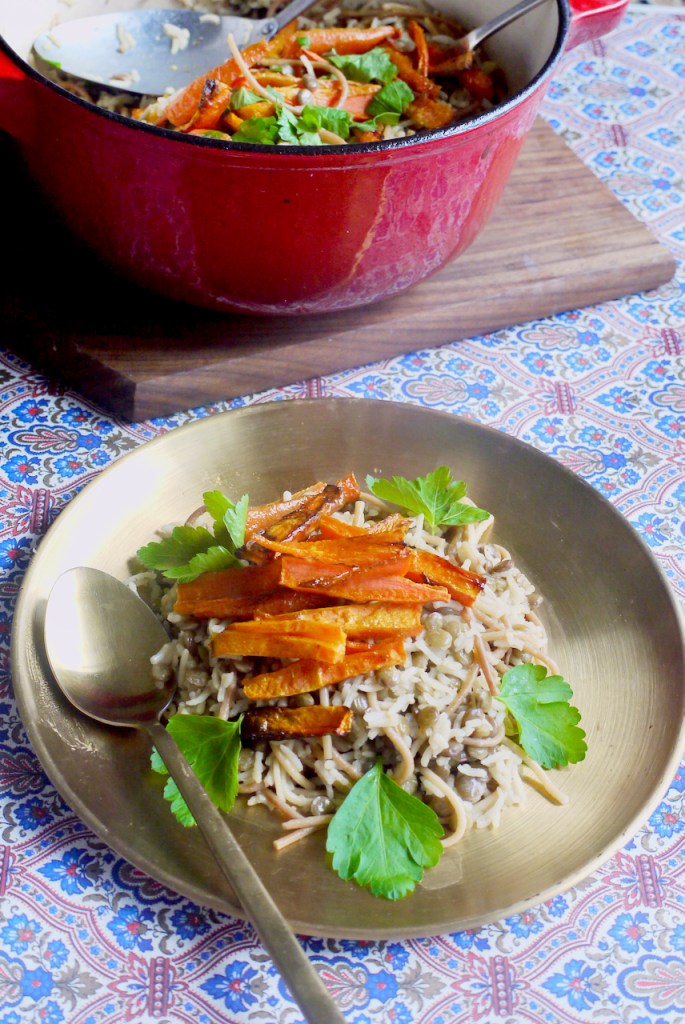
So, you may be tempted to add more spices to the dish, and I am certainly both incapable and disinclined to stop you. But just that heat and the reassuring kindling warmth of the cinnamon sticks do so much, that it’s worth giving it a go to see what simplicity is capable of. I say this as someone who frequently makes a vast vat of this without even the carrots (themselves an excellent example of the flavour-wise transformative properties of heat).
It’s so easy to make and equally easy to eat, desperately comforting and not without its nourishing properties. To be honest, I have never once measured the ingredients after making this the first time, and encourage you to follow suit—it’s the sort of recipe you should start to feel within your bones, instinctively flinging in the right quantity of lentils, pouring in sufficient boiling water, not being afraid to add more of something if needed. But, if your instincts are feeling sluggish, consider the quantities I’ve given.
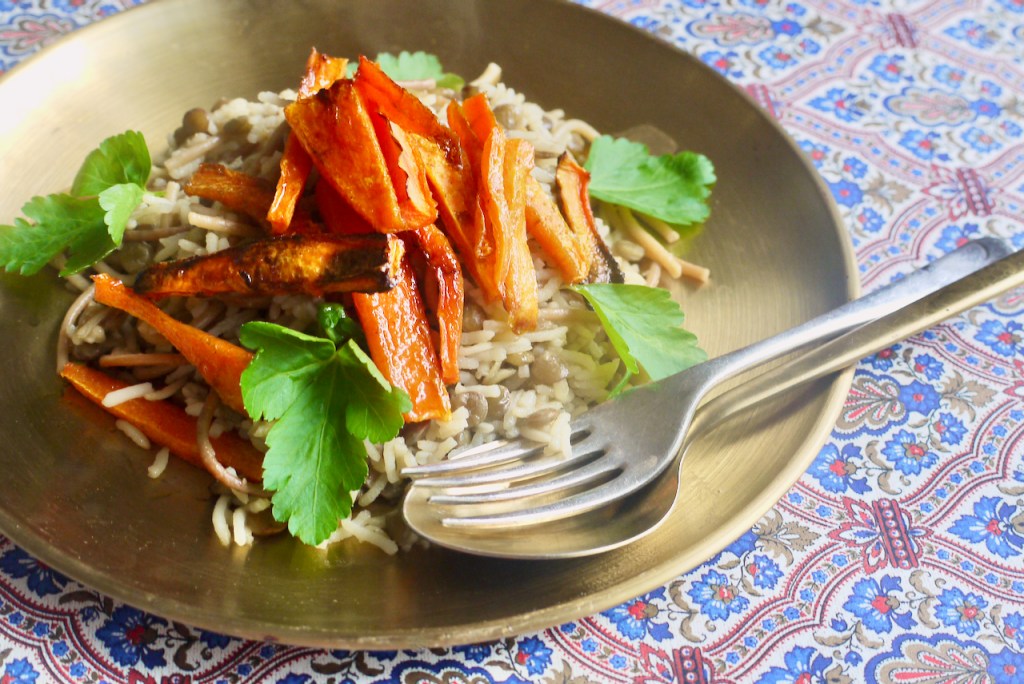
I haven’t even got to the meandering texture, which is its own reward: the rakish bouncy plumpness of the pasta weaving its way through dense bumps of lentil and soft, separate grains of rice. If this dish is otherwise unfamiliar to you, it may feel counterintuitive to load three different starchy-carby things together. It works, and has for a long time.
This does make a lot of kushari—but it both keeps and reheats well, in a way that makes you feel comforted anew rather than part of a relentless cycle of slogging dutifully through leftover slop. It’s also another worthy addition to the Recipes for the Cost-of-Greed Crisis canon.
For more grainy, one-pan, burnout-friendly recipes that ask little of you time and finance-wise, and yet amply provide, I suggest:
- Spiced Pearl Barley Pilaf (humbly delicious, very versatile, good cold)
- Sha’aktoura (a dynamic chorus of flavours, makes a lot)
- Hands-free Black Bean and Brown Rice Casserole (robust, calming, really quite effortless).
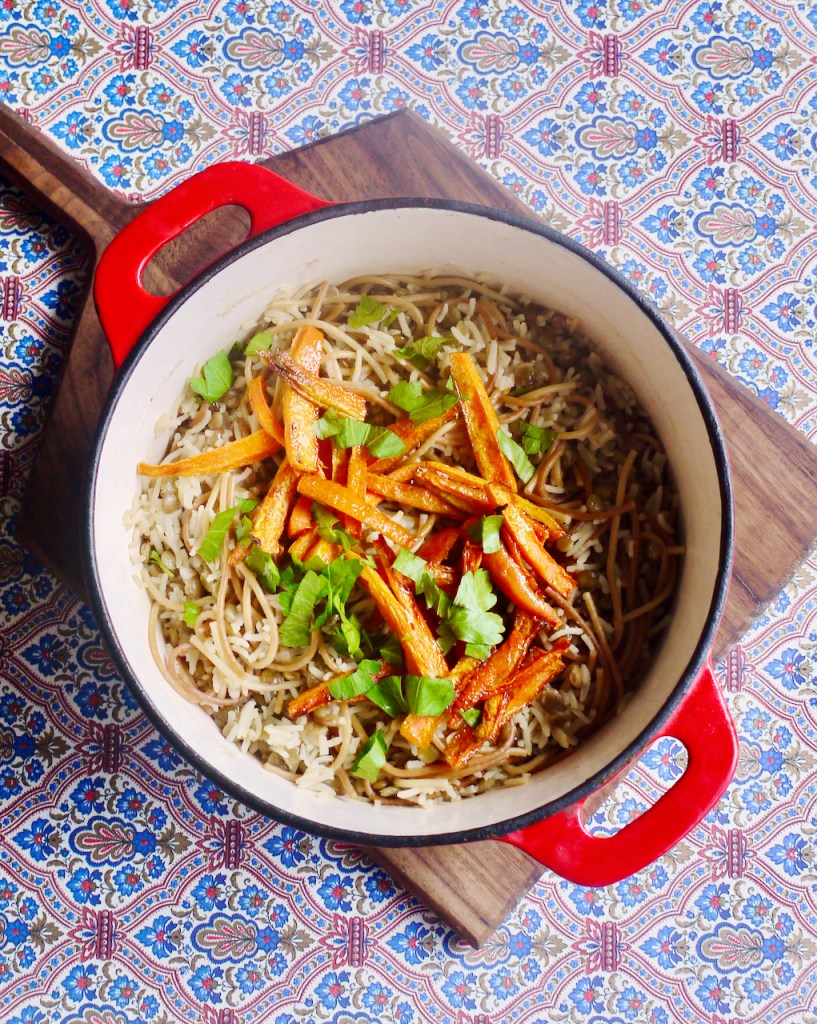
Roasted carrot kushari
Three elemental ingredients—pasta, lentils, rice—come together in a flurry of cinnamon-scented texture. This recipe is exceptionally easy, it’s cheap, it’s comforting, and it tastes magnificent. It’s the dish of Egypt, though I came to this specific recipe via Claire Thomson’s streamlined go at it, and am grateful for it. As always, before shopping for these or any ingredients, I recommend checking out the Boycott Aotearoa zines so you know which brands to avoid. Recipe adapted lightly from New Kitchen Basics by Claire Thomson.
- 2 large carrots
- 2 tablespoons olive oil, plus another 2 tablespoons for frying (see notes)
- 1 teaspoon ground cumin
- 50g spaghetti, linguine, or angel hair pasta
- 100g long grain rice, I use basmati
- 100g green or brown lentils, rinsed (see notes)
- 2 cinnamon sticks
- 700ml boiling water
- 2 chicken or vege stock cubes (I like the vegan chicken ones here)
- Plenty of salt and pepper
- A handful of flat-leaf parsley, to serve
1: Set your oven to 200C/400F. At this point, or indeed, earlier, you could consider placing the 100g lentils in a small bowl and covering them with water, just to give them a helping hand to cook quicker—and I always do—but it’s not essential.
2: Slice the two carrots into sticks and place in an even layer on a roasting tray. Drizzle over two tablespoons of the olive oil, scatter over the teaspoon of cumin, and season with salt and pepper. Roast for 20 minutes, or until wizened and golden (at which point, simply turn off the oven and leave them to stay warm; I do feel obliged to remind you to check in case they suddenly burn in the residual heat, it all varies from oven to oven.)
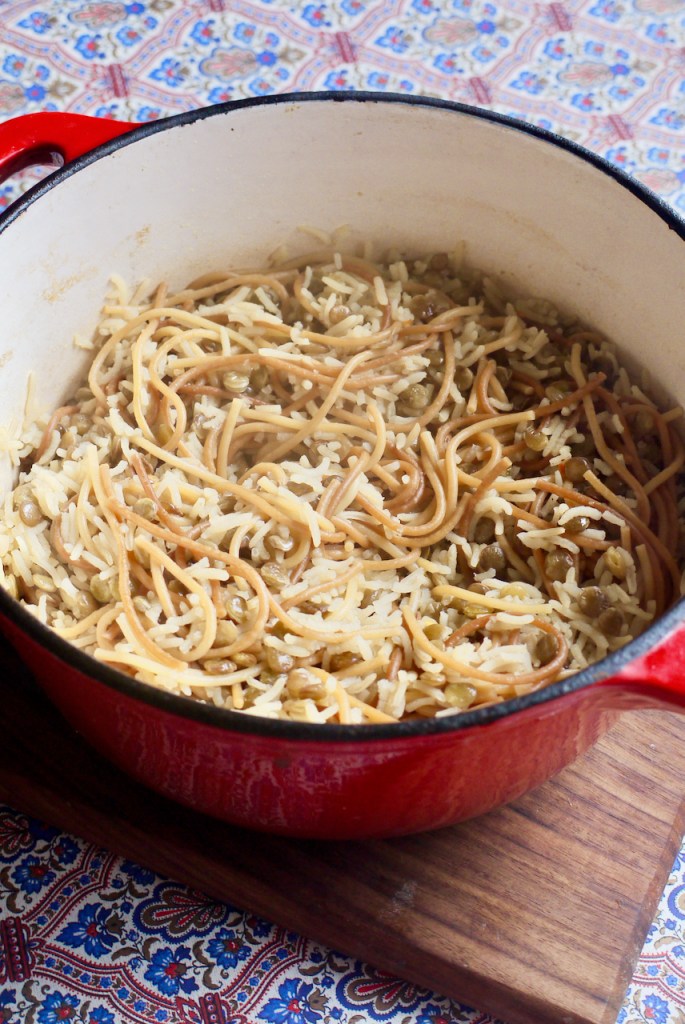
3: While the carrots are in the oven, get out a large, heavy saucepan with a lid. I use an exceptionally heavy stovetop casserole dish, but anything sturdy and lidded should work. Warm the next two tablespoon of olive oil over medium heat—though see the notes for options. Wantonly clutch the 50g spaghetti in your fists and break it into shorter lengths (some of the pieces will fly in the most surprising directions; I usually break the spaghetti at two intervals into thirds.) Fry the short splinters in the oil, prodding with a wooden spoon—they’ll turn very pale and then golden.
4: At this exact point, tip in the drained 100g lentils, the 100g rice and the two cinnamon sticks, stirring well for a minute or so. Pour in the 700ml boiling water and crumble in your two stock cubes.
5: Let this come up to the boil—it won’t take long at all—then lower to a simmer, stick the lid on, and let it cook for 20 minutes. You can check in after about five minutes to give a redistributing stir. I’d also lift the lid sometime after the fifteen minute mark—the cook times for this can fluctuate for me, and it’s always down to the lentils, which can vary wildly in how quickly they yield. If it’s looking too dry at this point and still not cooked, simply pour in a little more water and let it cook, covered, a bit longer.
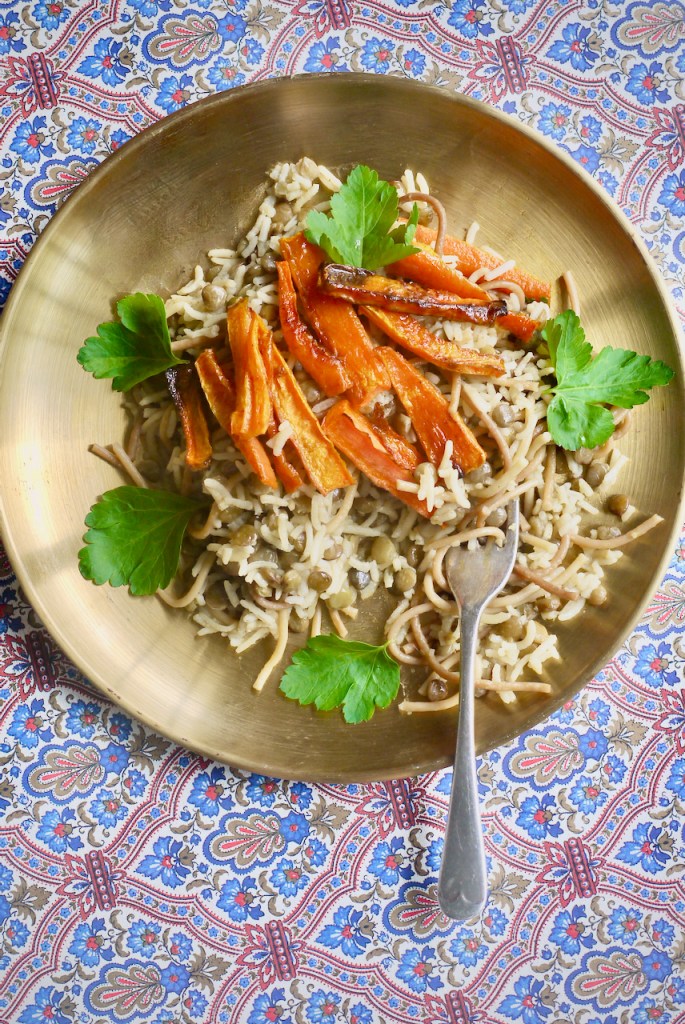
6: Once the rice, pasta, and lentils are all tender, remove from the heat. Taste for salt, add more if you please. Serve with the carrots spooned over and plenty of chopped flat-leaf parsley.
Serves: You could easily feed four; but it could provide small servings to 8+ at a bring-a-plate type of arrangement. I make it at this size every time just for the two of us, and keep leftovers in the fridge for quick and comforting reheating throughout the following week. If you want to feed more people, simply increase the quantities 25g at a time respectively across the pasta, lentils, and rice, and use your largest pan.
Also: I’ve kept this pared back for simplicity, and do love it as is, but please consider (the original recipe’s suggestion) thick yoghurt, lemon wedges (and my suggestion) toasted pine nuts or chopped almonds, and other herbs to serve. There are also, of course, more traditional koshary toppings and fixings that it would make perfect sense to incorporate here.
Notes:
- The original recipe calls for butter to fry the pasta—there are really no viable options in the cost-of-living crisis, but to make it vegan I’ve gone with olive oil. I’ve also had great success using flavourless coconut oil and avocado oil. It is particularly delicious with butter though, if you have it—you could use about 25g here, or more if you want.
- I’ve made this using green lentils, brown lentils, and split green peas—all benefit from a quick (or longer) soak in cold water beforehand to help speed up the cooking. I’d avoid red lentils, which tend to dissolve into nothing.
- No cinnamon sticks? Use a half-teaspoon of ground cinnamon! No ground cinnamon? Get some!!
- Sometimes I make this even simpler by leaving out the carrots altogether.
- For my allium-avoiding pals out there, please note there’s no onions or garlic in this and not once do I think about them while eating it!
- On the other hand, a crackly tangle of fried onions on top of this would be a perfect addition….
what I’ve been listening to lately:
Rocky Top by Dolly Parton. I got tearful listening to her singing this song, which, if you also listen to it, speaks more to the magnitude of loss than any shred of poignancy to be found in the song itself. She was so GOOD and so talented in a way that I wish more people were interested in being! It simply shouldn’t have been her but I’m glad to have lived while she did. If you want to cry along to a song with a more fittingly plaintive atmosphere, Those Memories of You by Trio should work. Don’t even get me started on Tim Curry.
Losin’ Time by Wooden Schjips, the sort of song that makes you feel like every pedestrian light is going to turn green the moment you walk up to to cross the road, and also like you’re suspended in lime-flavoured gelatine while someone shines a torch on you. Try it in either scenario!
アナザーモーニング [Another Morning] by the pillows, so rollicking and fuzzy, like a fleece sock in a tumble dryer.
PS: Feeling hopeless is a luxury that serves no one but those perpetrating the hopelessness, despite the hopelessness being accelerated beyond comprehension daily. The people of Palestine need us now more than ever; aside from directly sending money when you see personal videos pop up as you scroll, you can support:
- ReliefAid’s Gaza Appeal, who are connected with teams on the ground in Gaza.
- Convoys of Good, another registered NZ charity distributing aid.
- Please visit Chuffed—they’re one of the few spaces providing families in Palestine with official crowd-funding platforms, as well as for other urgent causes.
- As I’ve already mentioned, you can also demonstrate your control and power through the absence of your dollars. Boycott Zine Aotearoa has helpfully put together two comprehensive free zines so you can quickly see who to studiously avoid when buying food, drinks, household items and beauty products.
- You can also check out the Pro-Palestine Business Aotearoa account by the same people for a very solid list of places to actively focus your consumer attention on.


