
Whatever it is going on in my brain, be it nameable or undesignated, it only occasionally manifests in the form of what is commonly known as ‘food hyperfixation’. I’ve always been emotionally fixated on the idea of food, specifically, cooking it—experiencing a certain scarcity-minded franticness when I’m unable to cook, which I suspect is, at the least, a bit weird. Now and then, though, a certain food will cohabitate with my habits, like having a writer in residence staying with you: this past week it was lentils. I yearned for their collapsing bodies, tipping them like a rainstick into a bowl ready to soak with cool water, endlessly testing little simmering spoonfuls—no, still not cooked yet.
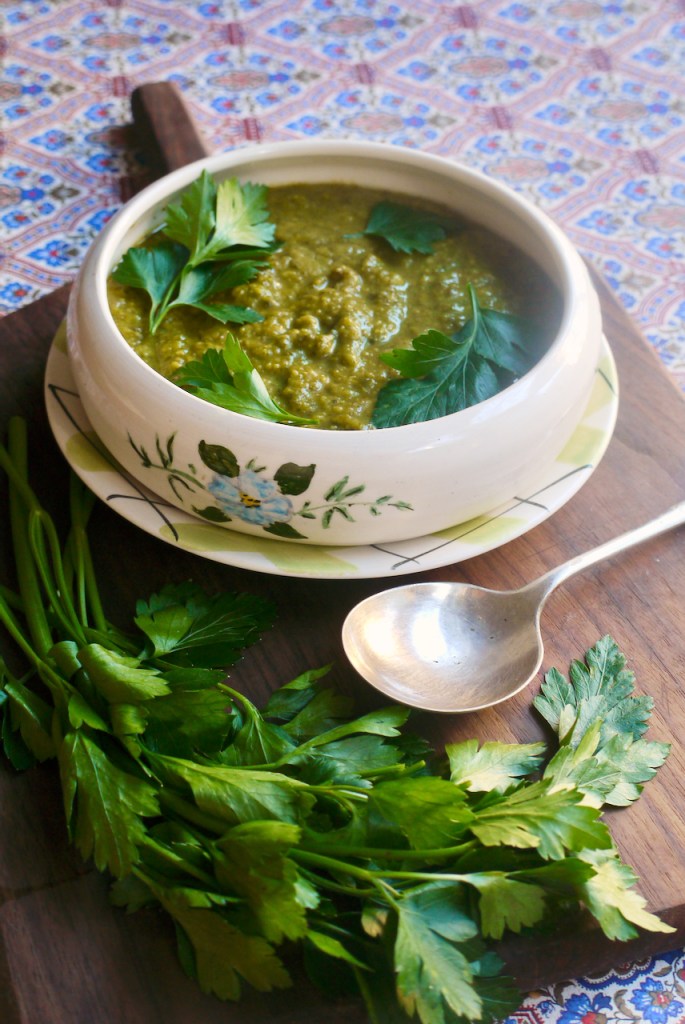
This recipe for Big Green Soup actually uses split peas, but! Lentil Week is a state of mind type of nomenclature. Speaking of nomenclature, the recipe title misleads not at all: it’s Big (makes over a litre); it’s Green (if you have 400g of silverbeet drooping malevolently in the fridge, this is for you); and it sure is Soup. It is also, of course, delicious. That’s why we’re here.
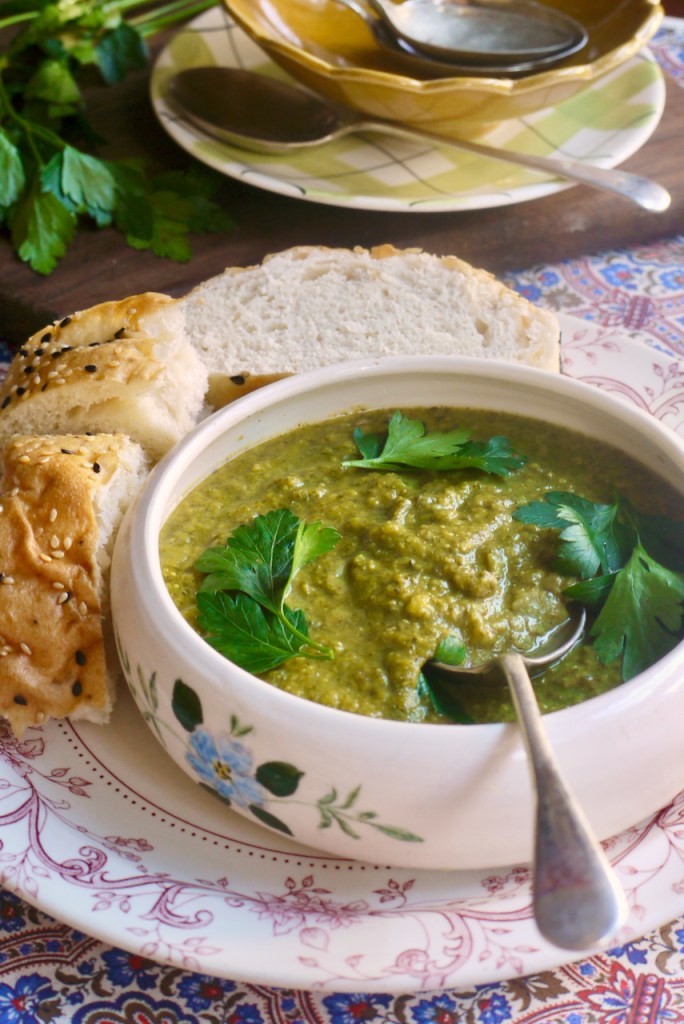
This recipe started, happily, with a whole lot of vegetables delivered via my brother from my mum’s garden; without which this soup wouldn’t have existed, because I suddenly had to do something with them and this was the idea that came forth. As you can see from the ingredients list, it does suggest a hodge-podge of pluckings from someone’s backyard; all these ingredients were so green and so perfect together that serendipity has now turned into a grocery list. I will say, silverbeet is not, and never has been, first on my list of chosen vegetables to spend time with—its throat-prickling oxalates seem so close to the surface, the leaves are so metallic—but here a remarkably large quantity of it manages to fold into the background and provide little more than a generic green quality and a moving-van full of vitamins.
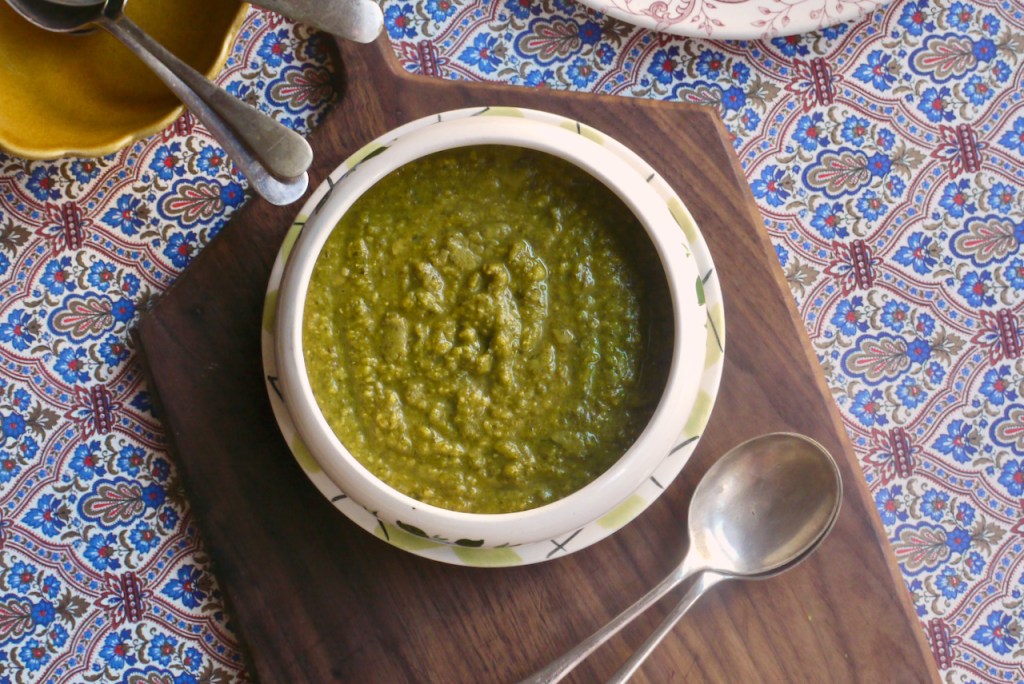
To that end, there’s really no other way to describe the flavour of this soup succinctly other than, it tastes GREEN: the cool, savoury celery and the meltingly ferrous spinach and the musky parsley all blitzed into the mild, bulging split peas. Bringing it together are two crucial ingredients: the fireside blaze of ras-el-hanout, providing one-fell-swoop of flavour in its blend of spices, and the jolt of lemon juice at the end, like a swipe of yellow paint through the green.
Now, this soup is not a fast recipe with all that soaking and simmering, so it’s best made on a Sunday or some other day of the week that stretches out generously before you. But it keeps magnificently and makes a huge amount, meaning that tomorrow or the next day, it’s suddenly a near-immediate meal. And with all those greens and the split peas jostling for position to deliver you the most vitamins and minerals, it’s also exceptionally good for you—you can almost feel your blood cells regenerating and your nail beds growing with every mouthful.
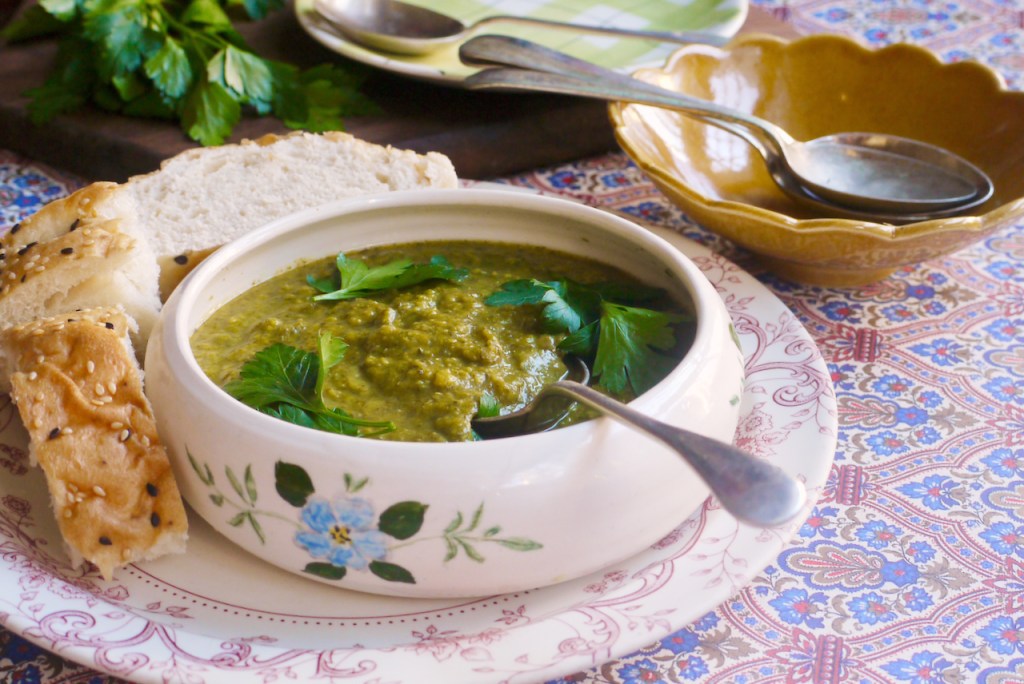
This is a very cold-weather soup in both flavour, method, and seasonality of ingredients—and I appreciate that people reading this in the northern hemisphere may themselves feel as though they’re simmering for forty minutes. For what it’s worth, if you’re someone who believes in sipping hot food in hot weather, the lemon juice and fresh vegetables give this soup more of an enlivening quality than your usual sleeping-pill midwinter recipes. And it’s not bad cold from the fridge, either.
For more soup inspiration that transcends season, I suggest: Shorbat Jarjir (silky, peppery with rocket), Lemon Halloumi Angel Hair Soup (delicate, tranquilly elegant) and Chilled Cannellini Bean Soup with Basil Spinach Oil (velvety, cooling yet substantial).
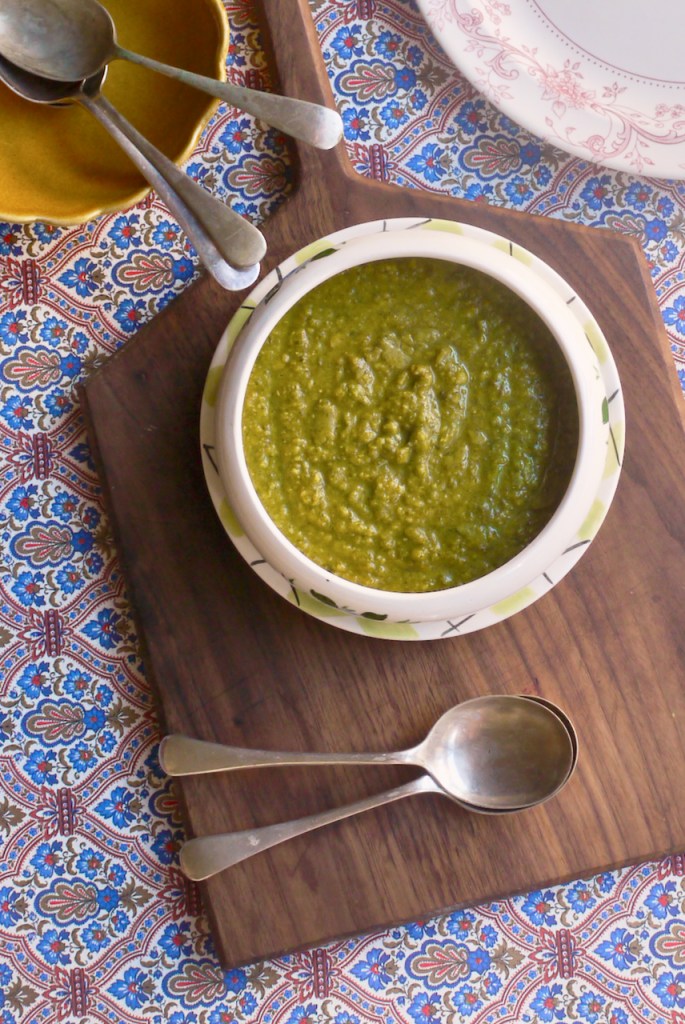
Big green soup
Particularly useful if you have a lot of silverbeet to reluctantly burn through; this is so hearty yet fresh with the lemon and although it takes a while to simmer, the vast leftovers will heat up in a trice. As always, before shopping for these or any ingredients, I recommend checking out the Boycott Aotearoa zines so you know which brands to avoid. Recipe by myself.
- 175g green split peas, soaked in water for at least an hour
- 3 spring onions
- 3 sticks celery
- 2 tablespoons coconut oil
- 4 garlic cloves
- 3 teaspoons ras el hanout
- 1/2 teaspoon turmeric
- 1L boiling water
- 2 stock cubes of your choice
- 400g silver beet
- 120g spinach
- 20g parsley (flat leaf or curly)
- 1 large lemon
- Plenty of salt and pepper
1: Before you start anything, soak the 175g green split peas in a bowl of fresh cold water, topping up if they absorb it all. I find 2-3 hours soaking time optimal, but even half an hour will help things move along.
2: Slice your three spring onions and three sticks of celery fairly roughly—since you’re going to be blending it up later anyway—and melt the 2 tablespoons of coconut oil in a large, heavy-based saucepan with a lid. Tumble in the chopped celery and onion plus a good pinch of salt and stir for two minutes over a medium heat, which should turn the ends of the onion a more vivid green.
3: Very roughly chop the four garlic cloves and throw them in, along with the three teaspoons of ras el hanout and the 1/2 teaspoon of turmeric. Stir it through, to let the spices bloom in the pan’s heat and become fragrant.
4: Pour in the liter of boiling water, and add the two stock cubes. Tip in the soaked, drained split peas. Bring.to the boil, skimming way any extraneous froth that arises, and then lower to a simmer and cover, letting it bubble away over a low heat for 30-40 minutes. Keep an eye on it and give it a stir every now and then. You shouldn’t need to add extra water, but if it starts looking too parched, then do so.
5: Once the split peas are nearly collapsing, chop up the white stems of the 400g silverbeet and add them to the pan to simmer for a few minutes. Once the split peas have actually turned completely tender, chop up the green silverbeet leaves and toss them into the pan along with the 120g spinach leaves, stirring to let them wilt and fall into the heat of the soup.
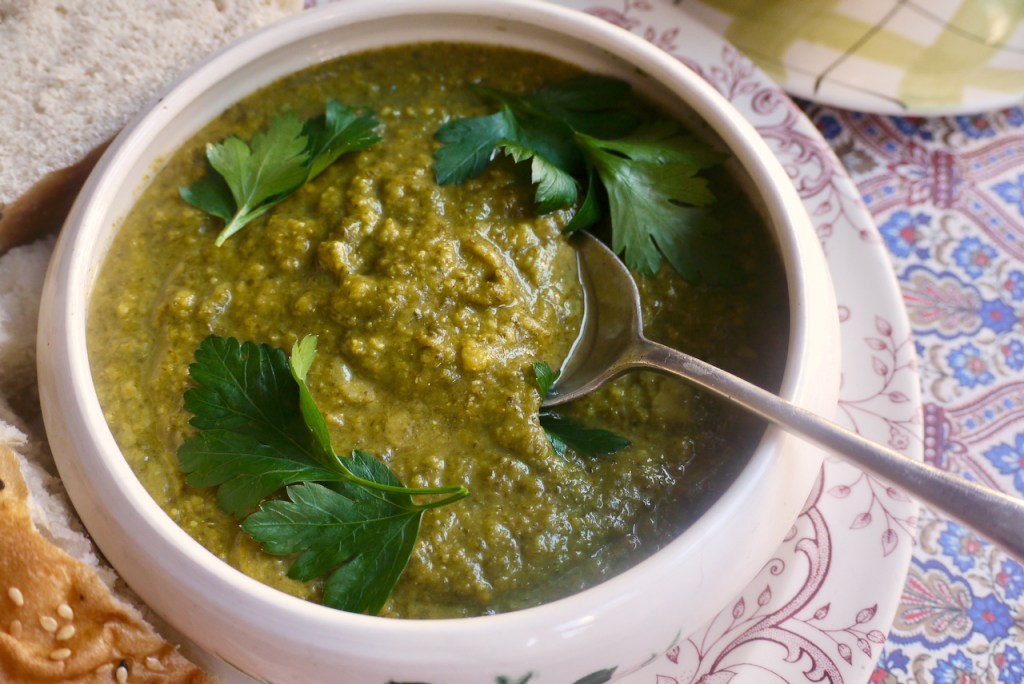
6: Remove the pan from the heat, and let it sit until it has stopped bubbling of its own volition. Roughly chop the 20g parsley and stir it in, followed by the juice of the lemon, squeezing in every last drop. Use a stick blender to pulverise the vegetables and lentils into a not-entirely-smooth puree (that is to say, I prefer it with a little texture, you keep on blending if you wish.) If you don’t have a stick blender, you’ll need to let it cool down further and blitz it in batches in a blender, still being careful when opening the lid, as any heat will build up pressure.
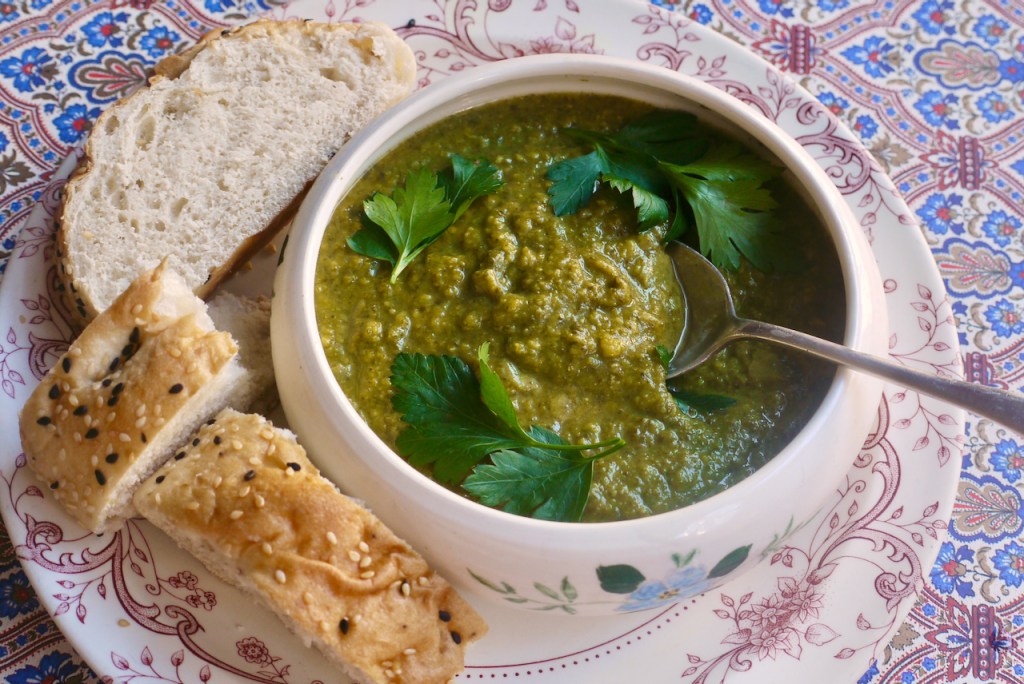
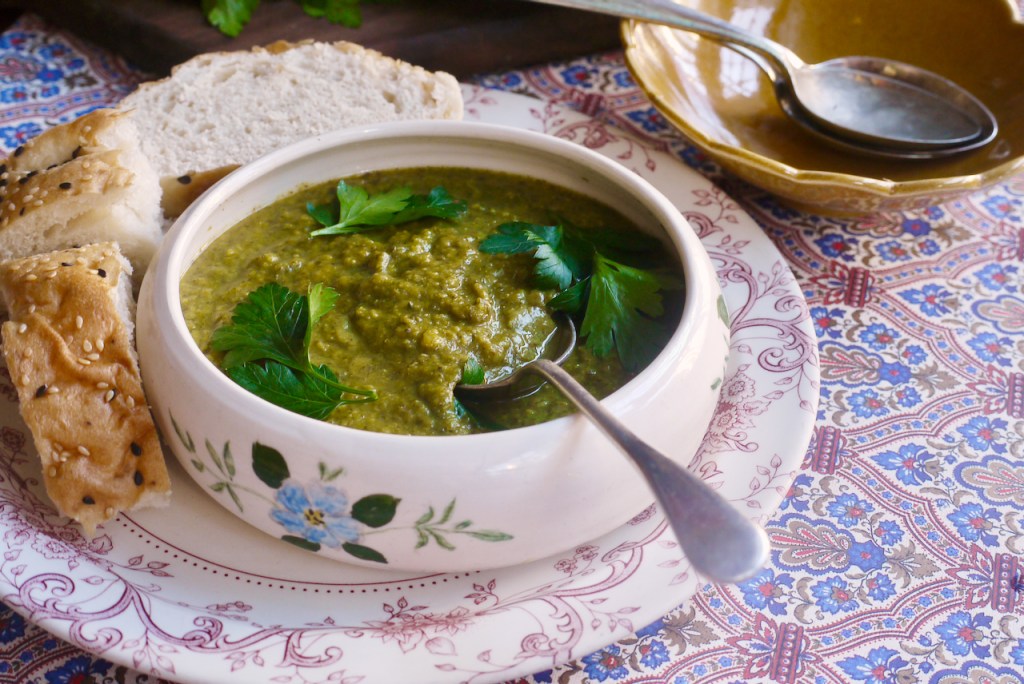
7: Taste to see if it needs any more salt or lemon juice, and serve with bread alongside.
Makes around 1.5 litres; and depending on size of vessel, serves 4 easily with leftovers. Store in the fridge for up to a week in a sealed container.
Notes:
- I’ve only made this with green split peas, but experience and media literacy would suggest that they’ll behave in the exact same way; colour notwithstanding. Red lentils cook the fastest and don’t need much more than a quick rinse; use them if you want to hasten this somewhat.
- For simplicity, you could leave out the silverbeet and replace it with more spinach, or use kale or cavolo nero instead. The latter two will require extra cooking time to break down their sturdier leaves.
- There’s a few extra things you could consider adding here—a handful of frozen peas, a small diced floury potato—but be wary of overloading for its own sake.
- I like the mellow richness of coconut oil here, but olive oil is fine and great instead.
- You probably suspect this already, but it’s very nice with some Lao Gan Ma chilli crisp spooned over.
what I’ve been listening to lately:
The Calvary Cross, by Richard and Linda Thompson. That tremolo, that slow, myth-making air of menace!
Pretend to Be Nice from the Josie and the Pussycats soundtrack; performed by Rachael Leigh Cook, Rosario Dawson and Tara Reid with lead vocals by Kay Hanley and backup by Bif Naked (I love the logistics of musical movies.) This was written by Adam Schlesinger and it’s a typical masterclass from him: a relentless Christmas parade of hooks, lyrics that tell a relatable scenario yet plausibly could be sung by a comic book rock band, fuzzy powerchords. Cruelly, he died in 2020 from Covid. In his shortish life his songwriting gave so much to pop culture, including this perfect song from a satirical masterpiece of a film.
Maybe Your Baby by Rufus. Chaka Khan’s voice is like a whole orchestra of which she is the conductor. And of course the song itself is good; it’s a Stevie Wonder cover, with a bassline so bombastically funky that listening to it feels like trying to walk through knee-deep honey.
PS: Feeling hopeless is a luxury that serves no one but those perpetrating the hopelessness, despite the hopelessness being accelerated beyond comprehension daily. The people of Palestine need us now more than ever; aside from directly sending money when you see personal videos pop up as you scroll, you can support:
- ReliefAid’s Gaza Appeal, who are connected with teams on the ground in Gaza.
- Convoys of Good, another registered NZ charity distributing aid.
- Please visit Chuffed—they’re one of the few spaces providing families in Palestine with official crowd-funding platforms, as well as for other urgent causes.
- As I’ve already mentioned, you can also demonstrate your control and power through the absence of your dollars. Boycott Zine Aotearoa has helpfully put together two comprehensive free zines so you can quickly see who to studiously avoid when buying food, drinks, household items and beauty products.
- You can also check out the Pro-Palestine Business Aotearoa account by the same people for a very solid list of places to actively focus your consumer attention on.


Wow! That soup sounds wonderful. We have summer here now but in autumn and winter it would be perfect. Thanks for sharing your recipe.
LikeLike