Chilli Corn Macaroni [vegan]

P1200326

I’m not sure there’s a pasta shape in the world where the mere mention of its name immediately evokes and suggests its partner ingredient the way macaroni does with cheese. Yes, there’s spaghetti and its frequent dance partner bolognese. But spaghetti has broad-spectrum versatility, it’s culinarily non-monogamous, whereas – other than perhaps those spooky mid-century salads – what else would you do with macaroni but serve it as mac and cheese?

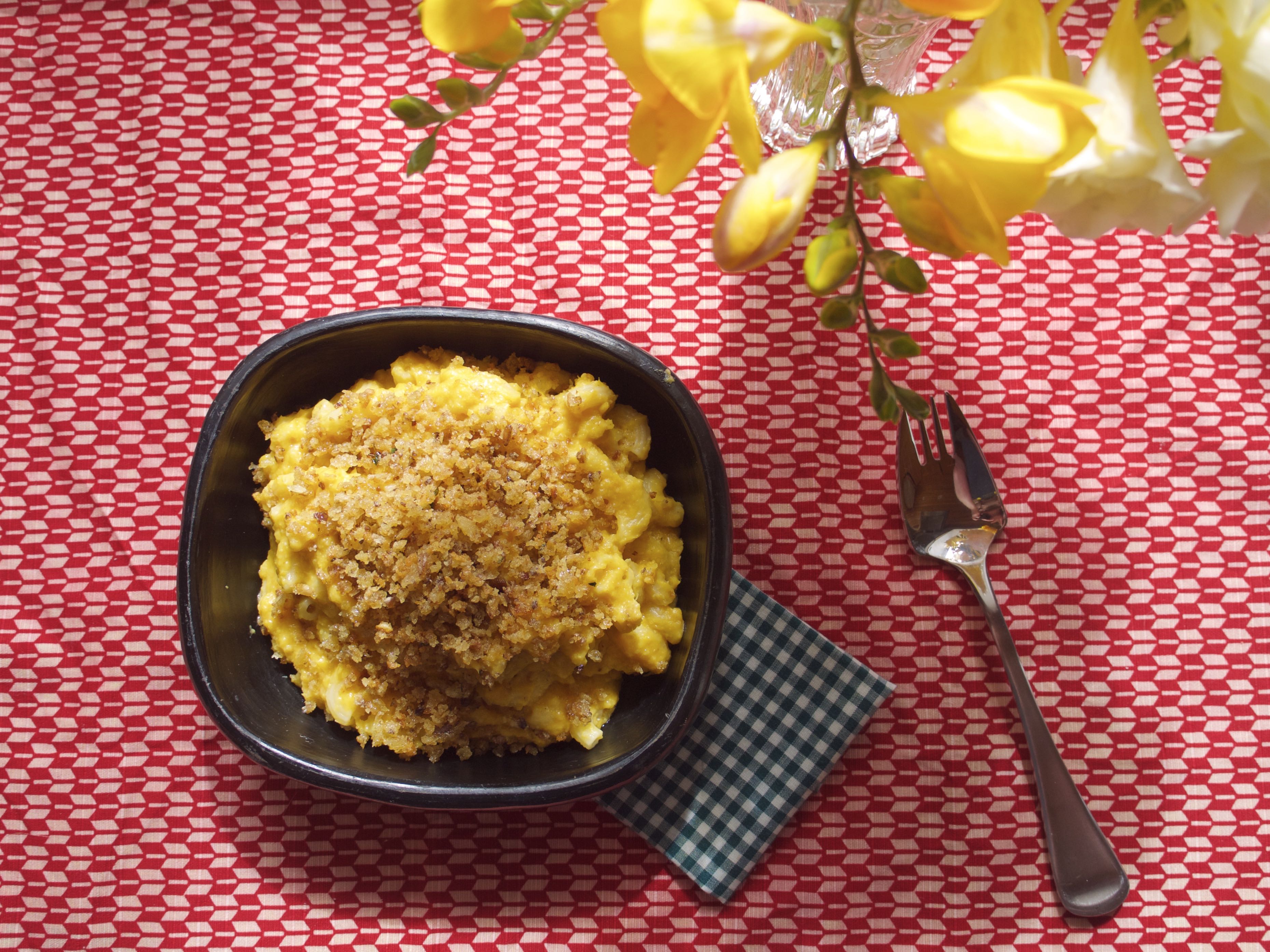
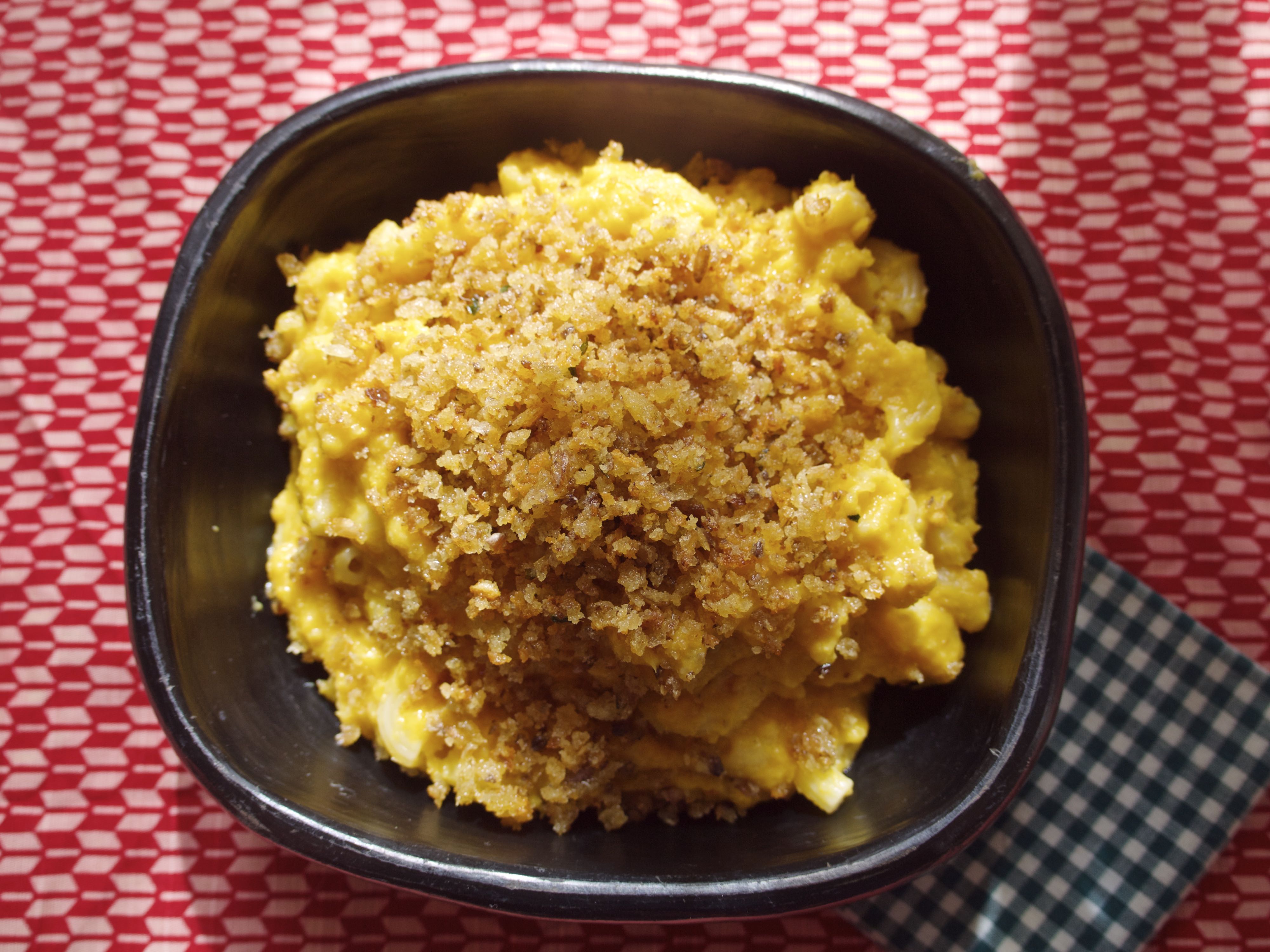
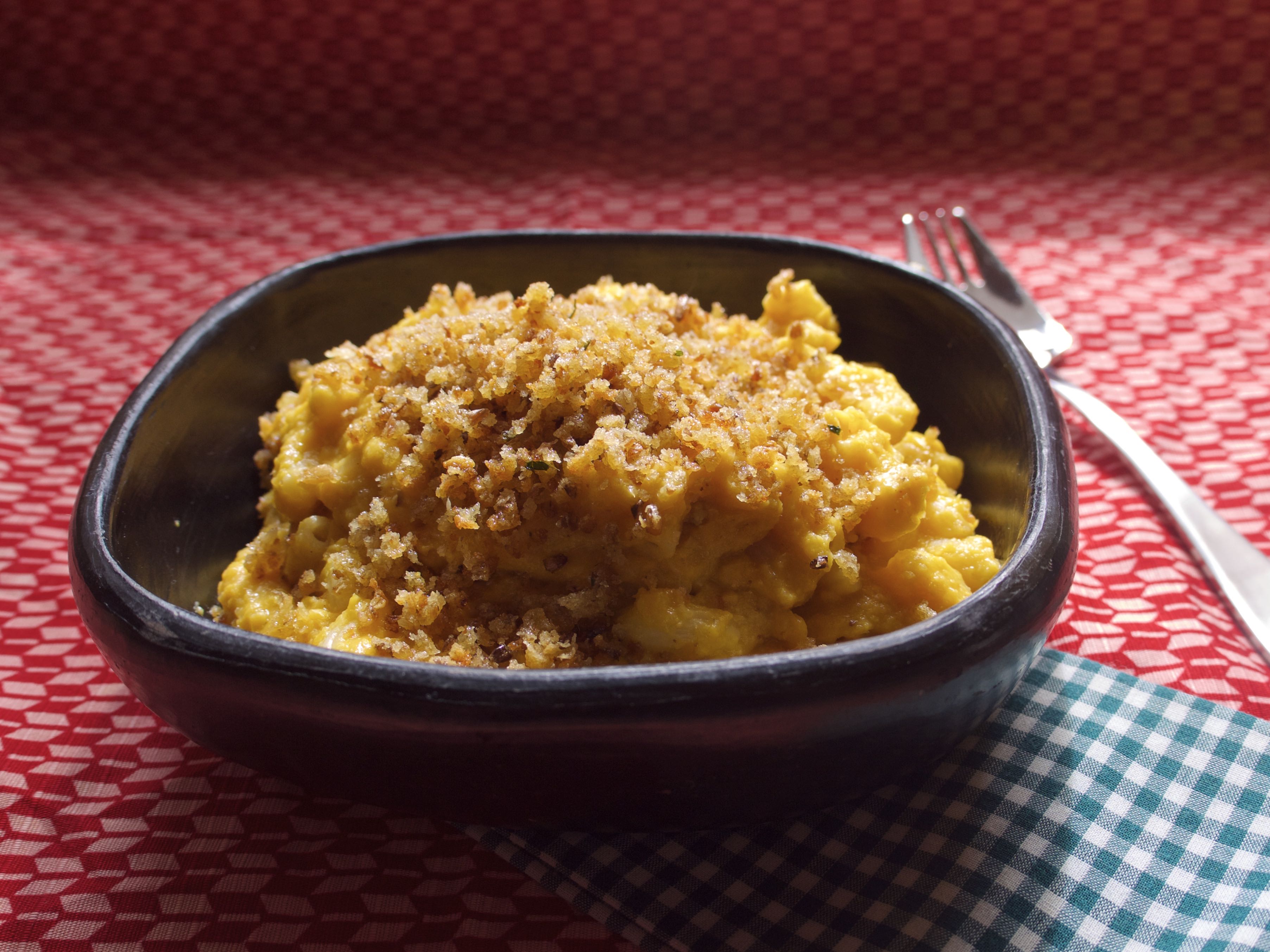
I say this to point out that while my recipe for Chilli Corn Macaroni isn’t supposed to be a vegan mac and cheese dupe, it still relies on the muscle memory of your taste buds to recognise the similar vibe – bright yellow, crunchy topping, creamy sauce, comfort food. In my earlier days of being vegan, I was more dedicated to coming up with sauces that could emulate and replace the macaroni cheese I’d grown up with, but the longer I stick with it the more I find myself making recipes that owe something to the blueprint but aren’t trying so hard, which – I think – makes them all the more interesting and delicious. I’m talking specifically about my Thai Yellow Curry Mac’n’Cheese or the Triple Pickle Macaroni that I made for my birthday last year; and now I’m adding this Chilli Corn Macaroni to the canon.

P1200325

And yes, you could make this sauce for linguine or bucatini or something more elegant but it fits best with the homely and unassuming macaroni elbow (or other small shape if that’s all you have) and till the day comes where a decent and affordable vegan cheese appears on New Zealand supermarket shelves – not crayon-waxy, not stick-to-the-roof-of-your-mouth gluey, but proper and sharp and able to melt into bubbling pools of golden promise – till that day comes, I’ll stick with these recipes.

That being said – would this taste amazing with non-vegan cheese melted on top? Probably! I’m not going to haunt your descendants from beyond the grave if you decide to do it.

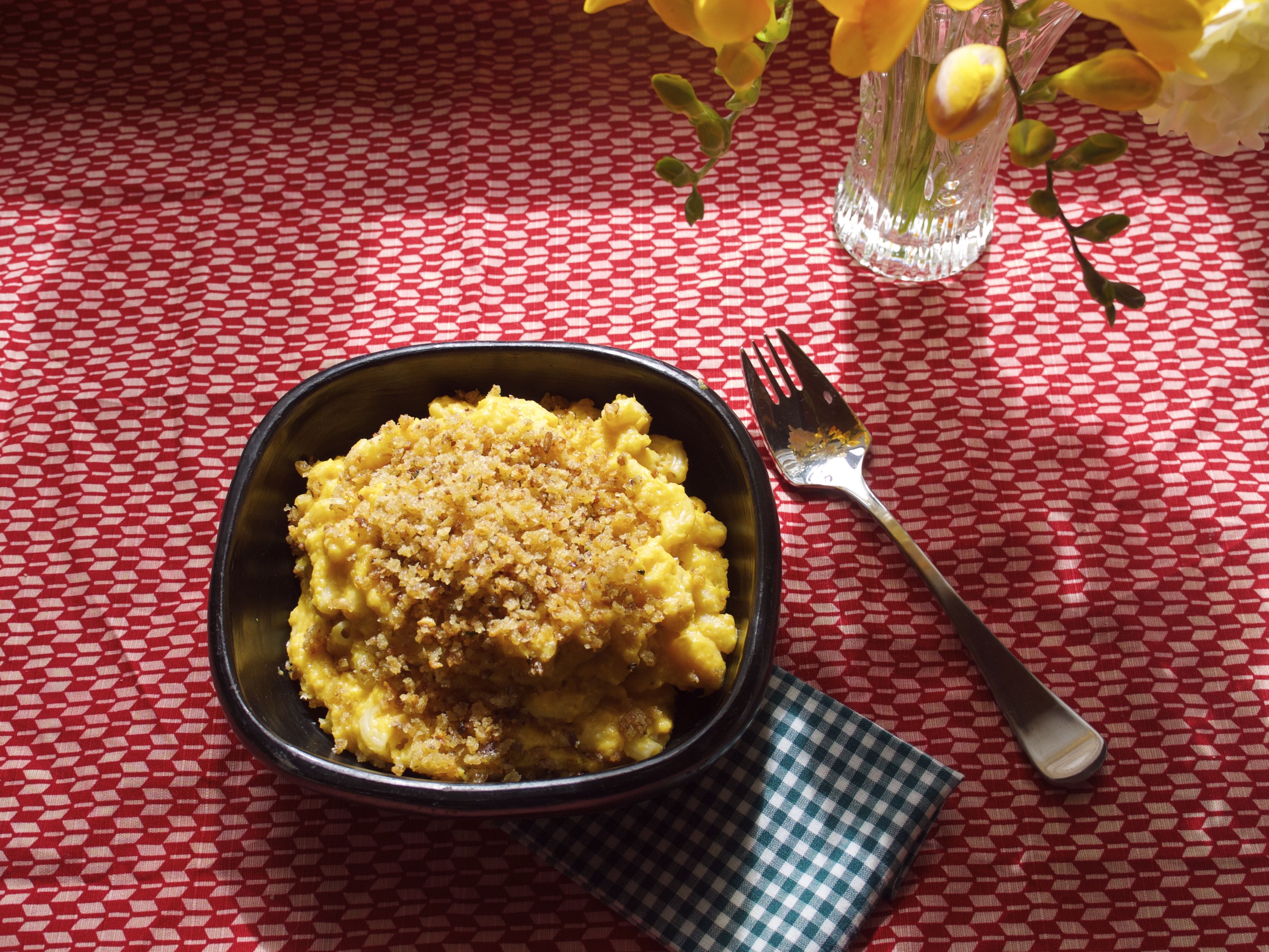
Fortunately for the rest of us, this macaroni tastes excellent as is. The corn is pureed into sunshine-coloured velvet and becomes wonderfully buttery and sweet – if yellow had a flavour, this would surely be it. This sauce owes something to the Corn Butter Risotto recipe that I made a few years ago, but it’s significantly simpler to make – though nothing’s stopping you from straining this sauce through a sieve as well I imagine no one has the energy for that right now. While this is comfort food, it’s not entirely coddling you – the hit of chilli ties it all together, which is hardly a surprise when chilli and corn pair so well in numerous other established recipes. The garlic crumbs on top are my usual way of providing added texture and flavour in these circumstances, and rather than thinking of them as a cheese substitute, they are delicious, and indeed, necessary in their own right. In case this sounds like too much effort, rest assured that you don’t have to wash the blender or the pan between making the crumbs and the sauce – beyond that I can’t help you, but I certainly won’t judge you.

P1200331

Chilli Corn Macaroni

As long as you have some kind of blender this couldn’t be easier – or more comforting – just creamy, buttery pasta evocative of mac’n’cheese without actually trying to be it, blanketed in crunchy garlic crumbs. Recipe by myself.

  • 200g macaroni elbows
  • 2 pieces of bread (any kind is fine, although I’d lean towards white bread)
  • 2 fat garlic cloves
  • 1 tablespoon fresh thyme leaves
  • 2 tablespoons olive oil
  • 1 x 400g can of whole corn kernels
  • 1 teaspoon mustard powder
  • 1 tablespoon soy sauce (I used mushroom soy sauce)
  • a pinch of freshly grated nutmeg
  • 1 tablespoon sriracha or chilli sauce of your choice
  • 1 tablespoon cornmeal (optional)
  • a splash of pickle brine (optional, but very good)
  • salt and white pepper, to taste

1: First, bring a pan of water to the boil, generously salt it, then tip in the macaroni elbows and cook them for about twelve minutes or until tender.

2: While this is going on, toast the two slices of bread in the toaster – just to dry them out a little – then tear them into chunks and place in a blender or food processor with the garlic cloves and thyme leaves, and pulse till they form breadcrumbs. Heat the olive oil in a pan and fry these garlicky breadcrumbs till golden and a little crunchy – bearing in mind that they’ll crunch up more upon sitting – then remove them to a bowl and set aside. This makes a decent quantity of breadcrumbs, perhaps more than you really need, but naturally, I’ve allowed extra for you to swipe while making everything else.

3: In the same blender – no need to wash – puree the drained corn kernels along with the mustard, soy sauce, nutmeg, and sriracha along with about 1/2 a cup of water (I just eyeball the quantity from the tap into the empty tin of corn, swirl it around, and pour it in). A high-speed blender works best here to really puree the corn into velvety mush, a regular food processor may struggle to achieve the right texture, or at least, you’ll be blending it for a lot longer. Also, it goes without saying (but I’m saying it just in case) that you can add more or less chilli to suit your taste.

4: Heat the same pan that you cooked the breadcrumbs in – again, no need to clean it – and spatula the corn mixture into the hot pan, along with the cornmeal and pickle brine if you’re using them. The cornmeal helps to thicken it but it’s quite fine without; if you don’t have any just add a small splash of starchy pasta cooking water, the pickle brine is pretty self-explanatory flavour-wise but you could always use a little red wine vinegar instead. Stir over a high heat, letting this bright yellow mixture bubble away and thicken. Add salt and pepper to taste, and then – since the pasta should be cooked by this point – take off the heat and stir in the drained macaroni. Divide between two bowls and top each bowl with a generous quantity of garlic breadcrumbs.

Serves 2. You could get away with putting 300g of macaroni in this, but add a little extra pasta cooking water to the sauce as you stir it. Any more pasta than that and I’d add an extra can of corn (and instead of doubling the seasoning, you could consider instead throwing a vegan chicken stock cube into the blender with the second can of corn.)

P1200332

music lately:

Can You Get To That by Funkadelic. If the colour yellow had a sound it would be this song!

Evel Knievel by Lilys, it’s a big crunchy distorted beeping stop-start mess of a song but it’s just the kind of thing I want to listen to. For something more straightforwardly pleasant I recommend the delightfully effervescent Ginger – the opening song to Evel Knievel‘s closer on their 1994 album A Brief History of Amazing Letdowns.

Candy Store from the off-Broadway musical Heathers (based on the film, Heathers) performed by Jessica Keenan Wynn, Alice Lee and Elle McLemore; I listened to this cast recording and thought it was fine but then I couldn’t get this song out of my head so here we are – between that glam-rock stomp of a drum beat and the stunning harmonies it’s just very, very catchy! There’s also this one small part of the song Big Fun from the same musical which is forcibly lodged in my head and I can’t get it out, but to prevent you being similarly afflicted I won’t tell you which part.

PS: If you like my writing and wish to support me directly, there’s no better way than by stepping behind the claret velvet VIP curtain of my Patreon. Recipes, reviews, poetry, updates, secrets, stories, all yours on a monthly basis. There’s no better time than right now – your support helps me to make all these blog posts!
Vegan Salted Caramel Ice Cream

P1200316

Why waste your breath chasing originality when you could instead obsess over one thing contingent only upon your getting sick of it, which does not seem likely anytime soon? I’m talking of course about salted caramel (but also I could be talking about, say, The Lion The Witch and The Wardrobe, a book that I loved as a kid and would re-read and re-read and every time I tried to get into literally any other book by CS Lewis it felt joyless and like hard work which, in the fullness of time, perhaps it really was, but anyway!)

Despite being, as a concept, utterly normal and unsurprising, salted caramel still manages to make eyes light up and taste buds limber up and for that – and its sheer deliciousness of course – I respect it. It’s truly the Saturday of foods, it’s switching the channel to find The Castle is on TV for the hundredth time and stopping to watch it for the hundredth time, it’s the culinary equivalent of the Grease megamix or Come On Eileen at the wedding dance floor, the food about which no one will ever say “oh god, not this again,” and even if they do try to front like they’re above it, a mere taste of whatever salted caramel confection is on offer will suddenly and stickily erase all attempts at snootiness.

P1200320

This salted caramel ice cream recipe is simple, has few ingredients, and does not require an ice cream machine – my personal vendetta against Big Ice Cream Machine guarantees you’ll never need one while I’m around – but, much like this blog post, there is a lengthy preamble to get through before you actually reach the gratifying part. By which I mean, you have to caramelise a can of condensed coconut milk by boiling it for several hours under a thick layer of water – while we fortunately live in a bountiful age where vegan condensed milk is a thing, we haven’t quite reached the convenience of ready-caramelised stuff yet (on the upside, it gives you something to complain about.) The process itself isn’t difficult or anything, but if you don’t have a crockpot you’ll need to situate yourself in or near the kitchen to make sure nothing burns or explodes, hence why I suggest making a double batch to give you maximum caramel output for your efforts.

@hungryandfrozen

vegan salted caramel ice cream🍦recipe at hungryandfrozen.com🍦SO GOOD🍦 #saltedcaramel #recipevideo #veganicecream #nochurn #icecream #pinkaesthetic

♬ Glory Box – Portishead

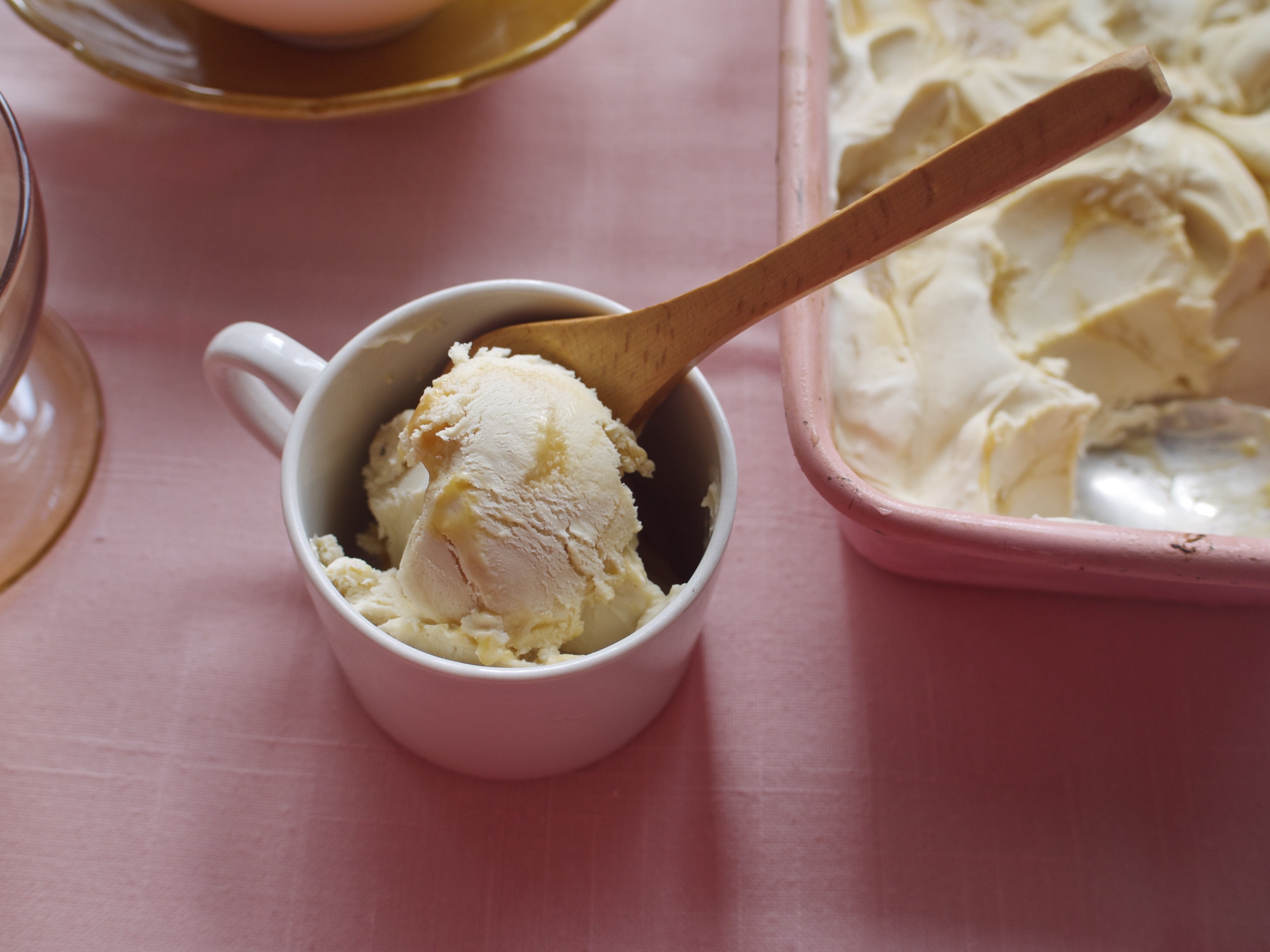
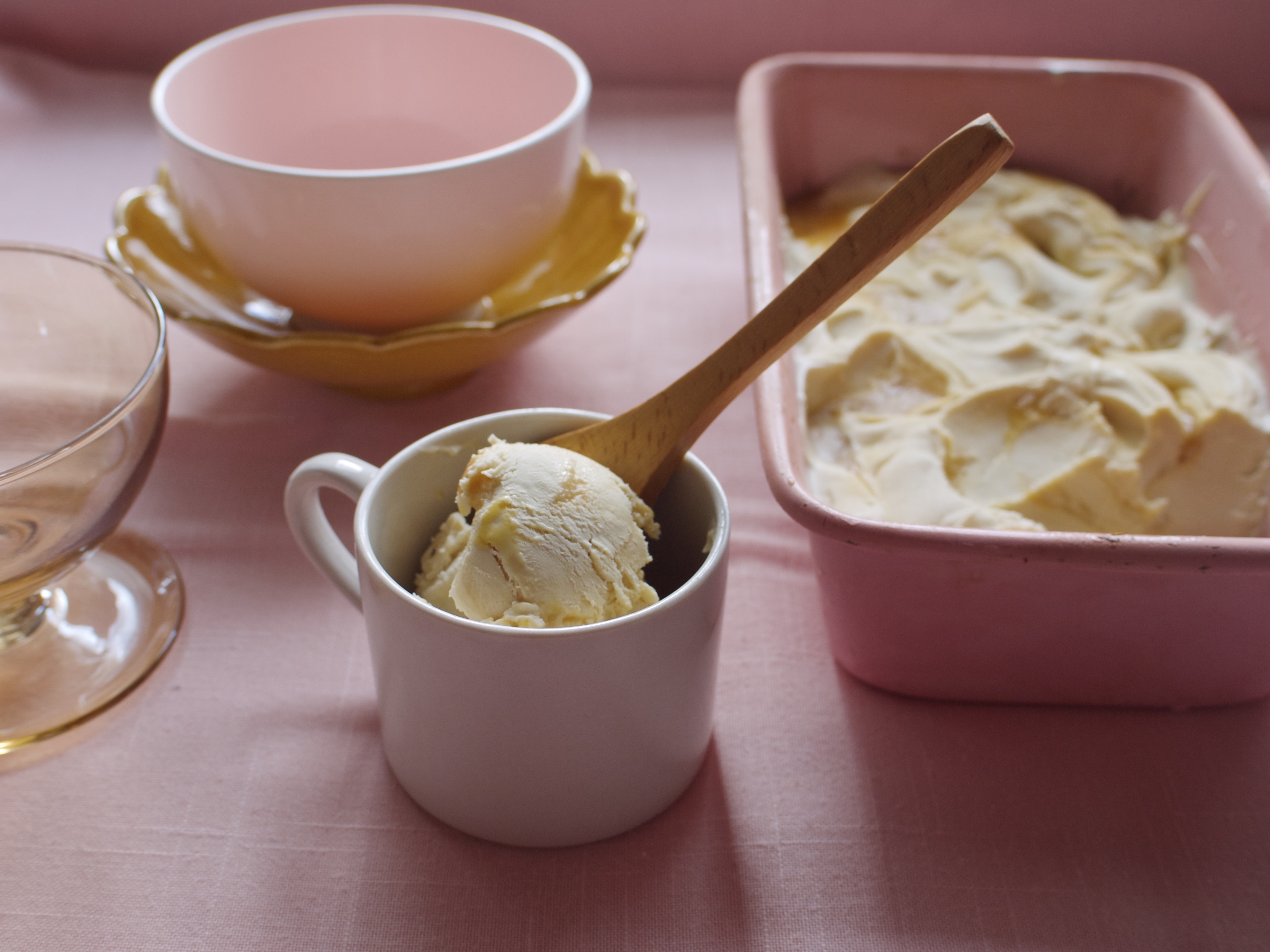
Once that step is complete it’s just a little mixing and freezing and you’ve got the creamiest, lushest ice cream rippled with waves of golden, burnished caramel. It tastes amazing, and the texture is glorious – chilling the coconut cream first and whipping it gives an airy denseness that I’ve been missing from my homemade ice creams; possibly the modest slosh of rum that I added helped the texture too, but you can leave the alcohol out and replace it with vanilla extract.

So no, this isn’t the first salted caramel recipe (or even the first vegan salted caramel ice cream recipe), nor will it be the last – and as long as salted caramel continues to taste this incredible, I wouldn’t want it any other way.

P1200319

Vegan Salted Caramel Ice Cream

Vegan, four ingredients, no-churn – of course! I’ll never ask you to use an ice-cream maker – and I know I say this every time, but this really is my best ice cream recipe yet. It’s creamy and soft and rich and rippled with caramel – truly the stuff of dreams. The caramel step is 1000% worth the wait, and I swear the process is a lot simpler than my wordy method makes it appear. Recipe by myself.

  • 1 x 320g tin sweetened condensed coconut milk
  • 1 x 400ml tin full-fat coconut cream
  • 1 tablespoon dark rum
  • salt, to taste

1: First, caramelise your condensed milk. A crockpot is ideal (and frankly, in my opinion, the best use for them) since all you have to do is cover the tin (with the label removed) in boiling water, cook on high for about four hours, then allow to cool completely, still in the crockpot. Otherwise, you can use the stovetop, bearing in mind that you’ll need to pay a lot more attention to it – place the tin, label removed, into a saucepan, cover completely with water, and boil for three hours, watching constantly to make sure nothing bad happens and that the water level doesn’t drop – my understanding is that if it evaporates enough so that the tin is no longer submerged, you could have a messy and dangerous explosion on your hands, so please consider yourself warned. While the condensed coconut milk is cooking, take this opportunity to place the can of coconut cream into the fridge to chill and firm up. Everything beyond this step is easy, I promise.

2: Once the can of caramelised condensed milk has cooled completely in whichever vessel of water it’s been bathing in, remove the tin and spoon about 3/4 of the now richly dark caramel into a mixing bowl. Take the coconut cream from the fridge and spoon the thickened coconut cream from the top into the mixing bowl. Using electric beaters (or a whisk and some exertion) beat the caramel and coconut cream together until thick and mousse-like, then tip in any remaining coconut water from the can of chilled coconut cream along with the rum if you’re using it and beat again to combine. Finally, beat in a good pinch of salt – bearing in mind that it’s always easier to add rather than subtract – and taste judiciously till you’re satisfied with the levels of salinity. (Also, you could consider stirring some salt into the condensed coconut milk before adding it to the coconut cream – or sprinkling more salt over the ice cream before freezing – or both! Your tastebuds will know what they want.)

3: Spatula this incredibly delicious mixture into a freezer-proof container and drizzle over the remaining 1/4 can of caramelised condensed coconut milk, using a skewer or something similar to ripple it throughout the cream. Cover the container and refrigerate for two hours – which I swear improves both the flavour and texture – and then, finally, freeze for around six hours or until solid. No need to tamper with it in any way during this time, although it’ll be easier to scoop if it sits on the bench for five or so minutes before serving.

Makes around 750ml. Since this is a fairly small quantity – about four servings – and since the caramel takes significant time to do its thing – I highly recommend making double quantities.

Notes:

  • There’s only one brand of condensed coconut milk on the shelves in New Zealand as far as I know, so that’s the one you’ll be getting. If you’re not vegan I guess there’s nothing stopping you from buying ready caramelised condensed non-vegan milk, but you know that already!
  • I said full-fat coconut cream and I meant it, if you choose low-fat or coconut milk then be it on your own head. I almost always get Pam’s, it’s inexpensive and does not appear to be watered down too much like some brands.
  • Instead of rum you can use bourbon, or brandy, or leave it out and add a teaspoon of vanilla instead.

P1200322

music lately:

Can I Help Me? (キャン・アイ・ヘルプ・ミー) by Plastics. Their 1980 debut album Welcome Plastics album is so good – I love the Apache-esque guitar lick and insouciant vibe of song in particular.

Rockin’ Back Inside My Heart by Julee Cruise. I’m re-watching Twin Peaks with my brother (who’s watching it for the first time) and, well, there’s never a wrong time to be reminded of this song, which is simply one of the best songs in the world!

Lot’s Wife from the Broadway musical Caroline, or Change performed by the supremely talented Sharon D. Clarke at the 2019 Olivier Awards; there’s this part in the middle where she just holds this huge note for what feels like hours, an absolute standing ovation of a performance.

PS: If you like my writing and wish to support me directly, there’s no better way than by stepping behind the claret velvet VIP curtain of my Patreon. Recipes, reviews, poetry, updates, secrets, stories, all yours on a monthly basis. There’s no better time than right now – your support helps me to make all these blog posts!
Homemade Mandarin Liqueur [vegan]

P1200305

Show a thousand people a Rorschach inkblot-rendered image of me and not one of them will say “that’s a patient person”. While patience is a virtue I’ve always considered myself to lack, I am good at making time disappear and jump forwards either through procrastinating or simply zoning out aimlessly – and what is zoning out if not patience’s weird goth cousin? Conversely, what is patience if not zoning out persevering?

P1200304

Whichever side of the coin you fall on, you’re gonna need at least one of these qualities to your name to endure the waiting time for this homemade liqueur to steep and come into bloom, and frankly, I suspect I have the rare edge over traditional patience here. Forgetting you have a large jar of homemade liqueur in the cupboard, only to remember it’s there waiting for you and ready to be consumed in the middle of a newly-announced nationwide lockdown? Now that’s a virtue.

P1200308

This recipe is a mid-winter take on the passionfruit liqueur I made back in April, but it’s so delicious and so versatile that it deserves a stand-alone place on the blog. The method is also slightly improved, as I found that dissolving the sugar completely before mixing it with the vodka makes for a much smoother finished product.

Our mandarin tree has been on the clock since 1984, producing season after season of hostile, tight-skinned, pip-studded little mandarins that you don’t so much peel as dig into, inevitably spraying juice hither and yon. What they lack in accessibility and friendliness they make up for in sprightly, acerbic flavour, the sort of unhesitating zing that the loose-skinned, pipless, baby’s-first-mandarins at the supermarkets could only muster a mere straining echo of. This liqueur makes use of both the fruit and the potent oils lurking in the peel, and the resulting liqueur is both delicate yet beautifully citrussy.

Triple sec (or Cointreau, or orange liqueur in general) is one of the most widely-used ingredients in cocktails after the base spirits, and while this liqueur has a more mellow and floral vibe it’s still vibrantly orange enough to slot into any classic you favour – the Margarita, the Sidecar, the Corpse Reviver No.2, the Cosmopolitan – a bottle of this in your cupboard gives you a wealth of potential (presuming you also have other bottles of cocktail-friendly liquor in your cupboard.) If cocktails are too much hard work, a splash of this in a glass of champagne (by which I mean, Lindauer) is an instant delight. Even easier than that is a nip of the liqueur, straight from the fridge, poured into a small glass for chic sipping pre- or post-dinner.

And if you want in on the fun but don’t have access to (or use for) alcohol? Try this lemon cordial recipe instead, which you can adapt to any other citrus fruit and, better yet, enjoy on the day it’s made.

P1200307_2

Homemade Mandarin Liqueur

Put some stuff in a jar, forget about it for a while, come back and you have delicious homemade liqueur for sipping or shaking into cocktails. Of course, you can use any other citrus fruit here – tangerines would be excellent. Recipe by myself.

  • 750ml bottle vodka – look for at least 40% alcohol/80 proof, nothing lower than that
  • 15 – 20 mandarins (no fewer than this, but more is fine)
  • 1 cup sugar
  • 1 teaspoon citric acid
  • 1 teaspoon vanilla extract

1: Thoroughly wash a 1-litre glass jar in hot soapy water and dry with a clean tea towel. Using a vegetable peeler, strip off as much clean, unblemished mandarin peel as you can and use a paring knife to slice off any pith (the white stuff) from the underside of the peel. Now, the mandarins on our tree were quite firm-skinned – not the kind that you can easily peel without making a mess – but if you have the kind with loose skin which falls off almost as you touch it, just remove as much pith as possible and you’re good to go.

2: Next, remove any remaining peel from your mandarins and do your best to remove as much of the white pith as possible clinging to each segment. This whole prep section is quite fiddly and messy but it’s worth the effort for the delicious results.

3: Pour the sugar into a bowl (or better yet, a measuring jug so it’s easier to pour into the jar later) followed by the mandarin segments. Stir with a wooden spoon, crushing the mandarin pieces to release their juice, and keep stirring until the sugar has dissolved into the mandarin juice and is no longer gritty when you do a little taste test. Add the citric acid to the bowl and stir again.

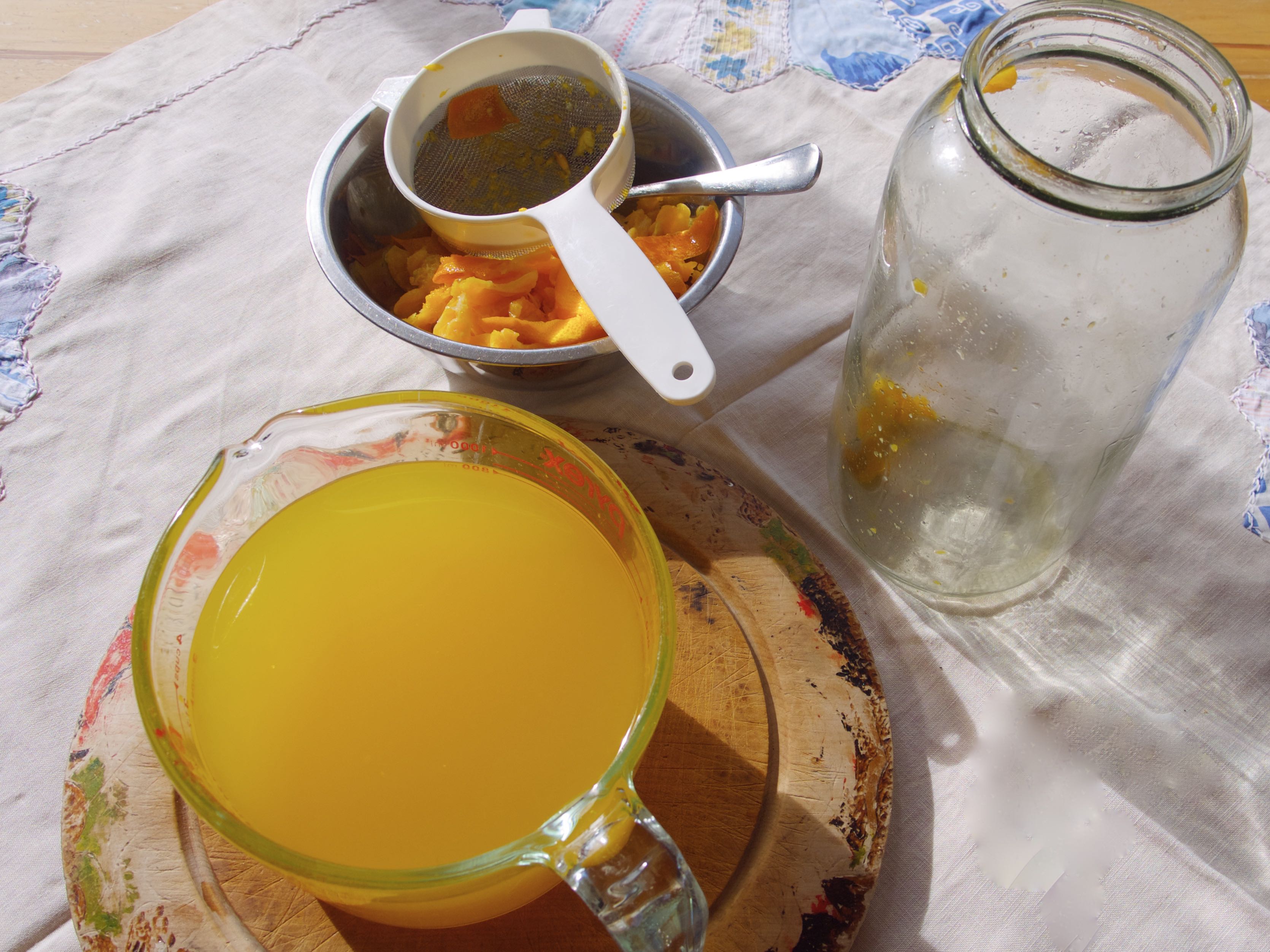
4: Carefully tip all this into the clean jar (perhaps using a spoon to ferry the solid mandarin pieces into the jar first before pouring the liquid in) along with the slices of mandarin peel, and then pour in the entire bottle of vodka. Screw on the lid and store the jar in a cupboard – ideally, one out of sight where you won’t be constantly reminded of its progress – and leave it for a month, occasionally giving the jar a careful swirl (I say ‘careful’ because I’m still haunted by the memory of dropping a jar of quince-infused brandy onto the ground back in 2010). If your vodka is particularly high-proof you can probably get away with considerably less waiting time than a month; obviously, the only way to know this for sure is by doing regular taste tests.

5: Once the month is up, strain the contents of the jar through a sieve into a measuring jug, pressing down on any pieces of fruit with the back of a spoon to extract their last gasps of flavour. Then stir in the vanilla and funnel the liquid into clean bottles. It should keep just fine in the cupboard but will taste particularly excellent if stored in the fridge or freezer.

Makes – depending on your mandarin quantity and quality – just over a litre.

P1200311

music lately:

Fast As You Can by Fiona Apple. The way she just – does – that!!

Say Hey by Branford Marsalis Quartet and Terrence Blanchard, from the Mo’ Better Blues soundtrack. The kind of jazz that makes you feel like the main character.

Could I Leave You from the Sondheim musical Follies, performed here by Dee Hoty for My Favourite Broadway: The Leading Ladies in 1998, a highly comforting yet exhilarating concert that I revisit frequently. This is such a good song in anyone’s hands, but Hoty has precisely the steel and elegance and control that makes it really shine.

Supervixens, by A.R Kane, the thing about this song is that I just never stop listening to it!

PS: If you like my writing and wish to support me directly, there’s no better way than by stepping behind the claret velvet VIP curtain of my Patreon. Recipes, reviews, poetry, updates, secrets, stories, all yours on a monthly basis. There’s no better time than right now – your support helps me to make all these blog posts!
Vegan Lemon Poppyseed Loaf Cake

P1200297

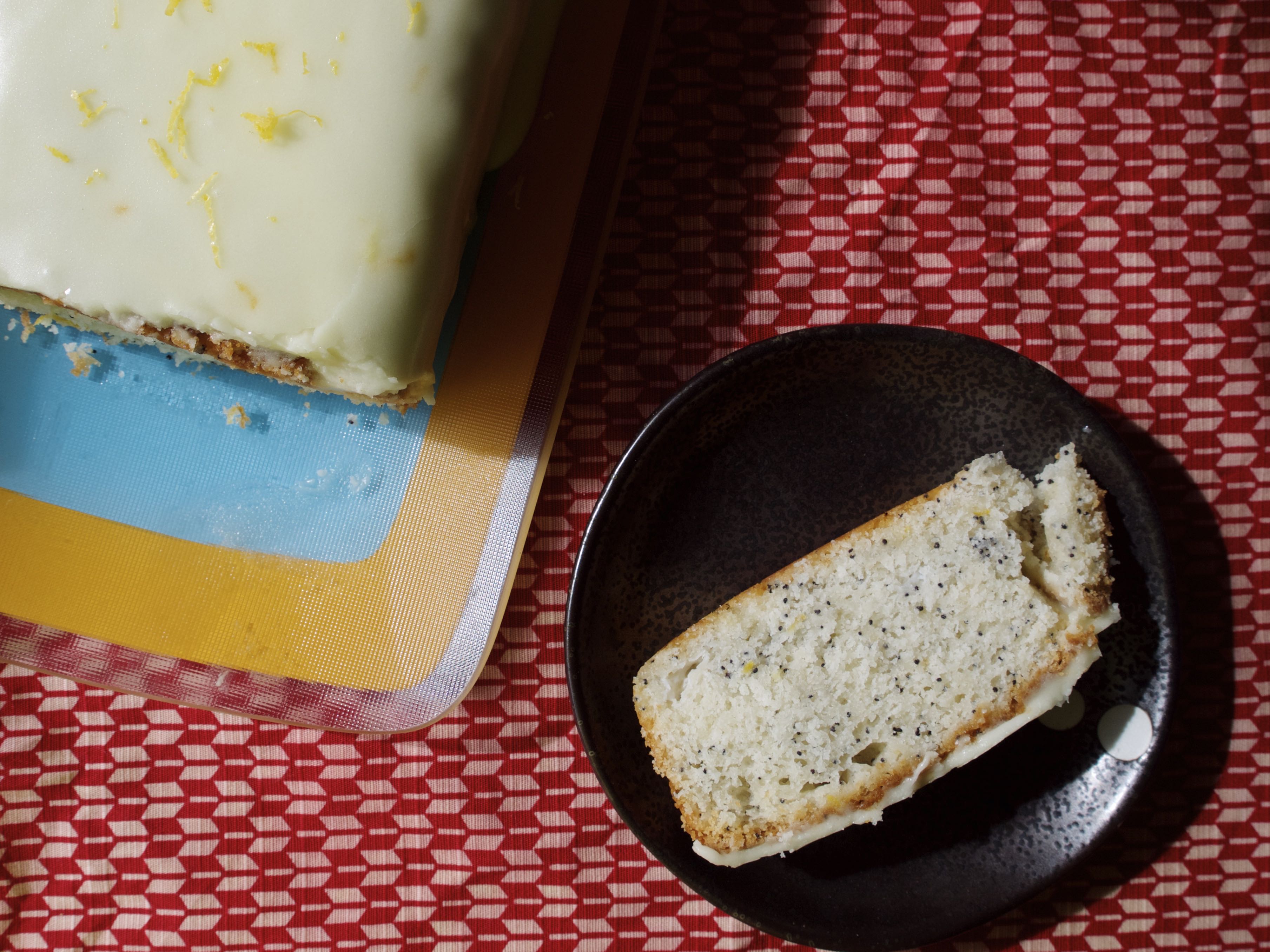
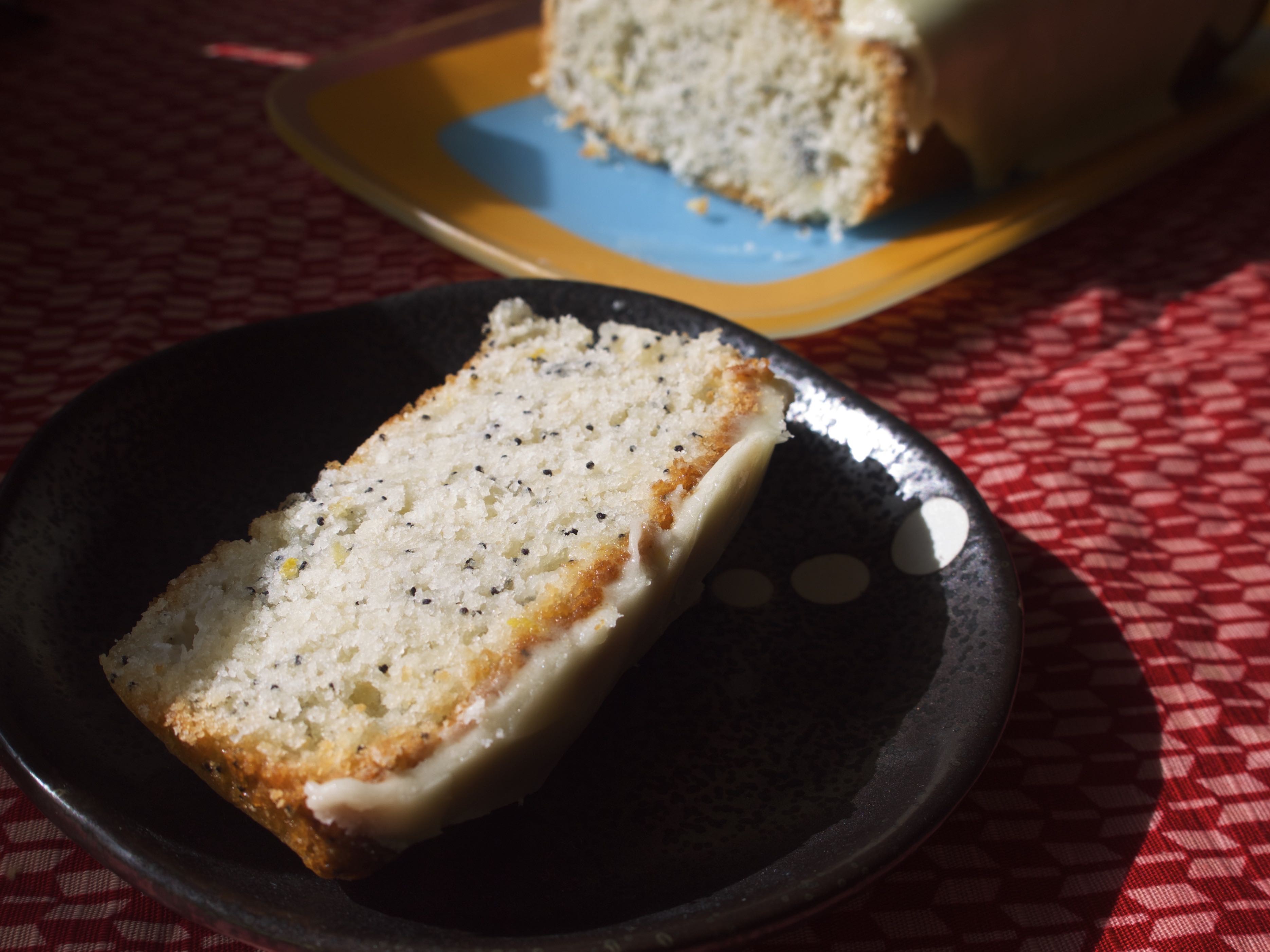
Just a simple one, this time. A simple, one-bowl vegan lemon loaf cake that deftly manages to be nothing special and utterly magnificent at the same time, the line that loaf cakes specifically are so good at balancing upon. We’re back in lockdown again, although for me it feels different to the first one in 2020 because we now have the benefit of hindsight. I was genuinely delighted when this lockdown was announced and welcome any extensions to its stay – a response less rigid than this would’ve been considerably more hellish and anxious to endure in both the short and long term.

I wasn’t even going to blog about this loaf cake – as you can probably tell by the very hasty and inelegant photos and lack of accompanying TikTok – it was a variation on an older lemon cake recipe, with some poppy seeds thrown in because I just think they’re neat. It tasted so good though, and was easy to make, and that’s reason enough to share it. And we’re in lockdown, what else am I going to do?

P1200295

This cake has a light, springy crumb and enjoys a triple dose of fresh lemon flavour – and there are few things so cleanly optimistic as the scent and flavour of lemon – in the batter, of course, in the icing, and in what I call The Brine, where you pour a mixture of lemon juice and salt over the cake while it’s still hot from the oven. I know that squeezing juice over an oven-hot cake is hardly a new proposition but in these trying times, you have to romanticise what you can – calling it a brine makes me feel like I’ve really Done Something. If you find that insufferable (a reasonable stance!) then absolutely feel free to ignore the name but please don’t ignore the step itself, which adds to the dense citrus presence and provides alluring contrast to the sugar in the icing.

It’s not that my thoughts turn to baking more while we’re in lockdown, since I’m always thinking about baking anyway – but if you’re in the market for something relaxed and delicious, indeed, if you’re simply in the market to think about baking more at all, this loaf cake could be the one.

P1200291

Vegan Lemon Poppyseed Loaf Cake

A simple, classic loaf cake mixed quickly in one bowl and positively levitating with lemon flavour. You can use oranges or limes or a mix instead, and of course, leave out the poppy seeds if you don’t have them. The icing is optional but also absolutely not optional – those are your options. Recipe by myself.

  • 1 and 1/2 cups flour
  • 1/2 teaspoon baking soda
  • 1 teaspoon baking powder
  • 3/4 cup sugar
  • 1/4 teaspoon salt
  • 1/4 cup rice bran oil (or similar flavourless oil)
  • Juice and zest of 2-3 lemons – enough to give you 1/3 cup juice
  • 1 cup/250ml full-fat coconut cream
  • 1/2 teaspoon vanilla extract
  • 2 tablespoons poppy seeds

For the brine:

  • juice of 1 lemon
  • 1/4 teaspoon salt

For the icing:

  • 1 tablespoon coconut oil, melted
  • 1 tablespoon coconut cream
  • zest and juice of one lemon – enough to give you around 3 tablespoons of juice
  • 1 and 1/2 cups icing sugar (though be prepared to add more)

1: Set your oven to 180C/350F and line a loaf tin with baking paper.

2: Stir the dry ingredients together in a mixing bowl – I sieve in the baking soda and baking powder to prevent any lumps – then make a well in the centre and pour in the oil, lemon juice and zest, coconut cream, vanilla and poppy seeds. Fold everything together to form a thick pale batter, spatula it into the loaf tin, and bake for about 40 minutes – depending on your oven – or until the top is firm and springy without any liquidy wobble beneath. Also – shake the can of coconut cream first before opening it, as they tend to separate into thicker cream and watery liquid and you want a good mix of both.

3: For the brine, zest the lemon and set that aside for later use (either throw it into the icing or sprinkle it on top of the finished loaf cake) and then mix the juice of the lemon and the salt together in a small ramekin or measuring cup until the salt has more or less dissolved. Spoon this mixture evenly over the cake while it’s still hot from the oven, and then let the cake cool completely before icing.

4: For the icing, mix everything together in a bowl to form a thick frosting – you may need to add more icing sugar – and refrigerate until required. Spread the icing thickly over the cooled loaf cake and sprinkle over any remaining lemon zest (or just zest another lemon – or you could sprinkle over some more poppy seeds.)

Note: I’ve never made this with anything other than full-fat coconut cream. Logic would suggest you could replace this with any milk – but since I haven’t tried it, I can’t guarantee the cake will then turn out how it should. On the other hand, I used a little coconut cream in the icing since I had it leftover from the open can used for the cake batter; you can definitely just use soy milk etc here instead.

P1200301


music lately:

That Life by Unknown Mortal Orchestra. New music by UMO is always good news. When the music video employs dancing muppets, so much the better. I love the way their music goes down but up at the same time, you know?

Kiss Off by Violent Femmes, a shaggy, Modern Lovers-esque exercise in sincerity, the sort of song where every part that comes along makes you say “oh wait THIS is my favourite part”.

No Good Deed sung by Shoshana Bean, from the musical Wicked – in all my years of being a fan of this show I was never particularly occupied with Ms Bean – which is nothing whatsoever to do with her talent! – there are so many portrayals of this role and I only have so many hours in the day. But this rendition of Elphaba’s last big song of the second act – a grainy video from 2005 of a performance on the Martha Stewart show of all things – stopped me in my tracks. The power and control in her voice – the way she can make her voice leap a tall building and then bring it back into the palm of her hand – while still managing to do capital-A Acting – is astonishing. I’ve heard this song a zillion times, this felt like hearing it for the first time again.

PS: If you like my writing and wish to support me directly, there’s no better way than by stepping behind the claret velvet VIP curtain of my Patreon. Recipes, reviews, poetry, updates, secrets, stories, all yours on a monthly basis. There’s no better time than right now – your support helps me to make all these blog posts!

Vegan Gochujang Bokkeum

P1200275

I’ve been vegan for about three years now, and comfortably so, but I’m only human and despite my claims, it is not just white chocolate that makes me occasionally question my every last firmly-held conviction. It’s Folu’s Unsnackable newsletter, it’s the memory of a filet o’fish – not that I think it would be hard to make a vegan dupe but a recipe for those pillow-tender steamed buns as yet eludes me – and it’s all the Korean food creators that I follow on TikTok. This recipe for gochujang bokkeum – a fried gochujang sauce with onions and beef – by Johnny Kyung-Hwo Sheldrick algorithmed its way onto my phone, and it looked so delicious, and I was sure I could make it vegan easily enough without squandering the vibe of the original recipe. (More so than the person who commented “is it vegan” to which Johnny gamely and politely replied, “without the beef it is”, such is the state of critical thinking these days.)

P1200276

Far be it from me to suggest that the food of a cuisine that isn’t mine needs me to meddle in it but as it stands, I don’t eat beef but I wanted to eat this. I’m delighted with my variation and I’m delighted that I found the original recipes that inspired it; I wouldn’t have come up with this without them. Rather than use a fake meat as a replacement I decided a rubbly mixture of blended up peanuts and sun-dried tomatoes would be ideal, and they were – the peanuts give texture, protein and nutty mildness; the sun-dried tomatoes add concentrated, near-meaty dark red savoury flavour and stickiness.

So far this gochujang bokkeum has been delicious on cold noodles, on hot noodles, and mixed into stir-fried vegetables with fake chicken; I know in my near future there’ll be a big spoonful of this on a bowl of rice with fried mushrooms, and I feel like it would work beautifully with a creamy texture as well – like these coconut chilli tofu noodles.

@hungryandfrozen

vegan gochujang bokkeum 🌶 SO DELICIOUS thanks @johnnykyunghwo for the inspiration🌶 #vegankorean #recipe #gochujang #veganrecipes #foodblogger #fyp

♬ Rumble – Link Wray & His Ray Men

All the peanuts and tomatoes spread that chilli heat out a little, but eating this is still a vigorous experience, and the gochujang, a Korean fermented chilli paste, is definitely pretty fiery. But it’s not only hot. It’s got these shadowy layers of flavour and depth and, as Nigella Lawson said in her book Kitchen, an “almost liquorice intensity”, a description that dances in my mind whenever I eat it. Besides, heat tolerance is a moving target and the only way to get used to it is to eat more. I don’t consider myself even close to being able to handle a lot of chilli heat and yet I keep sneaking spoonfuls of this; after a while your tastebuds do adjust – eventually you’ll be spooning it onto your breakfast cereal.

P1200279

Vegan Gochujang Bokkeum

This Korean fried chilli sauce is seriously delicious and versatile. I’ve replaced the usual meat with peanuts and sun-dried tomatoes, but the star ingredient is, of course, gochujang, a Korean fermented chilli paste. My vegan version is both inspired by and based on this recipe at Racheerachh Eats and this TikTok by Johnny Kyung-Hwo Sheldrick.

  • 1 onion
  • 2 garlic cloves
  • 1 and 1/2 cups raw peanuts
  • 10 sun-dried tomatoes
  • 1 tablespoon vegetable oil (I used rice bran)
  • 2 tablespoons brown sugar
  • 2 tablespoons mushroom soy sauce (or regular soy sauce)
  • 1/2 cup gochujang
  • 1 tablespoon sesame oil
  • 1 tablespoon sesame seeds

1: Finely dice the onion and roughly chop the garlic. Place the peanuts and tomatoes in a food processor and blend them into a chunky paste; the peanuts should be in small pieces but not in any danger of turning into peanut butter.

2: Heat the vegetable oil in a heavy frying pan and gently fry the onions and garlic till they’re softened. Spatula in your peanut and tomato mixture and fry for another five minutes, stirring often – don’t expect it to brown or change appearance considerably – then stir in the sugar and soy sauce and keep stirring till the sugar has melted into everything.

3: Add the gochujang to the pan and continue to fry and stir for another couple of minutes, it will be a fantastic dark red shade and quite thick. Remove from the heat, stir in the sesame oil and sesame seeds, and transfer to an airtight container or clean jar. Store in the fridge.

Makes around 2 cups.

  • Gochujang is more readily available in chain supermarkets these days but since most of my favourite ingredients come from Asian supermarkets anyway I tend to just get it there; either way, I’m afraid to say I go for the one labelled “mild”.

P1200282

music lately:

Mijn Droom [I Dreamed a Dream] by Pia Douwes from the 1991 original Dutch production of Les Miserables. I love finding the people in non-English speaking countries who are the go-to for theatre roles (like German powerhouse Willemijn Verkaik) and though I’ve heard of Pia Douwes I’ve never investigated her singing before, it was after watching a TikTok by BroadwayBob that I simply had to. She has this gutsy yet vulnerable voice that is made for the stage; I also highly recommend her Sally Bowles in the Dutch language Cabaret, it is, as you can imagine, quite powerful.

Legend of a Cowgirl by Imani Coppola, it’s the most 1997 sound imaginable and yet still so fresh and arresting and irrepressible and she should’ve been a megastar off the back of it.

It Hurts Me Too by Karen Dalton, one of those songs and voices that just makes you tearful the second you hear it. Good crying, not crying-crying, but after a while who can even tell!

PS: If you like my writing and wish to support me directly, there’s no better way than by stepping behind the claret velvet VIP curtain of my Patreon. Recipes, reviews, poetry, updates, secrets, stories, all yours on a monthly basis. There’s no better time than right now – your support helps me to make all these blog posts!
Rhubarb, Raspberry, and Cardamom Jam [vegan]

P1200255

I never feel more normal than when I’m quietly, as if by automatism, trying out a recipe that appeared in my head. “Normal” has twofold meaning here, in that I feel most calmly myself when I’m dithering away in the kitchen, and also I imagine this must be what it feels like for other people when they achieve everyday tasks the moment they arise. Tasks like using the phone to make an innocuous appointment, or tidying a living space, or, more broadly, maintaining one liveable salary instead of corralling a skittish herd of seventeen different tiny one-off payments every month.

Not that any such notions troubled me when I blissfully – with head empty, no thoughts, only preserves – made this Rhubarb, Raspberry, and Cardamom Jam on Saturday morning five minutes after the idea appeared to me. It was only once the jar lids popped under the pressure of the heat rising from the boiled fruit that things got existential, and it hasn’t quite left me, but at least I have delicious jam to eat.

P1200259_2

If you don’t regard yourself as the jam-making type, this could be the recipe for you. It’s small-batch, meaning you don’t have the stress of committing to vats and vats of jam; (although this was purely informed by the amount of rhubarb in the garden and raspberries in the freezer; had I more fruit, I would’ve made more jam.) It’s soft-set – almost like a compote, as much ready to be spooned over ice cream or yoghurt as it is gunning for your next piece of toast – so you don’t have to concern yourself with whether it’s gelling adequately. And it’s a startling and glamorous shade of hot pink which surely is a point in its favour – when it comes down to it, I myself am barely the jam-making type but I remain easily swayed by aesthetics, if anything I’m constantly on the eager look-out for an aesthetic to be swayed by.

This is probably important too: the jam is sweet, but balanced stridently by the sour wince of rhubarb. The raspberries also pack significant tang for their buck, and there’s a further squeeze of lemon juice, partly for added pectin, partly to make the sugar really earn its place. Cardamom has a lemony, gingery, musky flavour and even in its small quantity, it makes these qualities felt and lends an air of elegance to the otherwise fairly brassy jam. I mean brassy as in vibe, not flavour, in case you were suddenly worried about encountering ‘notes of door handle’ or something. This recipe makes enough for two medium jars with a little leftover to be spread immediately on toast – what is that, if not an achievement of the highest order?

P1200268

Rhubarb, Raspberry, and Cardamom Jam

This soft-set small-batch jam is easy to make, delicious, and a charming shade of bright pink. Makes around 400-500ml – I filled two medium-sized jars and ate the rest spread on toast. Recipe by myself.

  • 400g rhubarb (trimmed weight) cleaned and trimmed
  • 125g raspberries (roughly one cup – I used frozen)
  • 1 lemon
  • 200g sugar
  • 2 cardamom pods
  • 1 teaspoon vanilla extract

1: Cut the rhubarb into 1-inch pieces and place them in a bowl with the raspberries. Use a vegetable peeler to remove as many viable strips of peel as you can from the lemon, and add this to the bowl, then cut the lemon in half and squeeze its juice into the bowl.

2: Tip the sugar into the bowl and stir it into the fruit. Press against the two cardamom pods with the flat side of a knife or the base of a jar until they’ve just split, and add them to the bowl too. Cover the bowl and leave it to sit on the bench for about an hour, by which point some of the sugar should have dissolved and drawn out the juice from the fruit.

3: While this is happening, why take the opportunity to sterilise your jars? Place the lids in a small bowl and cover them with boiling water, and place your clean jars into a cold oven, turn it to 100C/200F, and heat them for about fifteen minutes. The jars need to be hot when the jam goes in, so leave this step till towards the end of the steeping time.

4: Scrape every last bit of fruit and sugar and newly-formed syrup from the bowl into a saucepan.  Bring to the boil, stirring regularly, and then lower the heat slightly and let it simmer briskly – still stirring frequently, as keeping it moving will stop it sticking to the pan and burning – for another seven to ten minutes until the fruit has completely collapsed and the mixture has thickened and reduced. Remove the cardamom pods and lemon peel with a pair of tongs, or live dangerously and leave them in (I forgot about them until they were already in the jar but it’s all in how you frame it.)

5: Either using a jam funnel or a spoon and a careful hand, transfer the jam into the hot, sterilised jars (I don’t know if you need me to tell you this, but if you place the hot jars on a wooden board they’re much less likely to break than if you place them on a cold bench) and place the lids on right away, fishing them out of their bowl of water with a pair of tongs and protecting your hands with an oven mitt or tea towel (again, I don’t know if you need me to tell you this, but I know the one time I relax and let the information remain implicit, someone will get hurt and I will feel responsible!)

Keep the jam in the fridge once opened.

P1200256

music lately:

Map Ref. 41°N 93°W by Wire. If a title is going to be that annoying to type out it better be a good song; fortunately this very much is.

So Little Time by Micki Grant, from the 1972 musical revue Don’t Bother Me, I Can’t Cope – the first Broadway show directed by a Black woman (Vinnette Caroll) and to have its music and lyrics written by a Black woman (Grant.) This song has such a warm, poignant vibe – like it could be the theme tune to a TV show that you’d watch when you were sick and didn’t go into school and got to doze on the couch all day.

Ruby by Ali Farka Touré and Toumani Diabaté from their 2010 album Ali and Toumani, but I’ve linked the whole thing so you can just swim right into its beauty – if you want music that’ll make you feel safe, yet important, yet inspired, yet also like you’re drifting gently to sleep under a weighted blanket, then, by all means, click through.

PS: If you like my writing and wish to support me directly, there’s no better way than by stepping behind the claret velvet VIP curtain of my Patreon. Recipes, reviews, poetry, updates, secrets, stories, all yours on a monthly basis. There’s no better time than right now – your support helps me to make all these blog posts!

Lentil, Radish, Avocado and Fried Potato Salad

IMG_0859

The one area in my life where I have a confident surplus of initiative is cooking – when nothing makes sense and the increasingly burdensome administrative tasks involved in being an adult are gleefully multiplying like the broomsticks in The Sorcerer’s Apprentice, I can still invent a recipe or be delighted by a hypothetical combination of flavours. July has been a taxing month and these reliable instincts fell somewhat dormant, but I was jolted back to life by seeing this Lentil Salad TikTok by food writer Bettina Makalintal – suddenly I felt excited again because making this recipe was in my near future. And besides, I gain as much joy from outside inspiration as I do from coming up with my own ideas (okay, maybe it’s more of a self-satisfied forty/sixty split), and it takes initiative to recognise someone else’s initiative, right? (As you can see, I may lack initiative, but at least I’m constantly worrying about it!)

Lentils and tofu are usually first under the bus when non-vegans discuss vegan food but as I always say, this is an issue with cooking ability, not the meal itself. Unseasoned, poorly cooked food is gross whether the protein source grew in the ground or walked the earth. You have to give the lentils some flavour and texture to cling onto otherwise they’re left stranded and bland. This superb salad – it does right by the lentil.

IMG_0829

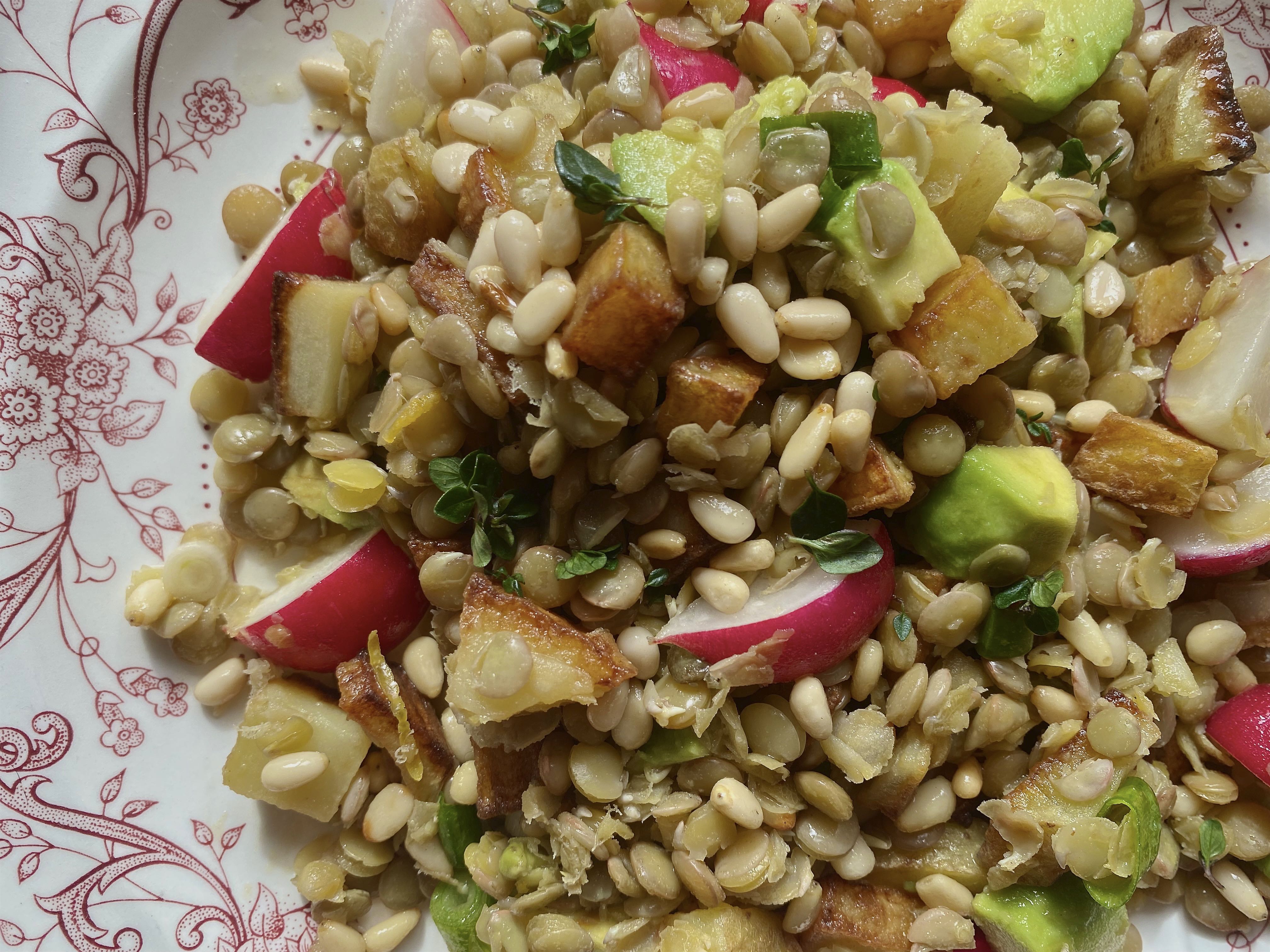
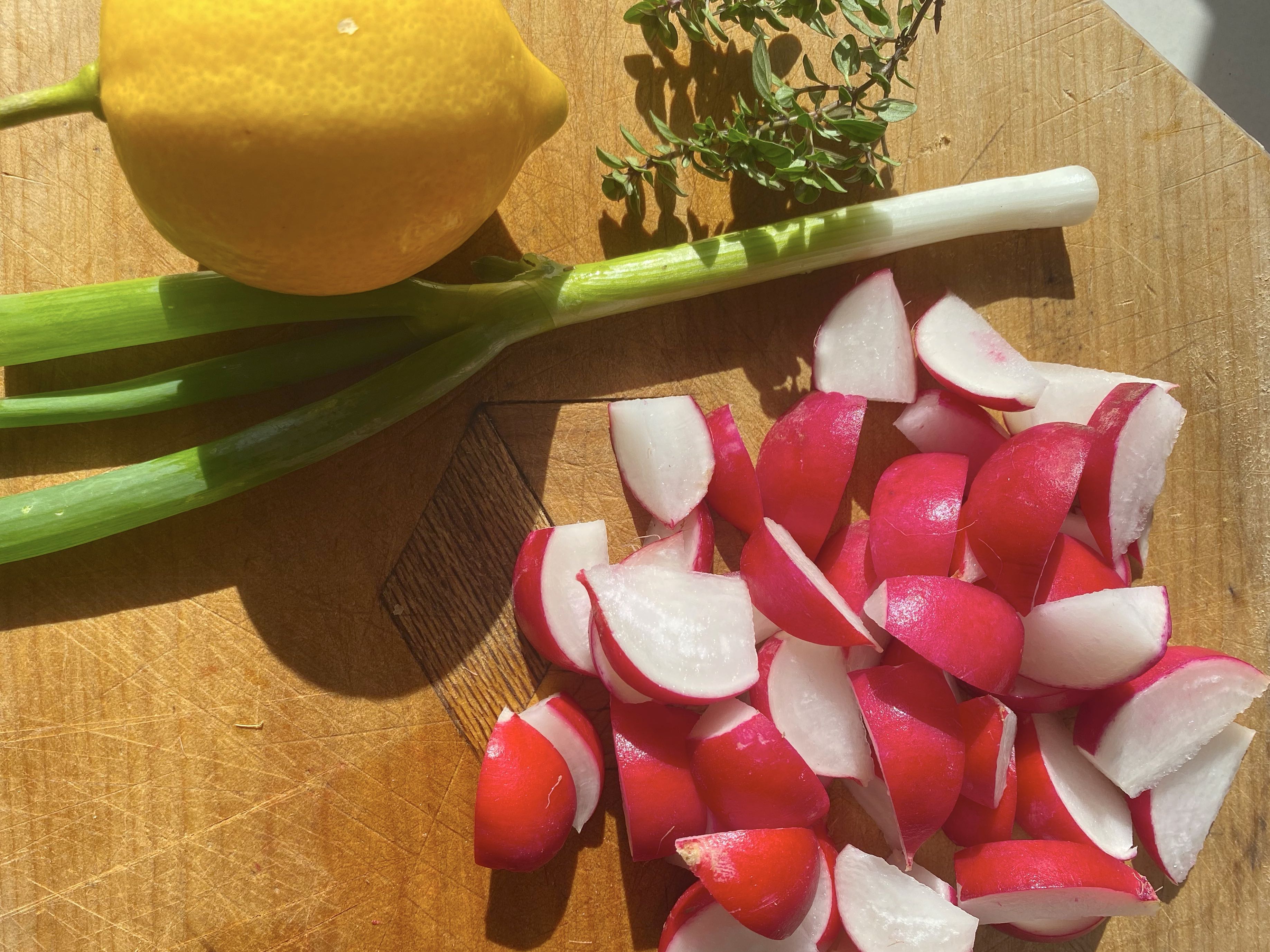
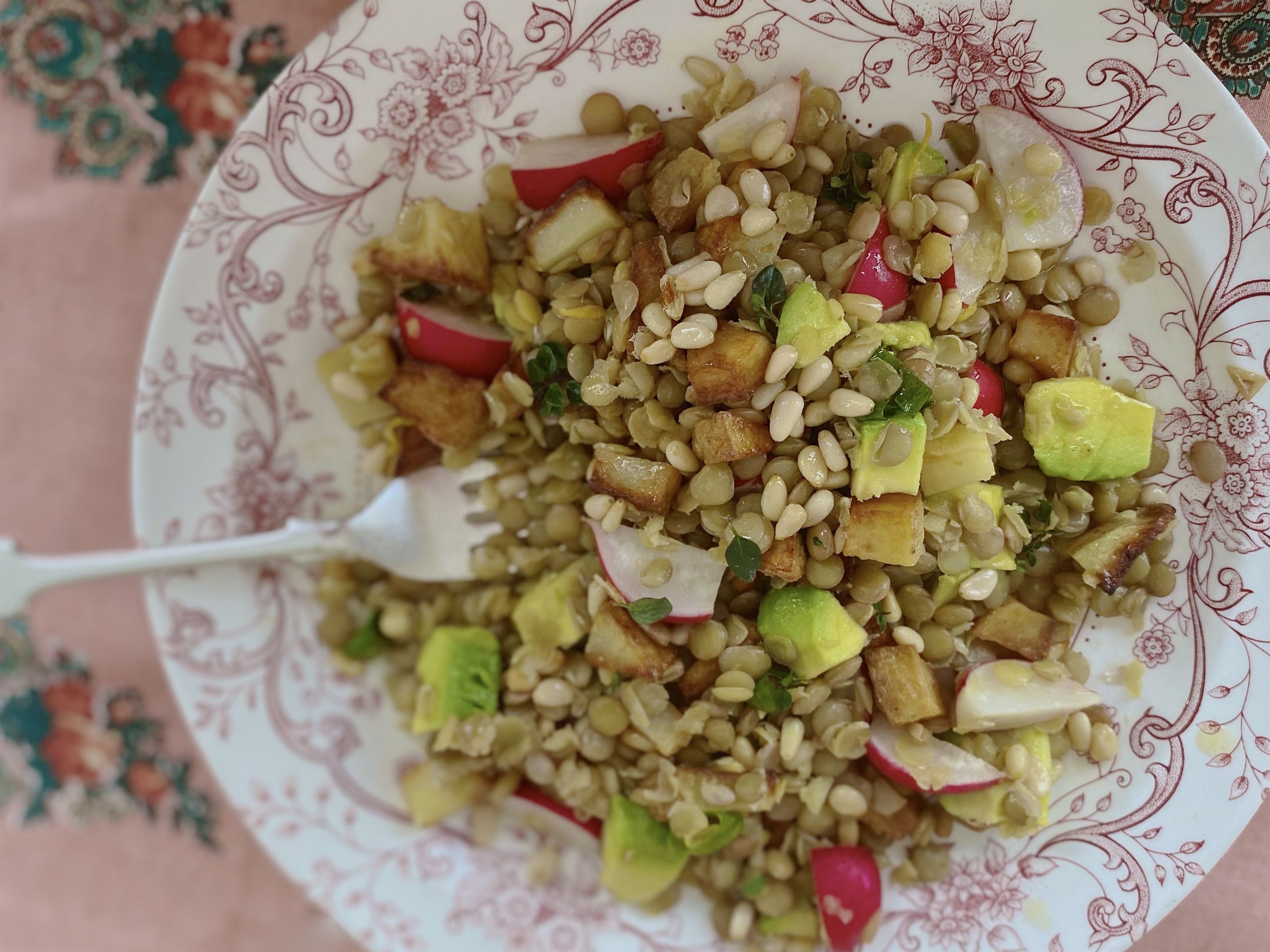
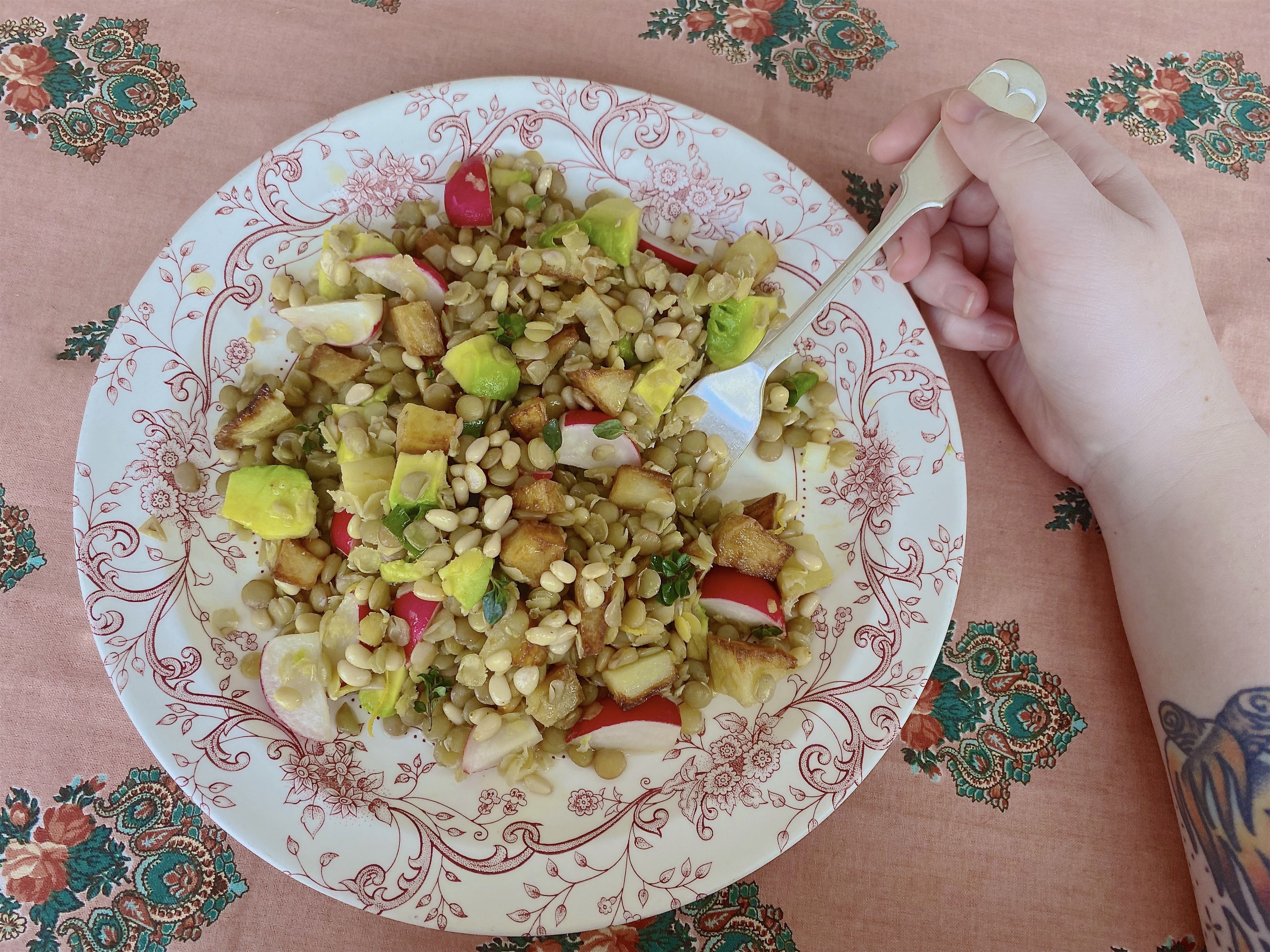
My recipe takes key elements of Bettina’s salad – the lentils, obviously, the peppery pink crunch of the radishes and plenty of lemon – along with my own added extras. There’s resiny thyme leaves, a diced avocado since I had one kicking about and it’s impossible to be sad when there’s an avocado involved, a generous quantity of mushroom soy sauce because it’s my current obsession, toasted pine nuts with garlic because to me pine nuts are just so classy – which I realise makes me sound more Kath Day-Knight than Old Money but I know where I’d rather be – and golden cubes of crisply-fried potato. The latter concept was inspired both by Nigella Lawson’s fried potato croutons in her Caesar Salad and a recipe by Rachel Ama for lentils with crispy new potatoes. It truly takes a village to make a salad!

This lentil salad is so delicious – leaving no adjective behind, it’s a perfect balance of oily, salty, sweet, earthy, peppery, crunchy, creamy, and tender. And it’s pretty, too, something the lentil doesn’t always get to boast – not since Elphaba and Galinda has pink looked so good with green. As is the nature of this kind of recipe you can add or subtract ingredients to your heart’s content, and despite being wedded to the classy pine nut, next time I’d definitely make this with the fried walnuts in Bettina’s recipe for a more pronounced crunch. There’s also lime juice or cherry tomatoes and basil to consider, or fried leeks, or olives, or rosemary, or pecans – the amicable lentil can handle it all. I’m slowly working on a newsletter where I plan to review various fake meats (the slow part is because CMS makes my head cave in on itself) but I enjoyed being reminded of the stalwart legume and its merits. It’s rather shamefully been years since I blogged a lentil recipe, and this salad will keep them on my mind from now on.

IMG_0870

Lentil, Radish, Avocado and Fried Potato Salad

A simple but lush vegan lentil salad, ideal for lunch or dinner in its entirety but also very bring-a-plate friendly. It looks like there’s a lot of steps, but you’re really just mixing a bunch of stuff together, and ingredients are pretty loose, quantity-wise – feel free to add or subtract depending on your taste and needs. Recipe by myself, inspired by this salad by Bettina Makalintal.

  • 1 and 1/2 cups dried brown lentils
  • 8 small radishes, trimmed
  • 1 spring onion
  • 2 lemons
  • 3 tablespoons olive oil, plus more for frying
  • 2 tablespoons mushroom soy sauce (or Maggi, or light soy sauce)
  • a generous pinch of white pepper, or to taste
  • 1 large floury potato
  • 1/2 cup pine nuts
  • 2 garlic cloves
  • 1 ripe but firm avocado
  • 2 tablespoons fresh thyme leaves

1: Rinse the lentils in cold water, then place in a bowl and cover with cold water and leave them to sit for an hour. You don’t actually need to soak them but it reduces the cooking time and I think there are some health benefits to it in terms of mineral absorption but don’t take my word for it.

2: Drain any water from the soaked lentils and tip them into a large saucepan with enough fresh water to generously cover (about the length of your index finger when prodded into the pan.) Bring the water to the boil then lower the heat and simmer the beans until they’re tender – this shouldn’t take more than 15 minutes. Keeping the heat low prevents the lentils from breaking apart and turning mushy, I was only semi-successful in achieving this but it still tasted fine. Strain the lentils, rinsing briefly in cold water to take some of the heat off, and set aside in a mixing bowl.

3: Cut the radishes into quarters and finely slice the spring onion. Make the dressing by zesting and juicing the lemon and mixing this in a small bowl with the mushroom soy sauce, olive oil and black pepper.

4: Scrub the potato clean if need be and dice it into small cubes. Heat another tablespoon or two of olive oil in a heavy frying pan and fry the potato cubes until golden and crisp – make sure they’re in one layer and give them about five minutes on the first side without moving them before turning over and cooking for another five minutes.

5: Turn off the heat, remove the potatoes from the pan with a slotted spoon and add them to the lentils. Peel and roughly chop the garlic cloves and add them to the pan with the pine nuts, and stir them in the residual heat until the nuts are lightly golden and toasted. Even though this isn’t happening on direct heat be sure to keep a close eye on it as both pine nuts and garlic burn easily.

6: Finally, tip the radishes and spring onions into the bowl of lentils and potatoes, then scrape in all the pine nuts, garlic, and remaining olive oil from the pan. Dice your avocado and add that to the bowl along with the dressing and the thyme leaves. Gently stir everything together and taste to see if needs more salt, pepper, or lemon.

Best served either immediately or after 24 hours in the fridge, by which point the potatoes will have lost their crispness but the overall flavour will have developed fantastically. If you’re making this ahead of time, either accept your uncrisp potatoes or fry them up at the last minute and stir them in. Finally – this is best at room temperature as opposed to fridge-cold.

Serves 4 generously as a light lunch, or 6-8 as a side dish as part of a larger meal.

IMG_0875

music lately:

Son of Birds by Dip In The Pool. The whole Aurorae album from 1991 is a sublime dreamscape from start to finish and that’s how I’d recommend listening to it, but this track, with its watery beat and film noir horns, is a charming entry point.

Don’t Leave Me by Blackstreet. A classic! The silky harmonies! Was there ever anything as poignant as that DeBarge sample! This song makes me feel like I’m wearing a cable knit sweater and slacks and a floor-length coat and pumps with a square toe and a square heel and I’m on the brink of divorce but in an aspirational, cinematic way!

The One by Limp Bizkit. Oh, I could pretend that watching the Woodstock 99 documentary with my brother is what made me nostalgic but the briefest scan of my timeline shows I’ve been enthusiastically listening to Limp Bizkit of my own volition for a long time. And even though this song is genuinely quite glorious with a similar downwards-diagonal intensity that you’d find in Shout by Tears for Fears or In Like The Rose by Black Rebel Motorcycle Club and I honestly love it so much and will play it five times in a row, we all know I’m going to play Limp Bizkit’s critically-reviled cover of Faith five times in a row after that – say what you like but I came of age with this band and none of us can deny the way Fred Durst’s voice soars in the bridge.

PS: If you like my writing and wish to support me directly, there’s no better way than by stepping behind the claret velvet VIP curtain of my Patreon. Recipes, reviews, poetry, updates, secrets, stories, all yours on a monthly basis. There’s no better time than right now – your support helps me to make all these blog posts!
Vegan Lemon Ice Cream [no-churn]

IMG_0173

It helps, when feeling on the back foot, to place what you’re doing within a wider context, to ground it, to lend precedence and credence. If you’re plagued with Main Character Syndrome like me you’ll already use this trick on a daily basis but for the rest of you it’s a great way to go from “another ice cream recipe? Really?” to “What do these artists have in common: Andy Warhol. Keith Haring. Yayoi Kusama. Gertrude Stein – that’s right, they incorporated repetition into their work and now they’re super iconic.” And then you point to yourself while saying “iconic”, thus indelibly cementing the association of you and that word. And then someone hands you a million-dollar record deal and it’s a hop skip and a jump to the top of the charts!

So yes, this lemon ice cream enters the room piggy-backing on my Twin Peaks Ice Cream method – which itself was a spin on the Feijoa Ice Cream method which was a vegan version of my original Feijoa Ice Cream! Because it’s such an easy and excellent way of making ice cream you can expect to see it pop up again sporadically in the future in further untold flavours, and should I ever want to repeat any of my existing ice cream flavour ideas I’ll probably be retroactively applying this method to them. (Although aquafaba will always have a place in my heart and my freezer.)

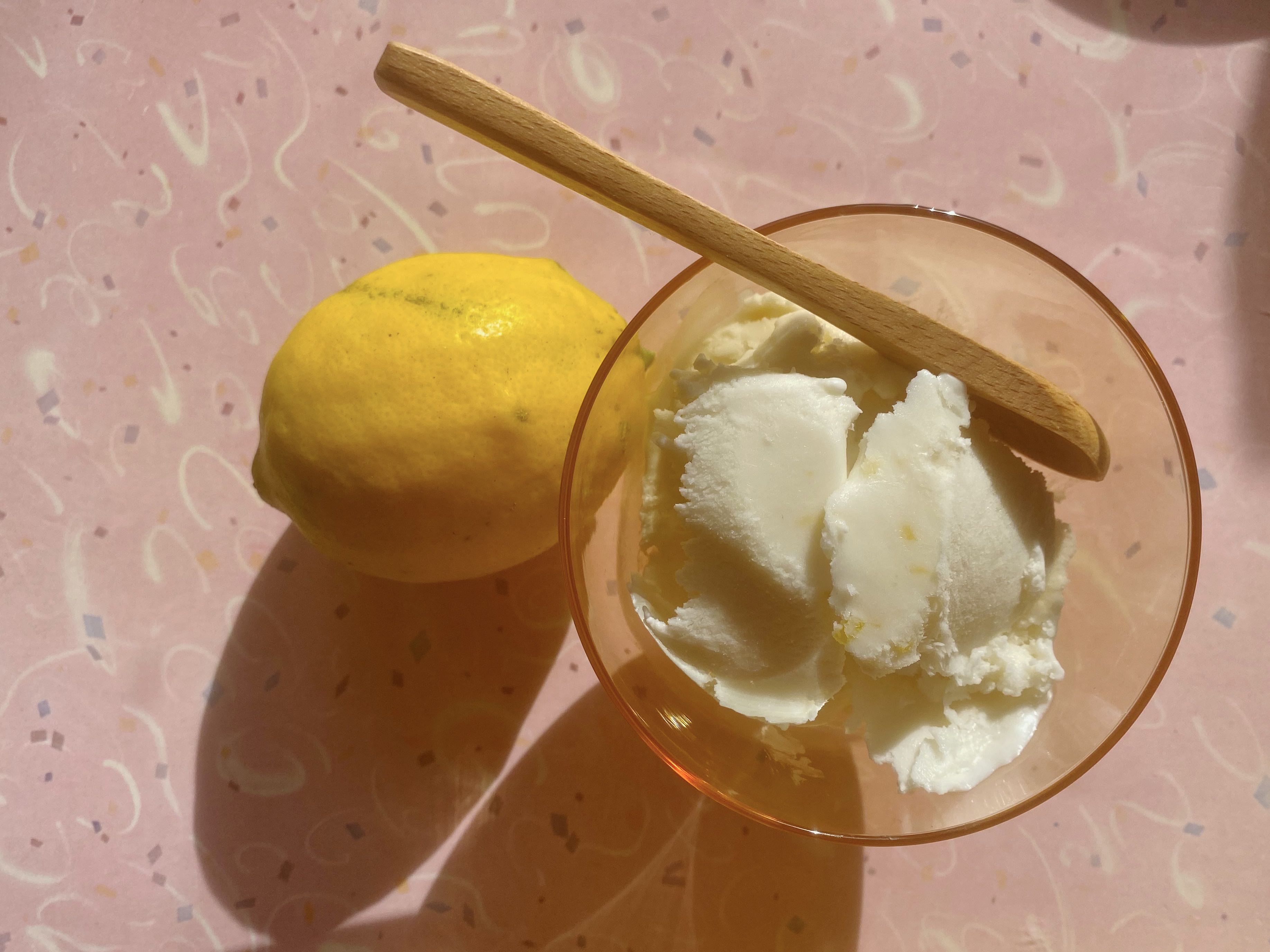
This iteration makes the most of the lemons which have happily burst into season just in time to give us some mid-winter sunshine. The scent of fresh lemon is enormously uplifting – although I take umbrage with the proliferation of TikTok videos claiming that eating lemon peel causes near-instant euphoria – and its sheer pure sourness matches well with a backdrop of lush coconut, giving a cloudless, sun-warmed beach towel vibe to even the frostiest of days. This is one of those recipes where you definitely still taste the coconut in the finished product but when the pairing is this perfect it’s a bonus, not a drawback. Unlike the Twin Peaks and Feijoa Ice Creams, I gave this mixture a brief go-over with electric beaters to aerate it before freezing. Where those ice creams were quite dense, this one is lighter and creamier – as befits its more delicate flavouring.

IMG_0180

You’d think ice cream would be the last thing anyone would want to make in the middle of winter but my favourite food knows no seasons, and the method is so relaxed and undemanding that I look forward to making this almost as much as eating it. And while there are few rewards for a life shackled by capitalism, a small good thing you can do as an adult to exert control and thumb your nose at practicality is to sit by a heater in your underwear and eat ice cream. I thoroughly recommend it. If you’re in the northern hemisphere and enjoying actual summer, I have to warn you that the seasonal inverse of this activity (eating a hot casserole in a swimming pool) just isn’t the same – but your time will come soon enough.

IMG_0183

Lemon Ice Cream

No-churn, three ingredients – vegan ice cream doesn’t get simpler than this. Recipe by myself.

  • 1 x 400ml tin full-fat coconut cream
  • 1 x 320g tin sweetened condensed coconut milk
  • 3/4 cup freshly squeezed lemon juice + the grated lemon zest
  • optional: a pinch of citric acid for extra zing

1: Place the coconut cream, sweetened condensed milk, and lemon juice and zest into a mixing bowl and beat on high for about three minutes using electric handheld beaters. If you don’t have electric beaters, just use a whisk and some upper body strength. You’re looking for an aerated texture – it won’t thicken or whip up but incorporating some air in it at this point will give a creamier texture later.

2: Stir in the citric acid if you’re using it and pour the mixture into a freezer-safe container. Place the lid on top and refrigerate the ice cream mixture for two hours before freezing for about six hours or overnight. It should be pretty scoopable straight from the freezer but may require a ten minute sit on the bench to soften first.

Makes around 1 litre.

IMG_0184

music lately:

Modern Dance by Pere Ubu. Jaunty and frug-y yet abrasive and awkward and coincidentally an excellent use of repetition? I love it!

You’re Dead by Nora Tanega. Cheerfully ominous, blithely jumping around time signatures, and exuding so much cool it could freeze a thousand tubs of ice cream.

There Will Be A Miracle by Mary Testa from Michael John LaChiusa’s 2005 off-Broadway musical See What I Wanna See, a mellow, tranquil oasis of calm in a fairly dark musical. The lyrics to this song are still dark but the melody is so gentle and Mary Testa repeating “there will be a miracle” is so soothing that you can zone out and vibe to it and feel pretty good about the world for a minute or two.

PS: If you like my writing and wish to support me directly, there’s no better way than by stepping behind the claret velvet VIP curtain of my Patreon. Recipes, reviews, poetry, updates, secrets, stories, all yours on a monthly basis. There’s no better time than right now – your support helps me to make all these blog posts!

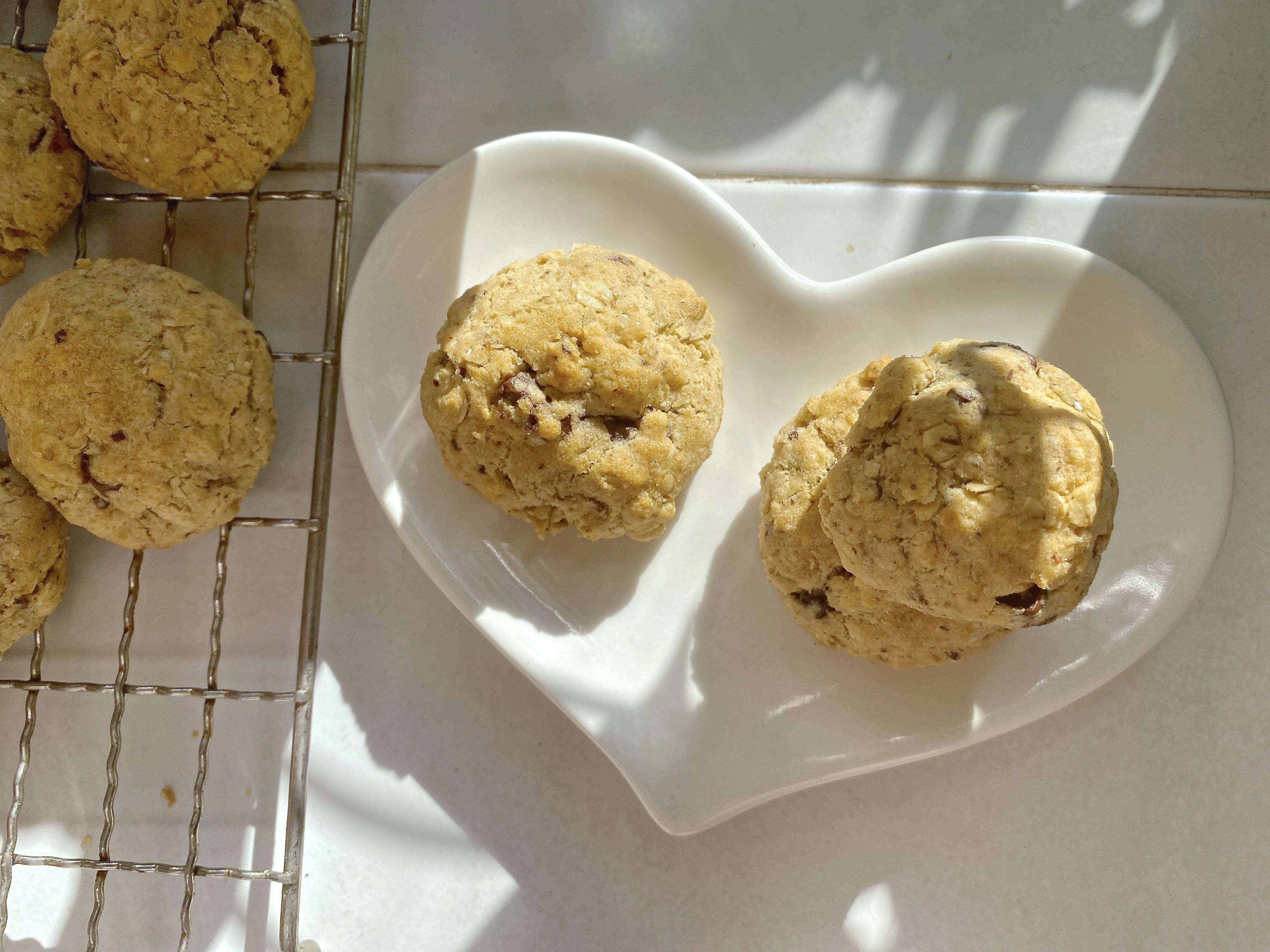
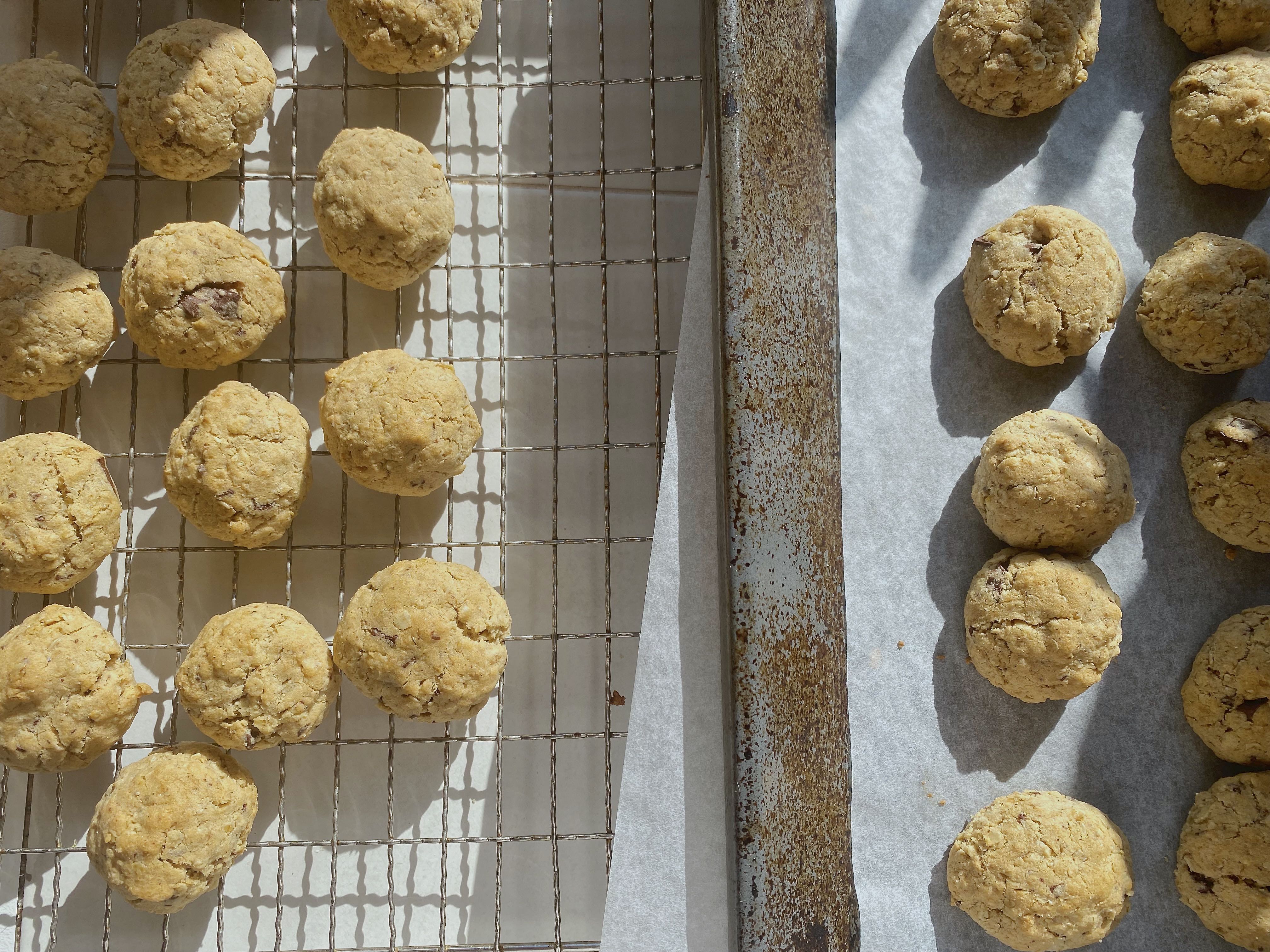
Vegan Chewy Chocolate Chunk Oatmeal Cookies

IMG_9877

Brevity is a rare treat round these parts but this week has munted my concentration levels – such as they are – so you’re spared my usual dissertation. The thing is there’s not a lot to say about these cookies anyway – they’re simple, they’re good, and they’ve got oats and chocolate in them.

These are a solid workhorse cookie, a stalwart, neither austere nor gilded, just the sort of thing you want to eat when the hand reaches half past the hour or when you hear water coming to the boil. In her most recent book, the excellent Cook, Eat, Repeat, Nigella Lawson says of a rice dish: “You will not get blown away by this. It won’t be the most electrifying thing you’ve ever eaten. This is not to disparage it…If I felt it weren’t worthy of your time or your table, I wouldn’t include it.” I appreciated her appraising description of the dish. Food-writing can lean all too easily on hyperbole, but when hyperbole is all you have, how can any recipe stand out – or stand up to scrutiny? (I like to claim that I never exaggerate – that my heightened language is simply the precise and appropriate response to whatever I’m describing – but I’m aware it definitely looks like a duck and quacks, hyperbolically, like a duck.)

IMG_9847

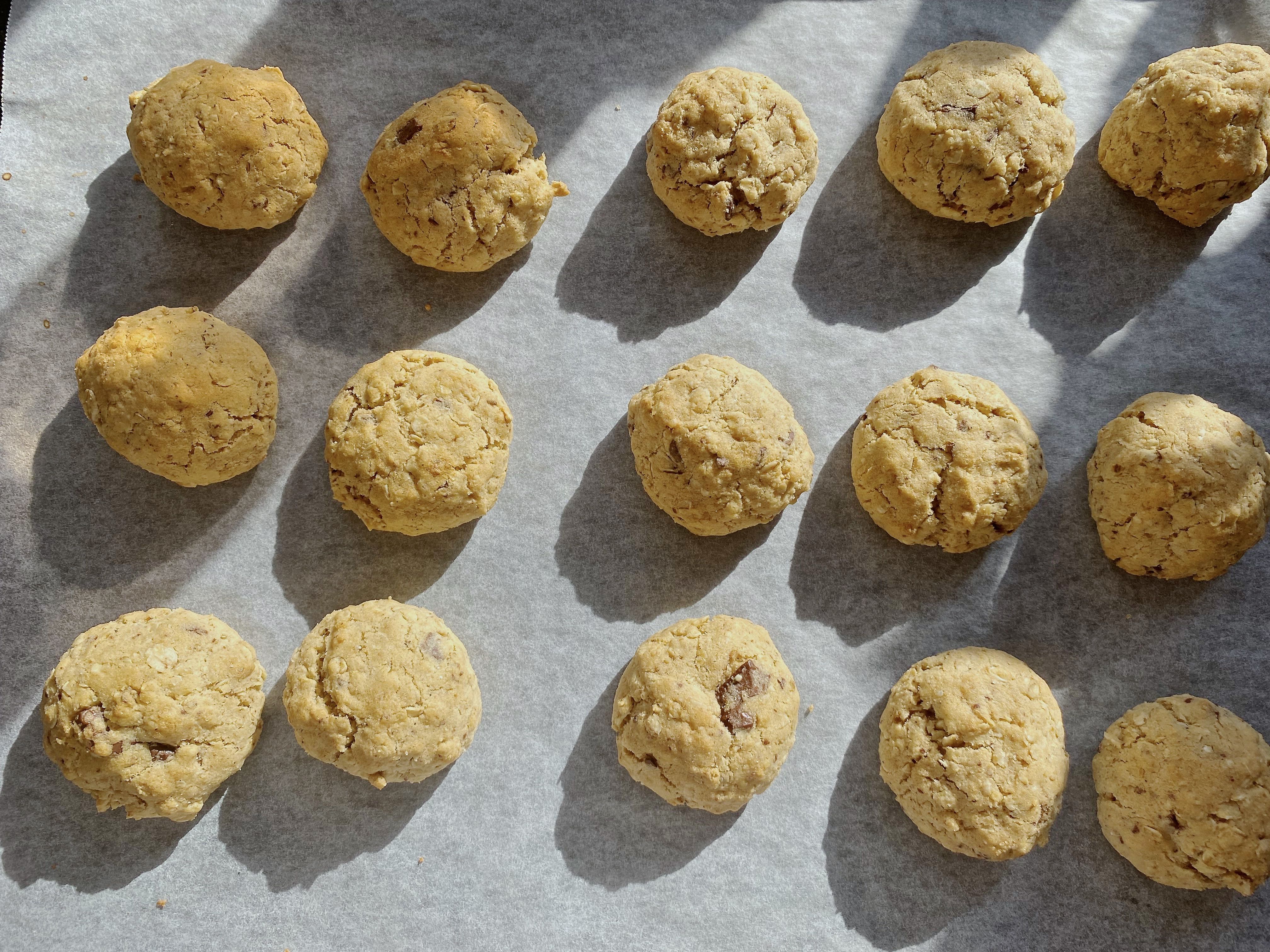
And don’t get me wrong, these cookies are delicious – with an almost custardy vanilla perfume and a modest scattering of chopped dark chocolate throughout their small round bodies. Importantly they’re as relaxing to make as they are to eat and behave beautifully – place a squat ball of dough on the baking dish with confidence that it will not spread, crumble, or cook too fast into an inedible rusk. Says Nigella of her rice dish, “there is just something quiet and lovely about it that seems to still the air around you as you eat.” Much the same could be said of these cookies. They won’t blow your hair back, and they’re not the sort of cookie to go viral, cruelly pulled apart and folded in half for the camera to reveal a dripping, uncooked interior. But they will make your life better in an unobtrusive fashion and sometimes that’s where your energy levels are at.

IMG_9878

Despite several hours of trying, and for reasons I cannot fathom other than everything these past few weeks has actively worked to thwart me, I couldn’t embed the cute TikTok video I made to go with these cookies, but you can view it here (or directly in the app of course.)

Vegan Chewy Chocolate Chunk Oatmeal Cookies

Easy, simple everyday vegan cookies, chewy from the oats and scattered with chopped chocolate. I genuinely don’t know how many this makes because I’m always eating the dough as I go, but from experience, if you only eat a modest quantity of dough and use a tablespoon measure to form the cookies, you should get 35. These cookies are loosely based on this recipe at Simple Sweet Vegan which I used as a starting point.

  • 2 tablespoons chia seeds
  • 6 tablespoons water
  • 1/2 cup soft vegan butter (eg margarine)
  • 1/4 cup neutral oil, I used rice bran
  • 1 cup brown sugar
  • 1/2 cup sugar
  • 1/2 teaspoon cinnamon
  • 2 teaspoons vanilla extract
  • 1 teaspoon baking soda
  • 1/2 teaspoon salt
  • 2 cups rolled oats
  • 75g-100g dark chocolate, roughly chopped small
  • 2 cups flour

1: Set your oven to 180C/350F and line two baking trays with baking paper. Mix the chia seeds and water together in a small cup or ramekin and set aside for the chia seeds to swell.

2: Place the butter, oil, and sugars in a mixing bowl and beat with a wooden spoon till they’re combined and fluffy. Beat in the chia seeds, followed by the cinnamon, vanilla, baking soda and salt – although you’re not going to get a ton of aeration here as you would with eggs I like to mix it energetically for a few minutes as if this were the case, it probably doesn’t have much effect but it feels like you’re doing something worthwhile.

3: Fold in the oats and chocolate pieces, then stir in the flour to form a very thick dough. Roll tablespoons of dough into balls and place on the trays – no need to flatten – about two inches apart. They don’t spread out but I like to give them a little room to breathe. Bake each tray one at a time for fifteen minutes each, transferring the cookies to a wire rack to cool before storing them in an airtight container.

Notes:

  • I haven’t tried it but I’m sure you could replace the chia seeds with ground flaxseeds
  • I promise the end result doesn’t taste a thing like margarine, and I am still the hardest boss to beat in this regard.
  • The cinnamon is barely detectable in the finished product and simply adds a sheer backdrop of comforting warmth, absolutely add more if you want it to actually taste of cinnamon.
IMG_9861

music lately:

Dark by Gary Numan. There’s a stretch of time in the late 90s that produced a lot of stupendous industrial music like this, in my head I call it “GreggArakiCore”, music that makes you feel like you’re wearing pleather pants and dancing in a decommissioned asbestos factory, I was only eleven in 1997 which is why my impression of this music is very stupid and surface-level but even a child can hear this and know for sure that it’s the music of people who are living.

New Rose, The Damned. My brother gave me a drum lesson the other day so I could accompany him on guitar, and I was pretty decent, as I should be three generations of drummers deep, and I went back out to the drum kit by myself a few days later and was simply astonished to discover I couldn’t immediately play one of my favourite songs just by staring at the drums and imagining the song in my head. Maybe next time! Anyway, listen to this song – doesn’t it make you want to play the drums? (We did manage a serviceable Just Like Honey played by ear but obviously, that’s pretty entry-level.)

The Story Goes On by Lea Salonga and Liz Callaway – two of the most crystalline, gleaming voices in musical theatre – this was Liz’s song in the 1983 musical Baby and the presence of harmonies with Lea only makes it even more beautiful – the towering, mountainous ending is just glorious and worth sticking around for.

PS: If you like my writing and wish to support me directly, there’s no better way than by stepping behind the claret velvet VIP curtain of my Patreon. Recipes, reviews, poetry, updates, secrets, stories, all yours on a monthly basis. There’s no better time than right now – your support helps me to make all these blog posts!
Vegan Miso Butter Noodles (two ways)

IMG_9354

Somewhere in the last ten years, two things happened: food blogs became more homogenised – facsimiles of facsimiles which trade strenuous perkiness for any discernible personality. And people on Twitter started complaining about food blogs, usually with the cadence of a joke but an absence of actual humour. “Get to the recipe, Karen”, they say, “I just want to know how to make pancakes, I don’t need to hear your life story. Don’t make me scroll through five paragraphs on your year abroad in the Tuscan hills and how it gave you a new appreciation for the mysteries of olive oil.” Everyone words it as though they’re the first person to be affronted by scrolling through a blog to find the recipe. Even Mindy Kaling tweeted this tired joke, and I know she knows how to be funny! (She since deleted it.)

Spend enough time ploughing in the Discourse Salt Mines and you’ll find insufferable takes on both sides (although anecdotal irritation doesn’t preclude one side from usually being considerably in the right.) For every re-tread of this same snide joke, there are a dozen earnest responses about valuing women’s labour (a valid point) and how bloggers get paid greater ad revenue if their posts are longer, or that Google SEO prioritises particular keywords and structures, or other words that mean nothing to me because my blog doesn’t earn me a cent and it’s too late to reverse-engineer any attention from Google’s finicky SEO.

IMG_9359

Yes, that’s certainly an explanation as to why these rictus-grin food blogs chant the same interchangeable phrases over and over, and my issue with them is that the writing is bad, not that I have to wade through it to get to the recipe – but my question is, why aren’t all the complainers simply reading better food blogs? And why are they so brutishly averse to even a shred of context and back story – who could possibly hate context? Imagine two marshmallows: one is sitting on a plastic plate on the floor in a room dimly lit by a flickering bulb, the second marshmallow is on a china plate on a tablecloth lit by candles with kittens roaming about and a sign saying “this marshmallow is delicious and hand-made using local ingredients” – which marshmallow do you think most people would choose? That’s context, baby! (I realise I accidentally made the first marshmallow sound cool as hell, but hopefully, you get what I was going for.) And even the most unreadable food blog is still providing you with a service, for free, that you could get elsewhere but you didn’t, because they made it easier for you – and I recognise how in their own bizarre bloodless way, these food blogs are as much social history as anything I’ll ever write or any food writer I love will ever come up with. They’re documenting a specific time when the tyranny of SEO flattened –

Okay, I also recognise the irony of kicking off such a blog post with absolutely no sign of the recipe in sight.

IMG_9357

This dichotomy of food blogs and those who consume them is always on my mind and the simplicity of today’s recipe for Miso Butter Noodles was what tied it all together for me and started this rant. Literally, just the simplicity: I was like, I have to reassure the readers that this is simple and they shouldn’t expect too much of it, but also that its minimal ingredients aren’t a mark of success in and of themselves and this is simple because it needs to be – and then I started spiralling – and, well, here we are. I feel like I’ve got more to say about food blogs and the space they take up, and perhaps one day I’ll revisit these opening paragraphs and expand upon them, but for now, I’ll start actually talking about the recipe since you’ve already scrolled this far, and I hear that scrolling is an exhausting task.

In 2013 my cookbook was published by Penguin, when writing the manuscript the recipe for Miso Butter Noodles was perhaps the easiest to commit to paper; it’s definitely the recipe I’ve made most since. In taking this favourite and recreating it to be vegan-friendly I knew I couldn’t just sub in vegan butter – aka margarine – or at least, not until I meet a brand my tastebuds can trust – and while you absolutely could use a homemade vegan butter, I didn’t want to presume such forward-thinking of you. If you’re coming to this recipe, you can make it on the spot using store-cupboard ingredients.

The salty, grainy savoury vibe of miso and the rich oiliness of butter make perfect sense together, and I knew there had to be a way to translate that to a vegan recipe without compromise. The result kind of is a compromise, in that I offer two versions: one simply using almond butter, which coats the noodles pleasingly and matches the depth and body of the miso. The second method – my preferred one – fools a few ingredients into acting like butter – coconut oil for fat, soy milk for protein, and vinegar to coagulate. Heating this together with miso paste makes for a more delicate and subtle yet surprisingly, genuinely buttery sauce, and each fat noodle strand is all the more delicious for it.

This is a very simple recipe and it tastes simple – it’s meant to! Feel free to augment any ingredients to make the balance work for you, and definitely add chilli if you want – I love it with Lao Gan Ma chilli in oil, but sriracha or chilli flakes would be friendly too – or garlic sauce, or soy sauce, or kimchi, or fried tofu, or wilted greens. It started life in the cookbook as the sort of meal you could rustle up for yourself while tired, tipsy, or both, and in the years hence it’s slid into pure comfort food territory – it soothes because it’s easy to make, it soothes because it’s salty and oily. I’m glad to have it back.

(PS: speaking of comfort food and things we’re glad to have back, I finally concluded season 1 of my Frasier food blog; to prepare I rewatched the episode under the most perfect of settings: it was raining, it was Sunday and I didn’t have anywhere to be the next day, and I was eating a bowl of these noodles.)

IMG_9347

Vegan Miso Butter Noodles

A revamp of a favourite comfort food recipe from my 2013 cookbook. I offer two variations depending on your ingredients and effort level – but neither version asks too much of you. As you can see this is an incredibly simple recipe: add anything you like to make it more your own. I can definitely recommend a large spoonful of Lao Gan Ma chilli in oil, but then I would recommend that for literally anything you’re eating. Recipes by myself.

Version 1: Almond Butter

This is the simplest of the two simple recipes – a little stirring and you’re done. Make the sauce in the bowl you intend to eat the noodles from for even faster results.

  • 1 x 200g package udon noodles
  • 2 heaped tablespoons almond butter
  • 1 heaped tablespoon white miso paste
  • chives to serve

1: Place the noodles in a bowl and cover with boiling water. Let them sit for five or so minutes until they’ve softened. If you have a preferred way of cooking your noodles then do that instead, this is the slovenly habit I’ve fallen into (in my mind, if the bowl has just had hot water and noodles in it, it only needs a rinse before going back in the drawer…perhaps I’ve said too much but it is what it is.)

2: Whisk the almond butter and miso paste together, using a spoonful or two of the noodle water to loosen it into a smooth paste. Drain the noodles and fold in the miso-almond butter sauce. Taste to see if it needs more miso paste and then snip over your chives with kitchen scissors or finely chop them and sprinkle them over. Serves 1.

Version 2: Quick Emulsion

I need to come up with a more appealing name than “quick emulsion” but that’s what this is – you’re basically tricking these ingredients into acting like butter. Anyway, it’s very fast and gives a more subtle, delicate sauce – of the two, this is my favourite version, but they’re both delicious.

  • 1 x 200g package udon noodles
  • 1/4 cup soy milk
  • 1 teaspoon vinegar of your choice (I used Chinkiang black vinegar)
  • 2 tablespoons refined coconut oil
  • 1 heaped tablespoon miso paste
  • chives, to serve

1: Prepare the udon noodles as above, or to your preference. Meanwhile, place the soy milk, vinegar, coconut oil and miso paste in a small saucepan and stir over low heat until it’s bubbling slightly and all the ingredients have combined to form a cohesive sauce. Drain the noodles and stir them into the sauce, then top with the finely chopped chives. Serves 1.

Note: if you have homemade vegan butter (eg this recipe or this recipe) then you can melt as much of that as you like together with a heaped tablespoon of miso paste and stir that through your noodles for an excellent time. If you have a store-bought vegan butter that you genuinely love and trust, then use that instead, too, and if you live in NZ please tell me the brand name because I want to know what love is!

IMG_9352

music lately:

Looking For Someone by 8 Eyed Spy. The film-noir horns and Lydia Lunch’s voice both have this incredible mix of bombastic yet careless, I love it so much.

The Key The Secret by Urban Cookie Collective, this song is simply pinging with unreal levels of euphoria – when Diane Charlemagne goes from “I’ve got the key, I’ve got the secret” to “I’ve got the key, I’ve got the secret” – that’s the sound of living!

Freedom! ’90 by George Michael. Those piano chords…that bridge…those supermodels…my life would be NOTHING without this song, that’s all there is to it!

PS: If you like my writing and wish to support me directly, there’s no better way than by stepping behind the claret velvet VIP curtain of my Patreon. Recipes, reviews, poetry, updates, secrets, stories, all yours on a monthly basis.